Brücher Dominik, Franc Vojtech, Smith Sheena N, Heck Albert J R, Plückthun Andreas
Department of Biochemistry, University of Zurich , Zurich, Switzerland.
Biomolecular Mass Spectrometry and Proteomics, Bijvoet Center for Biomolecular Research and Utrecht Institute for Pharmaceutical Sciences, University of Utrecht , Utrecht, The Netherlands.
MAbs. 2020 Jan-Dec;12(1):1792084. doi: 10.1080/19420862.2020.1792084.
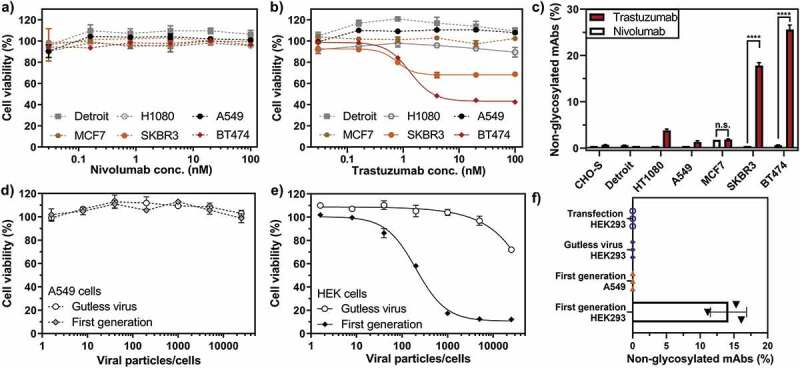
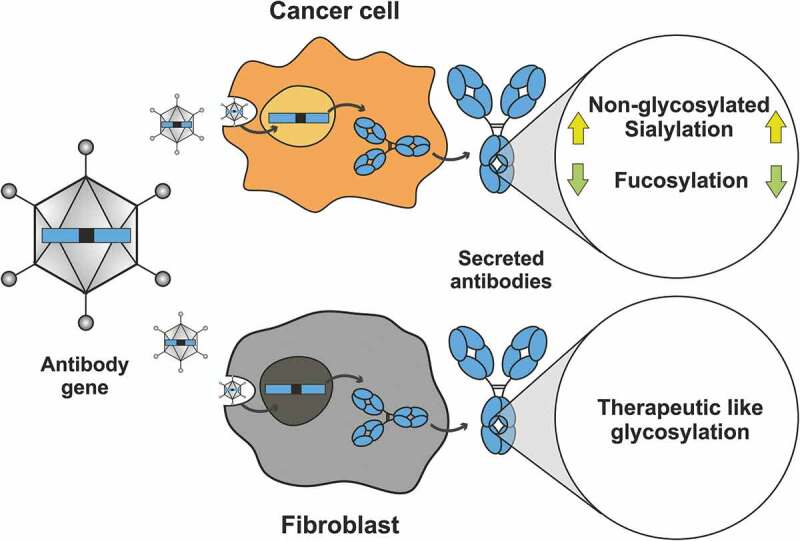
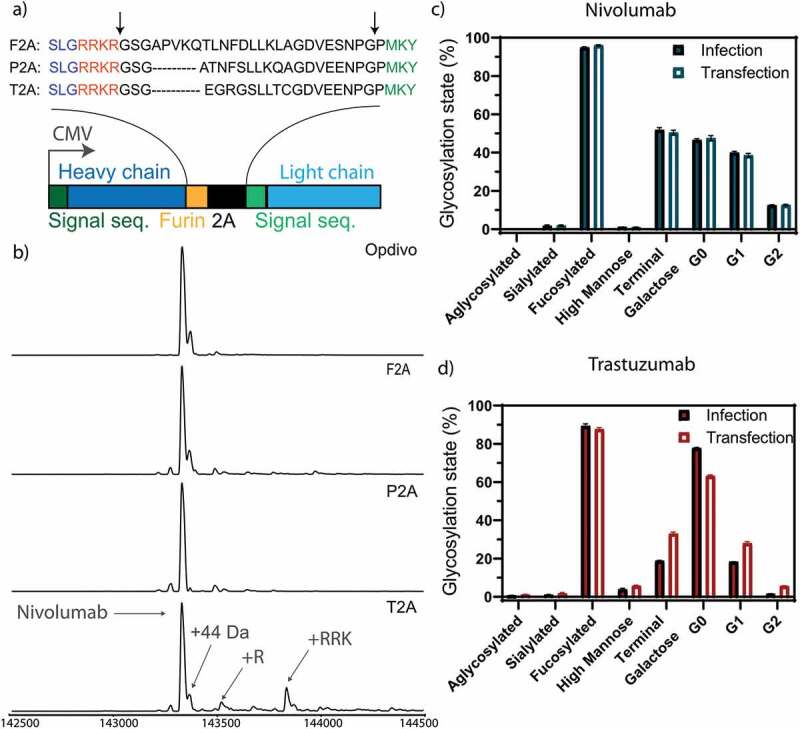
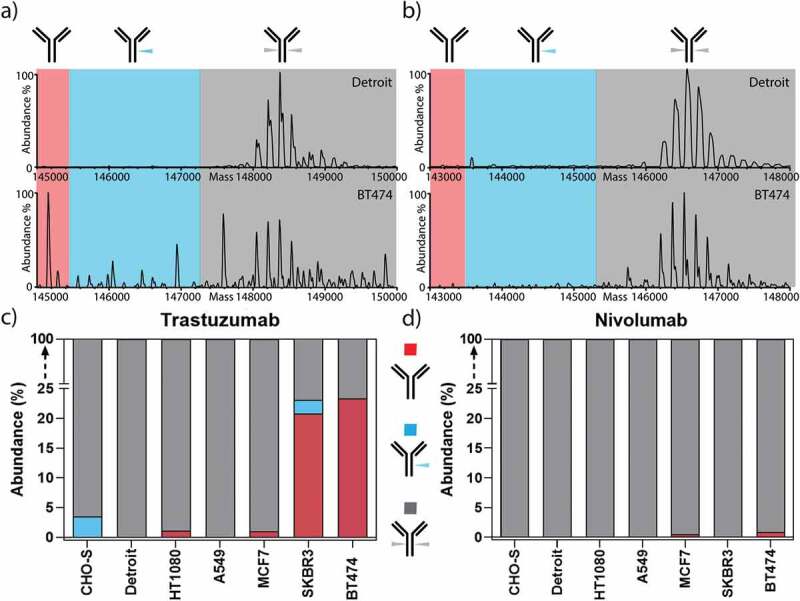
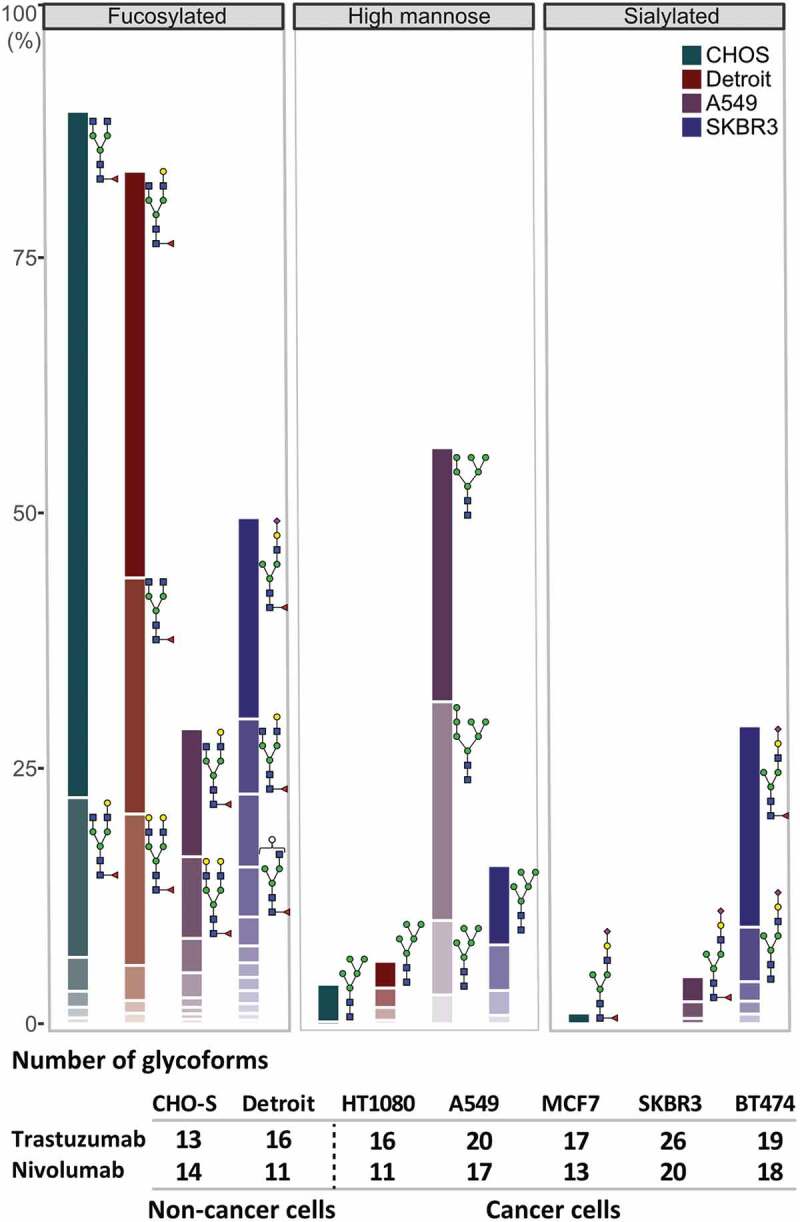
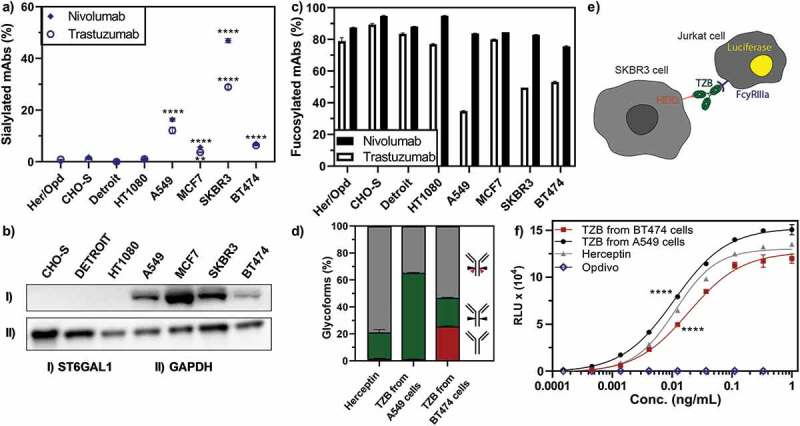
Gene therapy approaches now allow for the production of therapeutic antibodies by healthy or cancerous human tissues directly , and, with an increasing number of gene delivery methods available, the cell type for expression can be chosen. Yet, little is known about the biophysical changes introduced by expressing antibodies from producer cells or tissues targeted by gene therapy approaches, nor about the consequences for the type of glycosylation. The effects of different glycosylation on therapeutic antibodies have been well studied by controlling their glycan compositions in non-human mammalian production cells, ., Chinese hamster ovary cells. Therefore, we investigated the glycosylation state of clinically approved antibodies secreted from cancer tissues frequently targeted by gene therapy, using native mass spectrometry and glycoproteomics. We found that antibody sialylation and fucosylation depended on the producer tissue and the antibody isotype, allowing us to identify optimal producer cell types according to the desired mode of action of the antibody. Furthermore, we discovered that high amounts (>20%) of non-glycosylated antibodies were produced in cells sensitive to the action of the produced antibodies. Different glycosylation in different producer cells can translate into an altered potency of produced antibodies, depending on the desired mode of action, and can affect their serum half-lives. These results increase our knowledge about antibodies produced from cells targeted by gene therapy, enabling development of improved cancer gene therapy vectors that can include glycoengineering of expressed antibodies to optimize their efficacies, depending on the desired mode of action.
基因治疗方法现在允许健康或癌性人体组织直接产生治疗性抗体,而且随着可用基因递送方法的不断增加,可以选择用于表达的细胞类型。然而,对于通过基因治疗方法靶向的生产细胞或组织表达抗体所引入的生物物理变化,以及糖基化类型的后果,我们知之甚少。通过控制非人类哺乳动物生产细胞(如中国仓鼠卵巢细胞)中的聚糖组成,已经对不同糖基化对治疗性抗体的影响进行了充分研究。因此,我们使用天然质谱和糖蛋白质组学研究了基因治疗经常靶向的癌组织分泌的临床批准抗体的糖基化状态。我们发现抗体的唾液酸化和岩藻糖基化取决于生产组织和抗体亚型,这使我们能够根据抗体所需的作用方式确定最佳的生产细胞类型。此外,我们发现,在对所产生抗体的作用敏感的细胞中会产生大量(>20%)的非糖基化抗体。根据所需的作用方式,不同生产细胞中的不同糖基化可转化为所产生抗体效力的改变,并可能影响其血清半衰期。这些结果增加了我们对基因治疗靶向细胞产生的抗体的了解,有助于开发改进的癌症基因治疗载体,该载体可包括对表达抗体进行糖基工程改造,以根据所需的作用方式优化其疗效。