1Central Queensland University Bundaberg, Australia.
2School of Public Health and Health Sciences, University of Massachusetts Amherst, USA.
J Behav Addict. 2020 Jul 7;9(2):371-382. doi: 10.1556/2006.2020.00018. Print 2020 Jun.
The Prevention Paradox (PP) suggests that a large proportion of aggregate harm from gambling occurs to people who do not have a gambling disorder. However, it has not yet been tested using a population-representative sample. We aimed to test whether the PP applies to gambling in Finland. The prevalence rates of diverse harmful consequences from gambling were surveyed amongst a population-representative sample of past-year gamblers.
The study used first wave data (N = 7,186) of Finnish Gambling Harms survey, collected via online and postal surveys in 2017. A subset of 3,795 adults (≥18 years), who had gambled at least monthly in 2016, were selected for analysis.
Gambling-related harms were evaluated with the 72-item Harms Checklist. Problem and Pathological Gambling Measure (PPGM) measured respondents' probable disordered gambling from the subset of items for impaired control (4 questions) and other issues (3 questions).
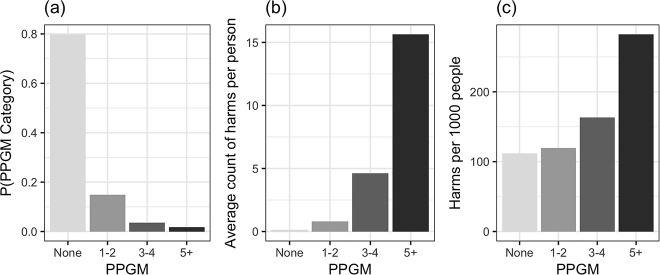
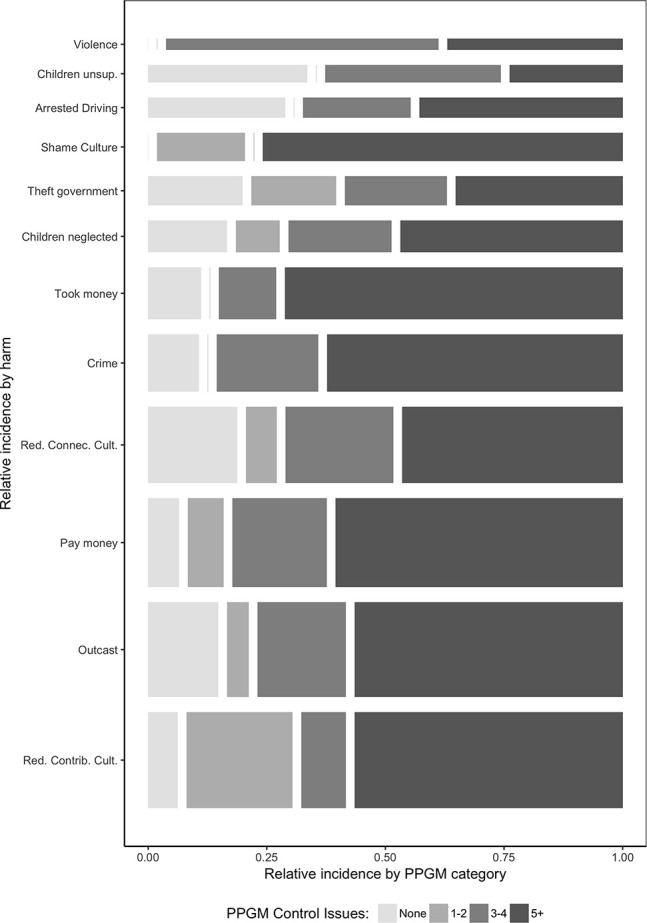
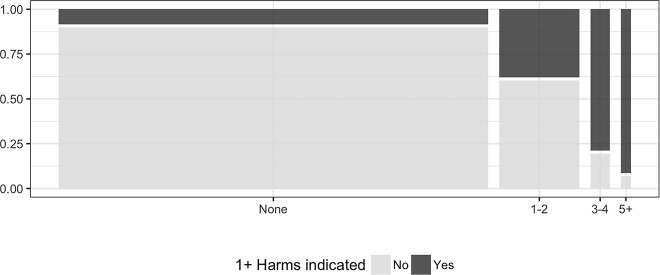
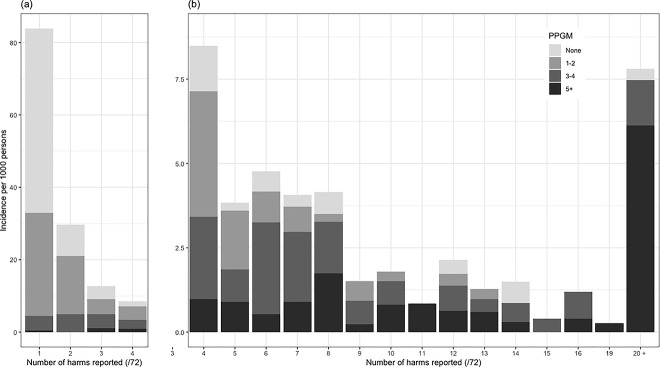
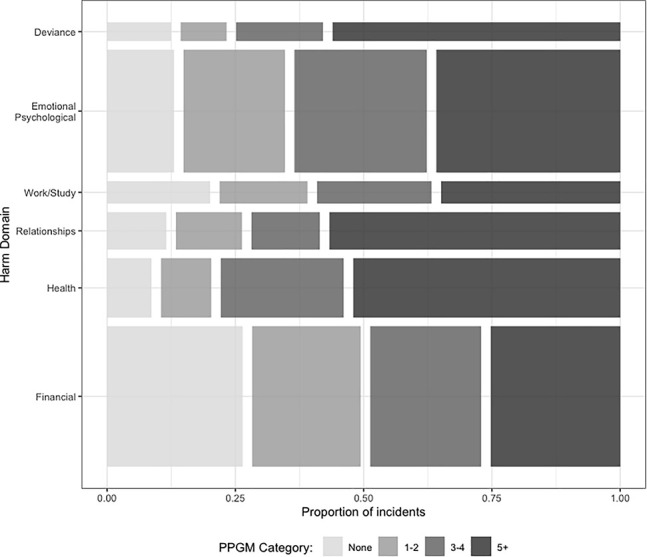
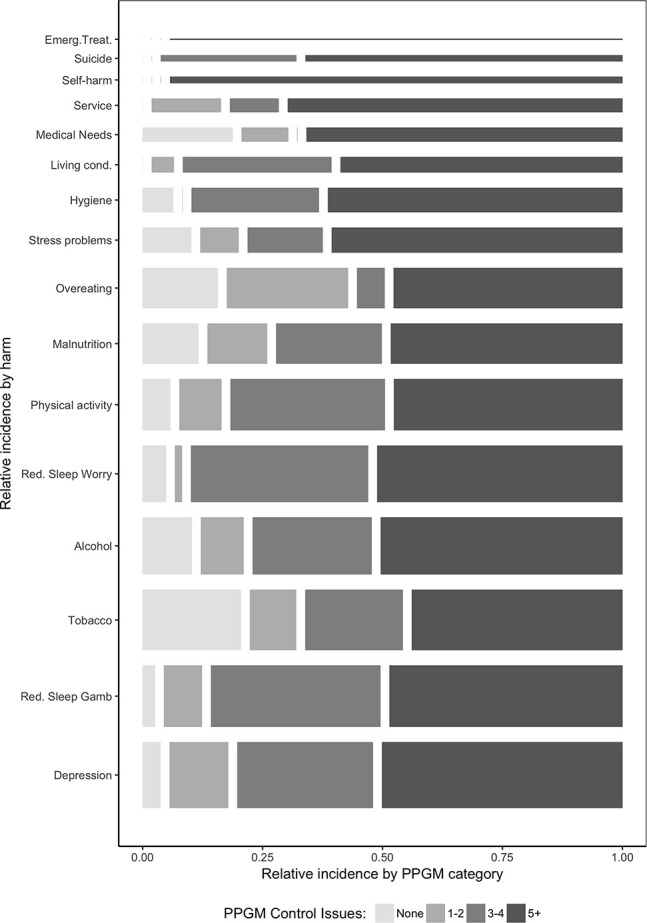
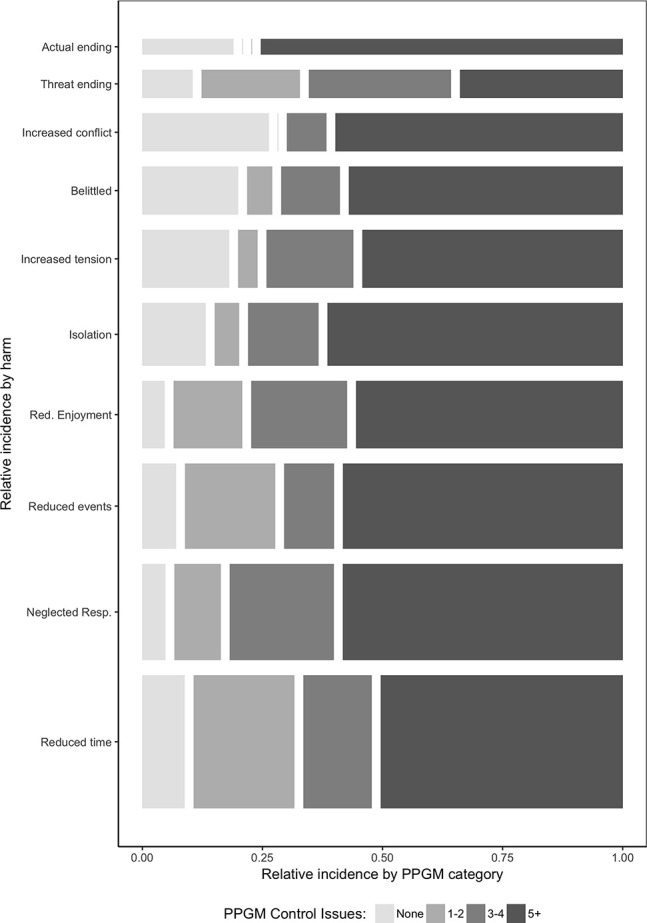
Consistent with previous findings, the majority of harms were reported by those in the less severe PPGM categories (i.e. scoring <5). However, considering each domain separately, this was true only for financial, emotional/psychological, and work/study harms. The PP was not supported for health, relationship, or social deviance harms.
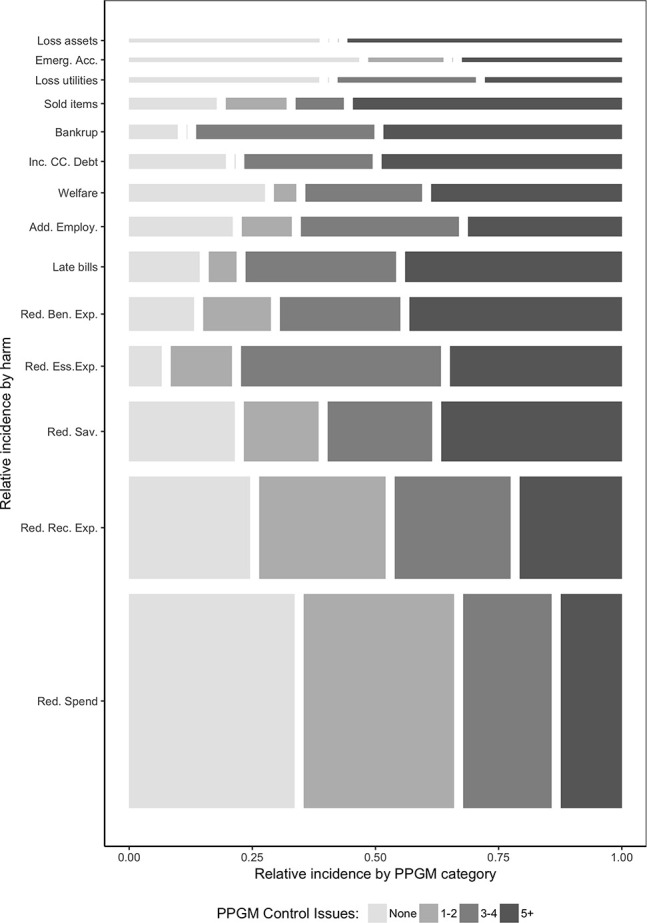
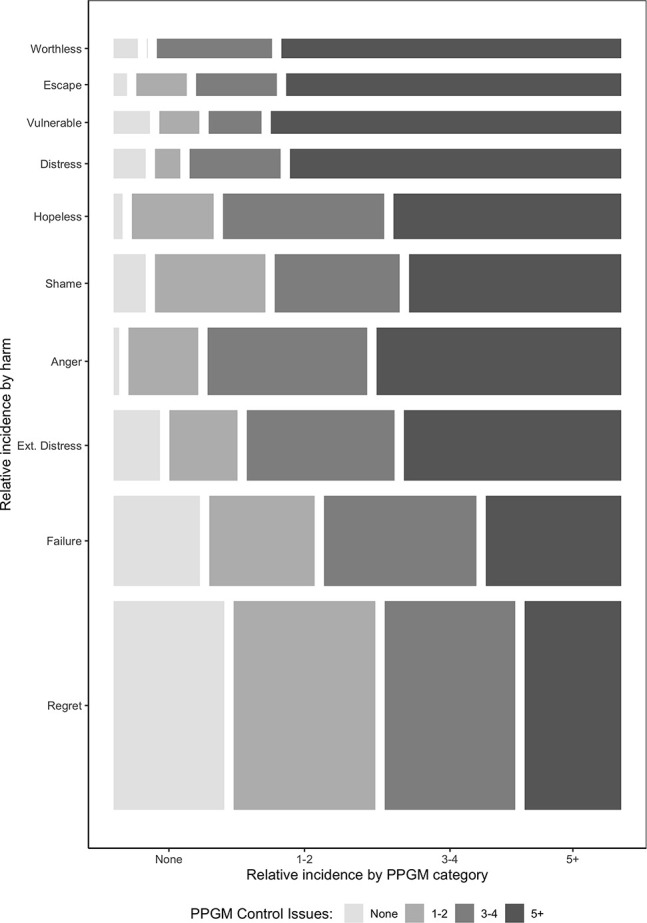
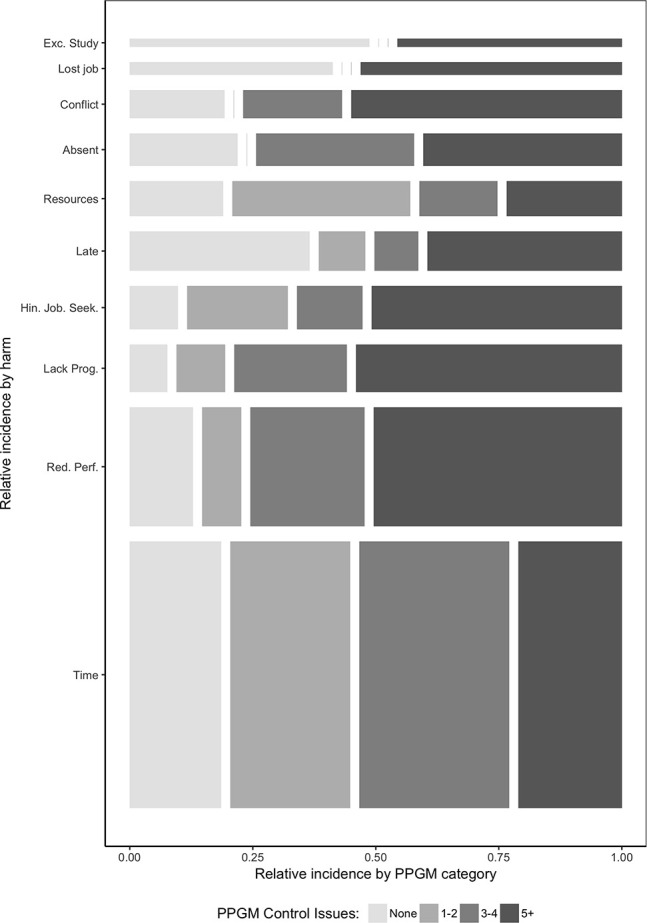
The population prevalence of the most serious harms (e.g. unsafe living conditions) is concentrated among those with severe impaired control issues. However, even excluding the ∼15% of harms occurring to occasional gamblers, most financial, emotional and work/study impacts occur to those with lower levels of control issues. Efforts at harm reduction should focus on the entire spectrum of issues that people experience from their gambling.
预防悖论(PP)表明,大量的赌博总危害发生在没有赌博障碍的人群中。然而,这还没有使用代表性的人群样本进行测试。我们的目的是检验 PP 是否适用于芬兰的赌博。在一个代表性的过去一年有过赌博行为的人群样本中,调查了赌博的各种有害后果的患病率。
本研究使用了芬兰赌博危害调查的第一波数据(N=7186),这些数据是通过 2017 年的在线和邮寄调查收集的。选择了 3795 名成年人(≥18 岁)作为分析对象,他们在 2016 年至少每月赌博一次。
使用 72 项危害检查表评估与赌博相关的危害。问题和病态赌博测量(PPGM)使用从受损害控制(4 个问题)和其他问题(3 个问题)的项目中选取的部分项目来衡量受访者的可能的赌博障碍。
与之前的研究结果一致,大多数危害是由那些在 PPGM 类别得分较低(即<5)的人报告的。然而,单独考虑每个领域,这仅适用于财务、情感/心理和工作/学习方面的危害。PP 不适用于健康、关系或社会偏差方面的危害。
最严重的危害(如不安全的生活条件)的人群患病率集中在那些严重受损的控制问题人群中。然而,即使排除偶尔赌博者的∼15%的危害,大多数财务、情感和工作/学习的影响也发生在那些控制问题较低的人群中。减少危害的努力应集中在人们从赌博中经历的所有问题上。