Department of Hematology/Oncology, The University of Kansas Cancer Center, Westwood, KS, USA.
Department of Pathology and Laboratory Medicine, The University of Kansas Medical Center, Kansas City, KS, USA.
Am J Case Rep. 2020 Jul 9;21:e923130. doi: 10.12659/AJCR.923130.
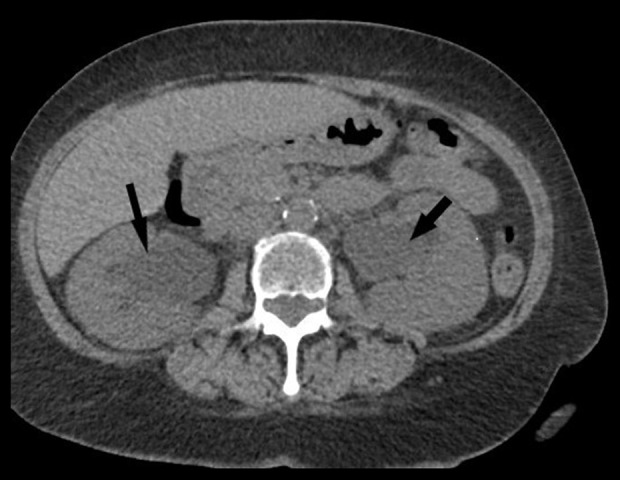
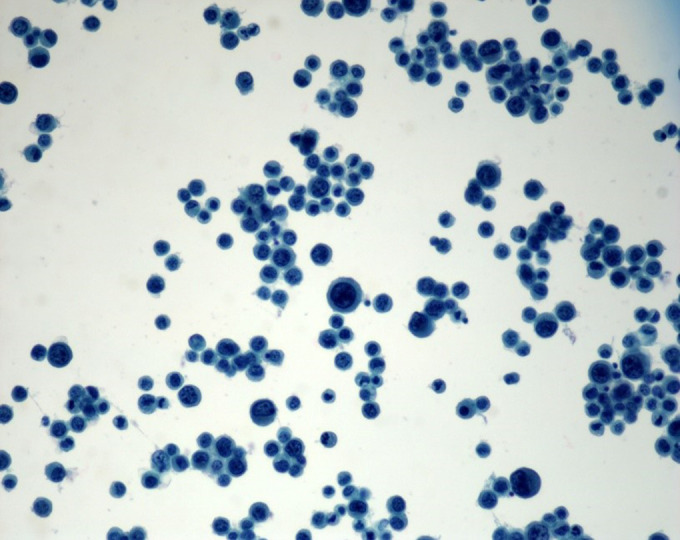
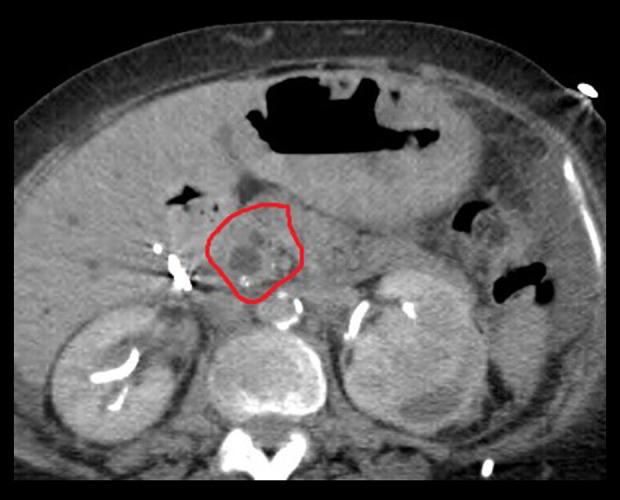
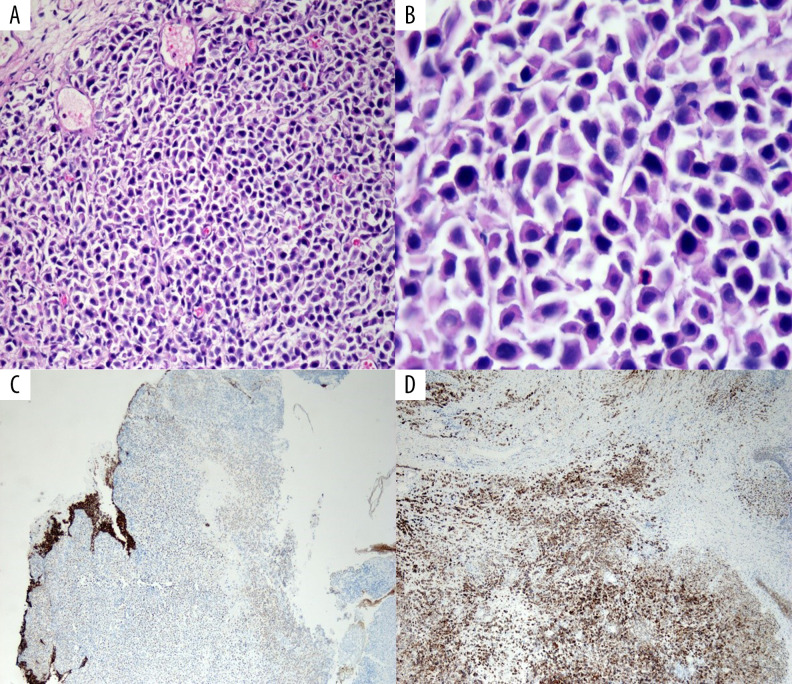
BACKGROUND Plasmacytoid urothelial carcinoma (PUC) is a rare and aggressive variant of urothelial cancers. Herein, we report a patient with CDH-1 mutated PUC who presented with disseminated peritoneal metastasis and high levels of CA 19-9. CASE REPORT A 65-year-old female presented to the hospital with vomiting, obstructive jaundice, and acute renal failure. Imaging studies showed bilateral hydronephrosis, bladder wall thickening without masses, and dilation of both common bile and pancreatic ducts without pancreatic masses. Carbohydrate antigen (CA) 19-9 was elevated at >17 000 U/mL. Repeated cystoscopies demonstrated no masses within the bladder, but with nodularity and inflamed mucosa, and random biopsies were obtained and showed PUC. Ascitic fluid cytology revealed metastatic PUC. A targeted exome next-generation sequencing (NGS) revealed pathogenic mutations in TP53, CDH-1, RB1, and ARIDA1A. The patient was debilitated, and hospice care was recommended. She passed away after 2 months of her initial presentation. CONCLUSIONS PUC is a rare and aggressive histological variant of bladder cancer. Advanced stage at diagnosis and high relapse rates after treatment with cytotoxic regimens are common. At the molecular level, somatic alterations in cadherin-1 (CDH-1) gene seem to be characteristic. Exploring the molecular sphere of this disease is prudent to identify possible new therapeutic targets.
浆细胞性尿路上皮癌(PUC)是一种罕见且侵袭性的尿路上皮癌变体。在此,我们报告一例 CDH-1 突变的 PUC 患者,其表现为弥漫性腹膜转移和 CA 19-9 水平升高。
一名 65 岁女性因呕吐、阻塞性黄疸和急性肾衰竭而到医院就诊。影像学研究显示双侧肾盂积水,膀胱壁增厚但无肿块,胆总管和胰管扩张但无胰腺肿块。糖类抗原(CA)19-9 升高>17000U/mL。多次膀胱镜检查均未发现膀胱内有肿块,但可见小结节和炎症性黏膜,并进行了随机活检,结果显示为 PUC。腹水细胞学检查显示转移性 PUC。靶向外显子组下一代测序(NGS)显示 TP53、CDH-1、RB1 和 ARIDA1A 存在致病性突变。患者身体虚弱,建议接受临终关怀。她在初次就诊后 2 个月去世。
PUC 是膀胱癌中一种罕见且侵袭性的组织学变体。在诊断时处于晚期,并且在接受细胞毒性方案治疗后复发率很高。在分子水平上,钙黏蛋白-1(CDH-1)基因的体细胞改变似乎是特征性的。探索这种疾病的分子领域是明智的,可以确定可能的新治疗靶点。