Kothari Damini, Lee Woo-Do, Jung Eun Sung, Niu Kai-Min, Lee Choong Hwan, Kim Soo-Ki
Department of Animal Science and Technology, Konkuk University, 120 Neungdong-ro, Gwangjin-gu, Seoul 05029, Korea.
Department of Bioscience and Biotechnology, Konkuk University, 120 Neungdong-ro, Gwangjin-gu, Seoul 05029, Korea.
Antibiotics (Basel). 2020 Jul 7;9(7):386. doi: 10.3390/antibiotics9070386.
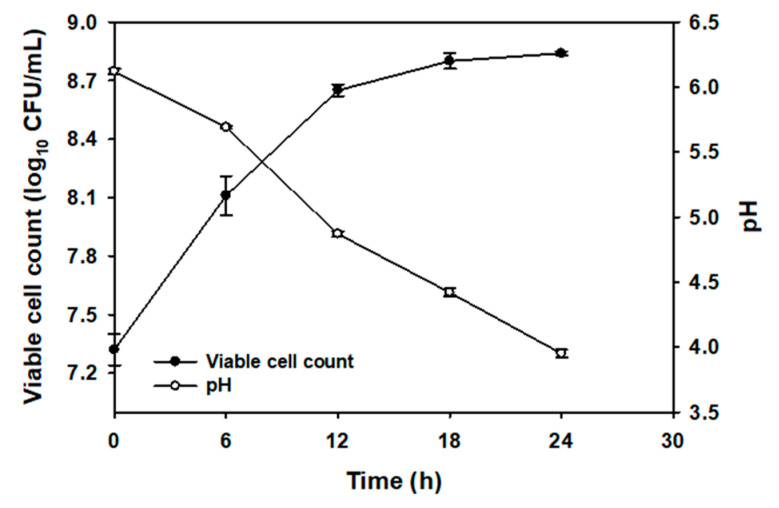
Chinese chives (CC) are rich in several antimicrobial constituents including organosulfur compounds, phenolics, and saponins, among others. Herein, we fermented CC juice using an autochthonous isolate, having antimicrobial effects against poultry pathogens toward formulating an antimicrobial feed additive. Following 24 h of fermentation, the antimicrobial and antiviral activities of CC juice were significantly enhanced against poultry pathogens. However, the antioxidant activity of CC juice was significantly decreased following fermentation. Meanwhile, the compositional changes of CC juice following fermentation were also investigated. The total polyphenol, thiol, and allicin contents were significantly decreased in 24 h-fermented CC juice (LpCC) extract; however, total flavonoids increased significantly following fermentation. The untargeted metabolite profiling of nonfermented CC juice (NCC) and LpCC extracts was carried out using the ultra-high-performance liquid chromatography-linear trap quadrupole-orbitrap-tandem mass spectrometry (UHPLC-LTQ-Orbitrap-MS/MS) followed by multivariate analyses. The score plots of principal component analysis (PCA) and orthogonal partial least squares-discriminant analysis (OPLS-DA) based on UHPLC-LTQ-Orbitrap-MS/MS datasets displayed a clear segregation between the LpCC and NCC samples, which suggests their marked metabolomic disparity. Based on the multivariate analysis, we selected 17 significantly discriminant metabolites belonging to the different chemical classes including alkaloid, flavonols, saponins, fatty acids, amino acids, and organic acids. Notably, the flavonols including the glycosides of quercetin, kaempferol, and isorhamnetin as well as the saponins displayed significantly higher relative abundance in LpCC as compared with NCC. This study provides useful insights for the development of a fermented CC juice based antimicrobial feed additive to combat poultry infections.
韭菜富含多种抗菌成分,包括有机硫化合物、酚类和皂苷等。在此,我们利用一株对家禽病原体具有抗菌作用的本地分离菌株发酵韭菜汁,以制备一种抗菌饲料添加剂。发酵24小时后,韭菜汁对家禽病原体的抗菌和抗病毒活性显著增强。然而,发酵后韭菜汁的抗氧化活性显著降低。同时,我们还研究了发酵后韭菜汁的成分变化。在发酵24小时的韭菜汁(LpCC)提取物中,总多酚、硫醇和大蒜素含量显著降低;然而,发酵后总黄酮含量显著增加。使用超高效液相色谱-线性阱四极杆-轨道阱串联质谱(UHPLC-LTQ-Orbitrap-MS/MS)对未发酵的韭菜汁(NCC)和LpCC提取物进行非靶向代谢物谱分析,随后进行多变量分析。基于UHPLC-LTQ-Orbitrap-MS/MS数据集的主成分分析(PCA)和正交偏最小二乘判别分析(OPLS-DA)得分图显示,LpCC和NCC样品之间有明显的分离,这表明它们存在显著的代谢组差异。基于多变量分析,我们选择了17种显著差异的代谢物,它们属于不同的化学类别,包括生物碱、黄酮醇、皂苷、脂肪酸、氨基酸和有机酸。值得注意的是,与NCC相比,LpCC中包括槲皮素、山奈酚和异鼠李素糖苷在内的黄酮醇以及皂苷的相对丰度显著更高。本研究为开发基于发酵韭菜汁的抗菌饲料添加剂以对抗家禽感染提供了有用的见解。