Kothari Damini, Lee Woo-Do, Kim Soo-Ki
Department of Animal Science and Technology, Konkuk University, Seoul 05029, Korea.
Antioxidants (Basel). 2020 Sep 19;9(9):888. doi: 10.3390/antiox9090888.
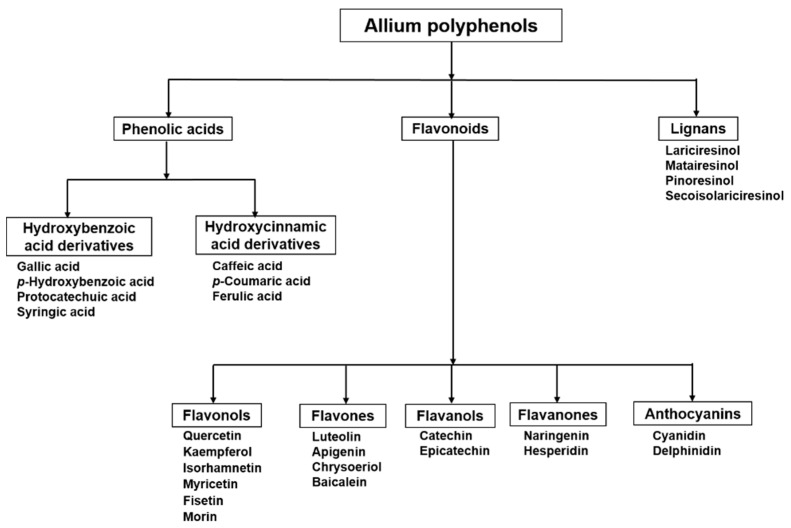
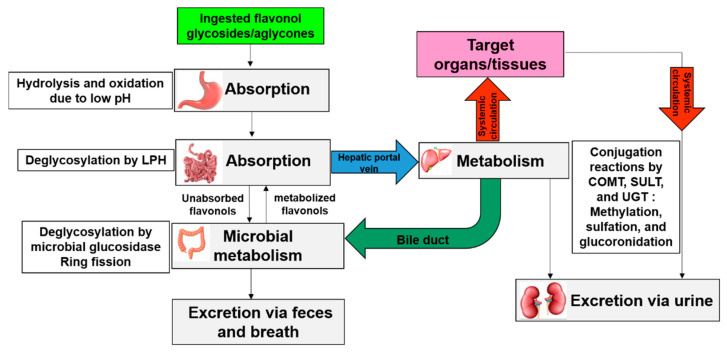
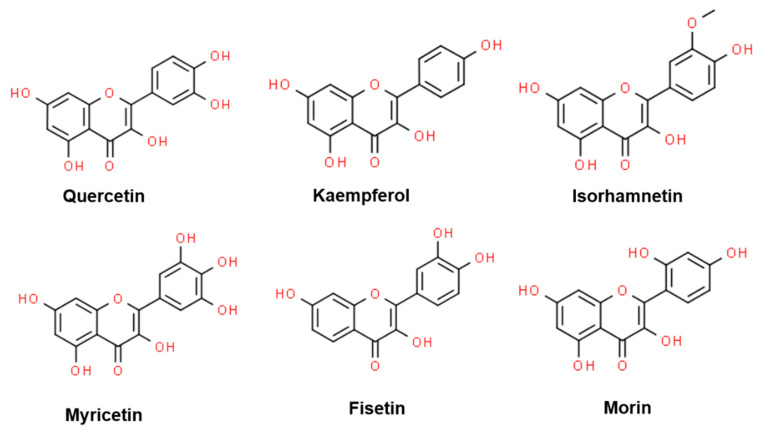
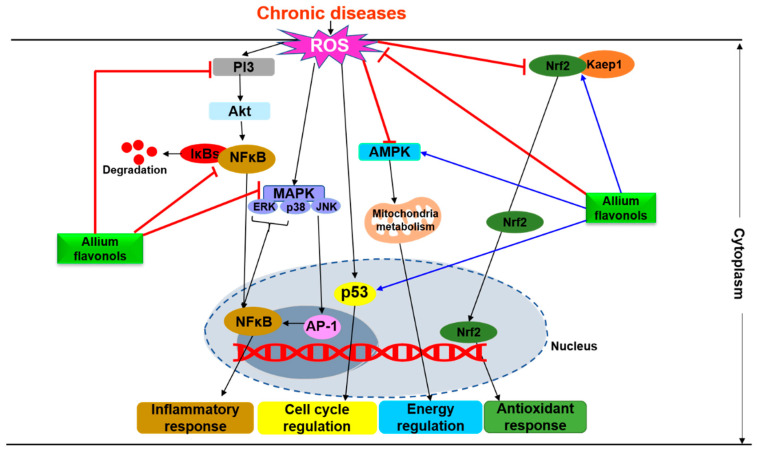
species are revered worldwide as vegetables, condiments, and spices as well as the therapeutic agents in traditional medicine. The bioactive compounds in alliums mainly include organosulfur compounds, polyphenols, dietary fibers, and saponins. Flavonoids, particularly flavonols from alliums, have been demonstrated to have the antioxidant, anticancer, hypolipidemic, anti-diabetic, cardioprotective, neuroprotective, and antimicrobial activities. However, flavonols are mostly characterized from onions and have not been comprehensively reviewed across different species. This article therefore focuses on flavonol profiles from different species, their health effects, underlying molecular mechanisms, and bioavailability. Intriguingly, the functional health effects of flavonols were mainly ascribed to their antioxidant and anti-inflammatory activities involving a cascade of multiple signaling pathways. Although the -derived flavonols offer tremendous potential in preventing chronic disease risks, in-depth studies are needed to translate their clinical application.
葱属植物在全球范围内备受推崇,被用作蔬菜、调味品和香料,同时也是传统医学中的治疗药物。葱属植物中的生物活性化合物主要包括有机硫化合物、多酚、膳食纤维和皂苷。黄酮类化合物,特别是葱属植物中的黄酮醇,已被证明具有抗氧化、抗癌、降血脂、抗糖尿病、心脏保护、神经保护和抗菌活性。然而,黄酮醇大多是从洋葱中鉴定出来的,尚未对不同葱属植物进行全面综述。因此,本文重点关注不同葱属植物中的黄酮醇谱、它们的健康效应、潜在的分子机制和生物利用度。有趣的是,黄酮醇对健康的功能作用主要归因于它们的抗氧化和抗炎活性,涉及一系列多个信号通路。尽管葱属植物来源的黄酮醇在预防慢性病风险方面具有巨大潜力,但仍需要深入研究以将其转化为临床应用。