Ab Hamid Nurulhusna, Mohd Noor Siti Nurfadhlina, Isa Nur Rasyidah, Md Rodzay Rohaiyu, Bachtiar Effendi Ainaa Mardia, Hafisool Afiq Ahnaf, Azman Fatin Atirah, Abdullah Siti Farah, Kamarul Zaman Muhammad Khairi, Mohd Norsham Mohd Iqbal, Amanzuri Noor Hasmiza, Abd Khalil Nurliyana, Zambari Izzah Farhah, Mat Rani Aimannur Najihah, Ariffin Farah Diana, Omar Topek, Wasi Ahmad Nazni, Lee Han Lim
Medical Entomology Unit, WHO Collaborating Centre for Vectors, Institute for Medical Research, Ministry of Health, Malaysia, National Institutes of Health, Block C, Jalan Setia Murni U13/52, Seksyen U13, Setia Alam, Shah Alam 40170, Malaysia.
Entomology and Pest Unit, Federal Territory of Kuala Lumpur & Putrajaya Health Department, Jalan Cenderasari, Kuala Lumpur 50590, Malaysia.
Trop Med Infect Dis. 2020 Jul 7;5(3):114. doi: 10.3390/tropicalmed5030114.
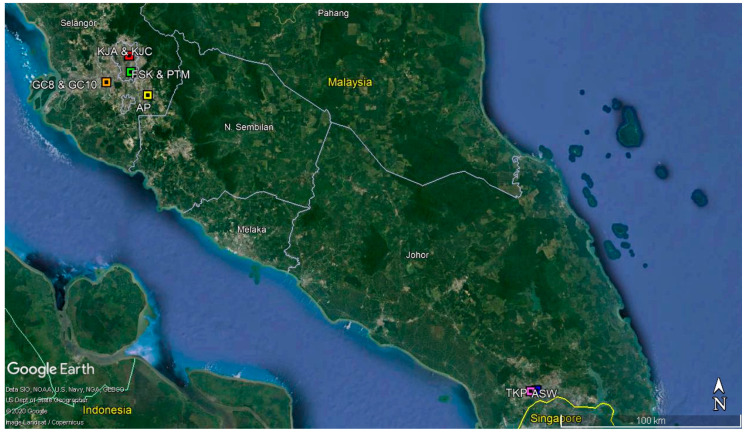
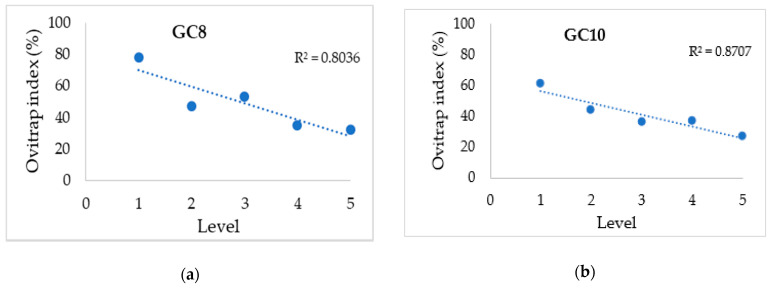
Dengue is placing huge burdens on the Malaysian healthcare system as well as the economy. With the expansion in the number of high-rise residential buildings, particularly in the urban centers, the flight range and behavior of mosquitoes may be altered in this habitat type. In this study, we aimed to expand the understanding of the vertical distribution and dispersal of in nine selected high-rise residences in Kuala Lumpur, Selangor, and Johor using ovitraps as the sampling method. We discovered that is the predominant species in all study sites. Both and are most abundant within the first three levels and could be found up to level 21 (approximately 61.1-63.0 m). Pearson correlation analyses exhibited negative correlations in eight out of nine study sites between the ovitrap indexes (OIs) within each floor level, suggesting that density decreased as the building level increased. Our findings provide information to the public health authorities on 'hot spot' floors for effective suppression of dengue transmission.
登革热给马来西亚的医疗系统以及经济带来了巨大负担。随着高层住宅数量的增加,尤其是在城市中心,这种栖息地类型可能会改变蚊子的飞行范围和行为。在本研究中,我们旨在通过使用诱蚊产卵器作为采样方法,扩大对吉隆坡、雪兰莪和柔佛州九个选定高层住宅中蚊子垂直分布和扩散的了解。我们发现,在所有研究地点,[某种蚊子名称]都是主要物种。[两种蚊子名称]在前三层最为丰富,在高达21层(约61.1 - 63.0米)的楼层也能发现。皮尔逊相关性分析显示,九个研究地点中有八个在各楼层的诱蚊产卵器指数(OIs)之间呈现负相关,这表明随着建筑楼层的增加,[蚊子名称]密度降低。我们的研究结果为公共卫生当局提供了有关“热点”楼层的信息,以便有效抑制登革热传播。