Grobben Yvonne, Uitdehaag Joost C M, Willemsen-Seegers Nicole, Tabak Werner W A, de Man Jos, Buijsman Rogier C, Zaman Guido J R
Netherlands Translational Research Center B.V., Kloosterstraat 9, 5349 AB Oss, The Netherlands.
J Struct Biol X. 2019 Nov 26;4:100014. doi: 10.1016/j.yjsbx.2019.100014. eCollection 2020.
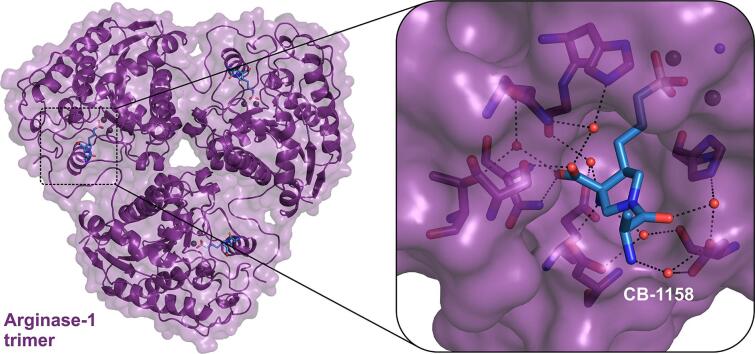
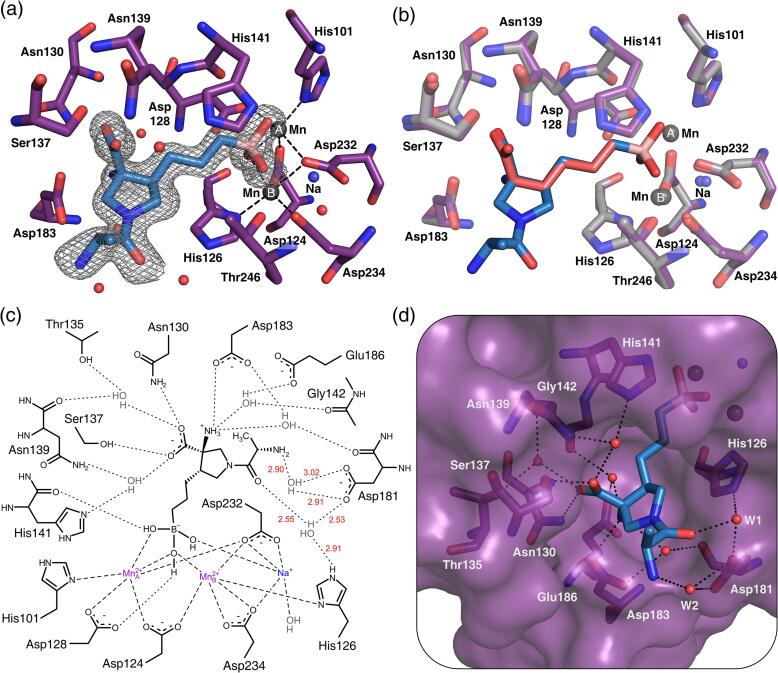
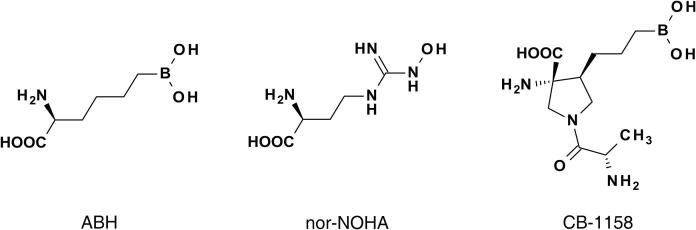
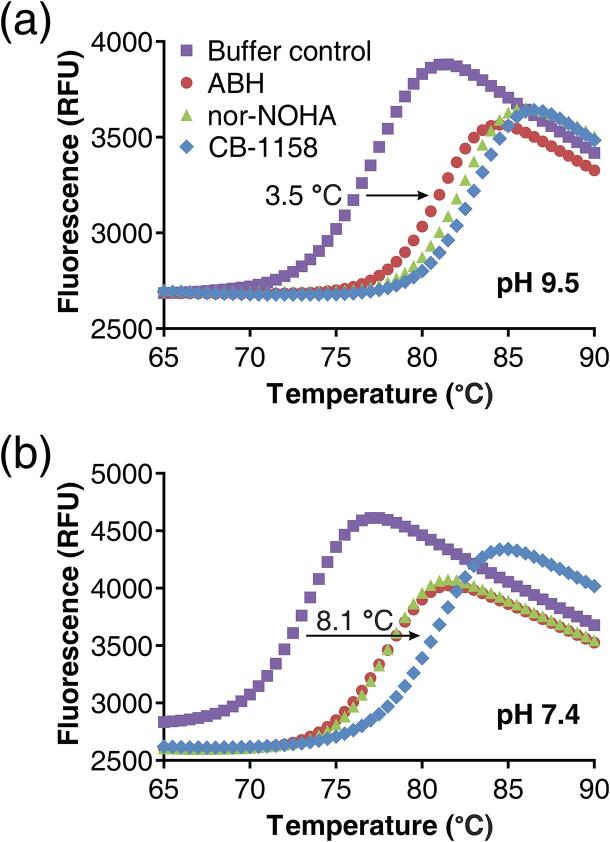
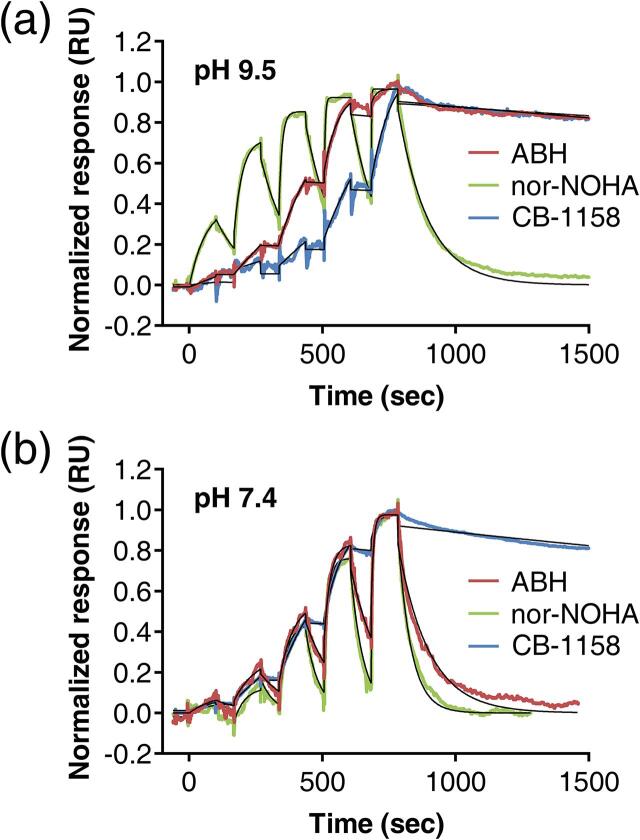
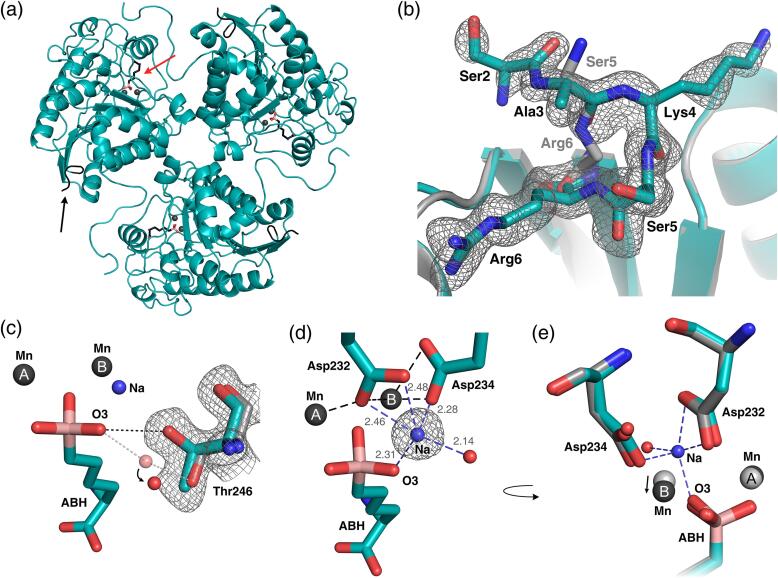
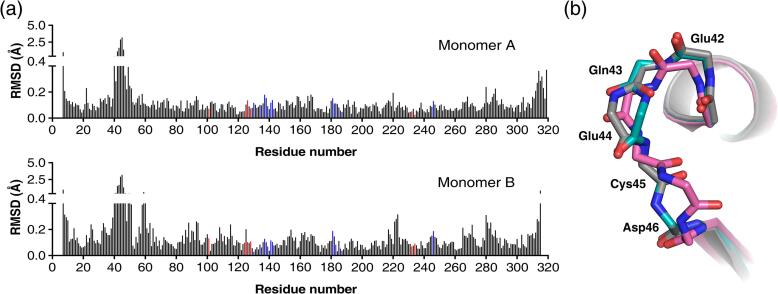
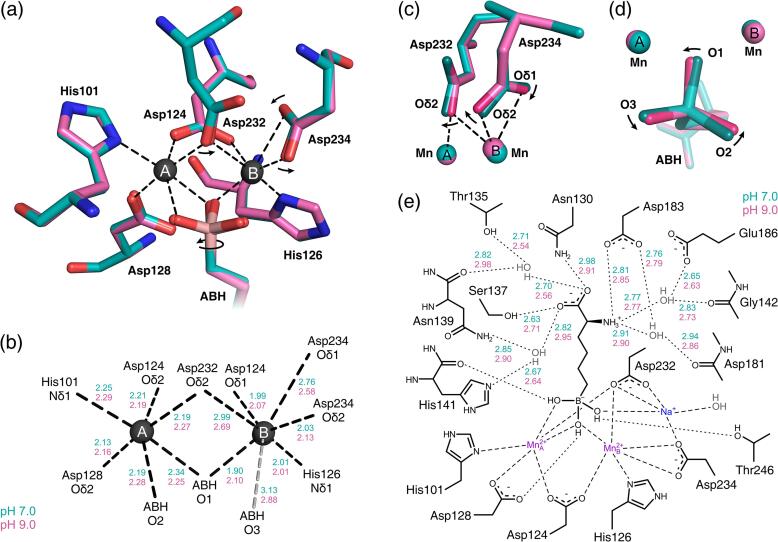
Arginase-1 is a manganese-dependent metalloenzyme that catalyzes the hydrolysis of L-arginine into L-ornithine and urea. Arginase-1 is abundantly expressed by tumor-infiltrating myeloid cells that promote tumor immunosuppression, which is relieved by inhibition of Arginase-1. We have characterized the potencies of the Arginase-1 reference inhibitors (2)-2-amino-6-boronohexanoic acid (ABH) and -hydroxy-nor-L-arginine (nor-NOHA), and studied their pH-dependence and binding kinetics. To gain a better understanding of the structural changes underlying the high pH optimum of Arginase-1 and its pH-dependent inhibition, we determined the crystal structure of the human Arginase-1/ABH complex at pH 7.0 and 9.0. These structures revealed that at increased pH, the manganese cluster assumes a more symmetrical coordination structure, which presumably contributes to its increase in catalytic activity. Furthermore, we show that binding of ABH involves the presence of a sodium ion close to the manganese cluster. We also studied the investigational new drug CB-1158 (INCB001158). This inhibitor has a low-nanomolar potency at pH 7.4 and increases the thermal stability of Arginase-1 more than ABH and nor-NOHA. Moreover, CB-1158 displays slow association and dissociation kinetics at both pH 9.5 and 7.4, as indicated by surface plasmon resonance. The potent character of CB-1158 is presumably due to its increased rigidity compared to ABH as well as the formation of an additional hydrogen-bond network as observed by resolution of the Arginase-1/CB-1158 crystal structure.
精氨酸酶-1是一种依赖锰的金属酶,可催化L-精氨酸水解为L-鸟氨酸和尿素。肿瘤浸润性髓样细胞大量表达精氨酸酶-1,其可促进肿瘤免疫抑制,而抑制精氨酸酶-1可缓解这种抑制作用。我们已对精氨酸酶-1参考抑制剂(2)-2-氨基-6-硼酸己酸(ABH)和β-羟基-nor-L-精氨酸(nor-NOHA)的效力进行了表征,并研究了它们的pH依赖性和结合动力学。为了更好地理解精氨酸酶-1高pH最佳值及其pH依赖性抑制作用背后的结构变化,我们测定了人精氨酸酶-1/ABH复合物在pH 7.0和9.0时的晶体结构。这些结构表明,在较高pH值下,锰簇呈现出更对称的配位结构,这可能有助于其催化活性的提高。此外,我们表明ABH的结合涉及靠近锰簇处存在钠离子。我们还研究了研究性新药CB-1158(INCB001158)。该抑制剂在pH 7.4时具有低纳摩尔效力,并且比ABH和nor-NOHA更能提高精氨酸酶-1的热稳定性。此外,如表面等离子体共振所示,CB-1158在pH 9.5和7.4时均显示出缓慢的结合和解离动力学。CB-1158的强效特性可能归因于与ABH相比其刚性增加,以及通过解析精氨酸酶-1/CB-1158晶体结构观察到的额外氢键网络的形成。