Department of Urology, Karabük University Training and Research Hospital, Karabük, Turkey.
Department of Urology, Health Science University Dr. Abdurrahman Yurtaslan Ankara Oncology Training and Research Hospital, Ankara, Turkey.
Int Braz J Urol. 2020 Sep-Oct;46(5):725-740. doi: 10.1590/S1677-5538.IBJU.2019.0387.
To evaluate whether components of Testicular Dysgenesis Syndrome (TDS) affect testicular germ cell tumor (TGCT) prognosis and oncological outcomes. According to the hypothesis called TDS; undescended testis, hypospadias, testicular cancer and spermatogenic disorders share the same risk factors and have a combined fetal origin.
We retrospectively evaluated the stages and oncological outcomes of 69 patients who underwent radical orchiectomy between January 2010 and December 2014 due to TGCT in our department. The presence of undescended testis, hypospadias and semen parameters disorders were recorded according to anamnesis of patients.
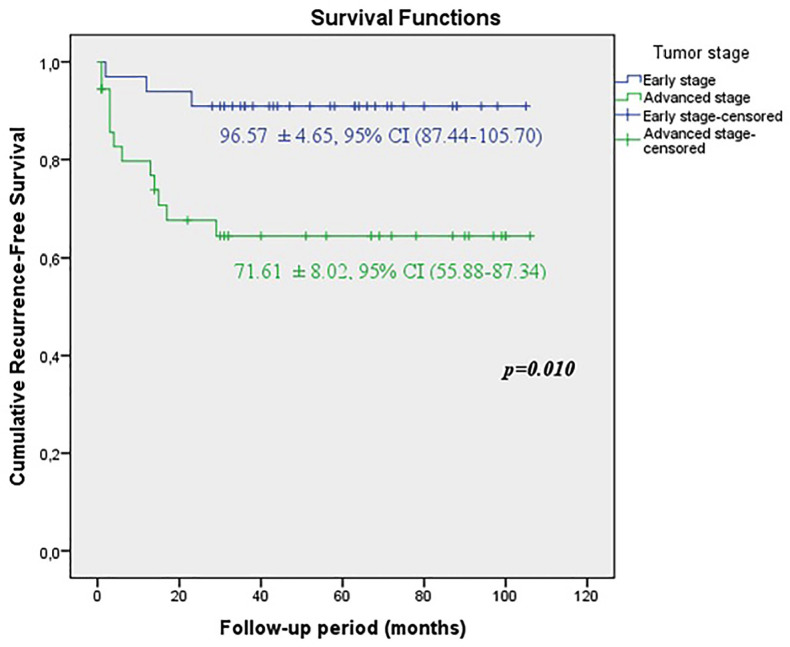
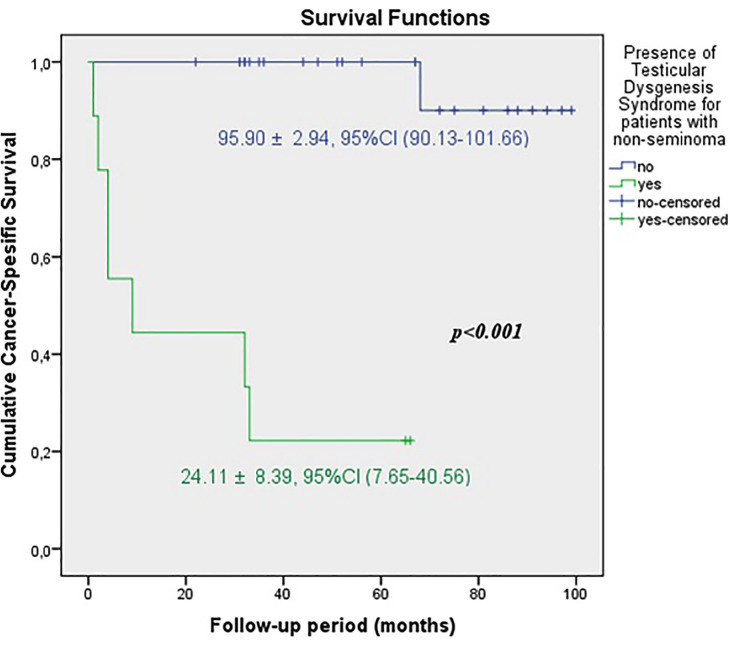
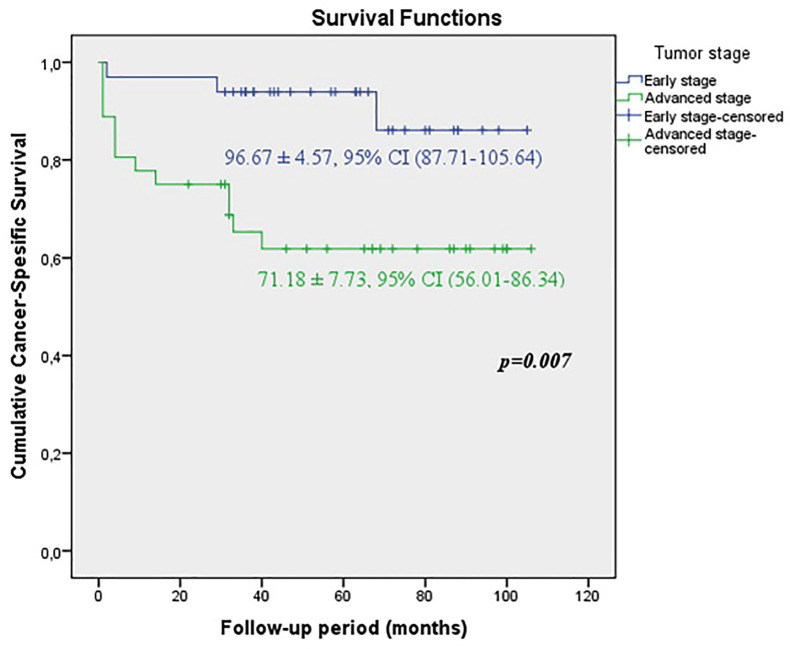
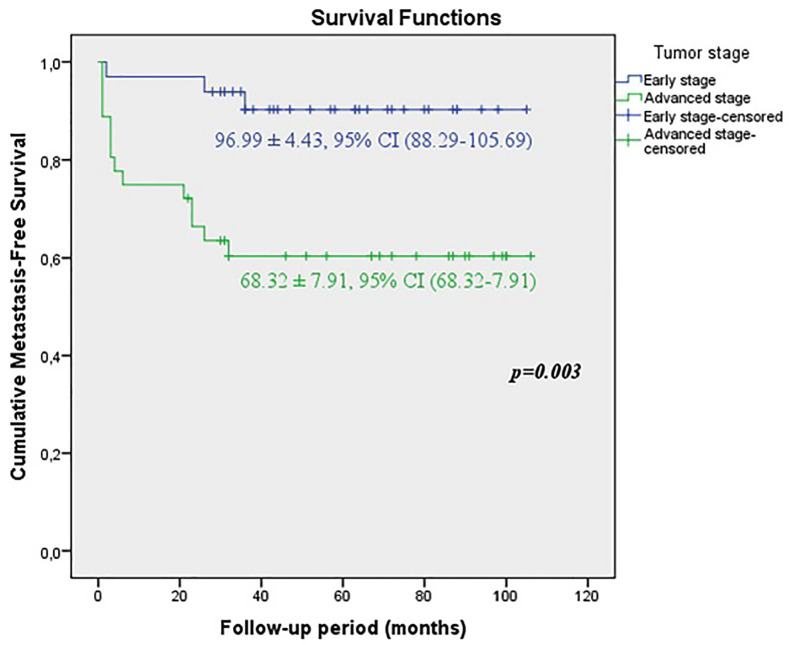
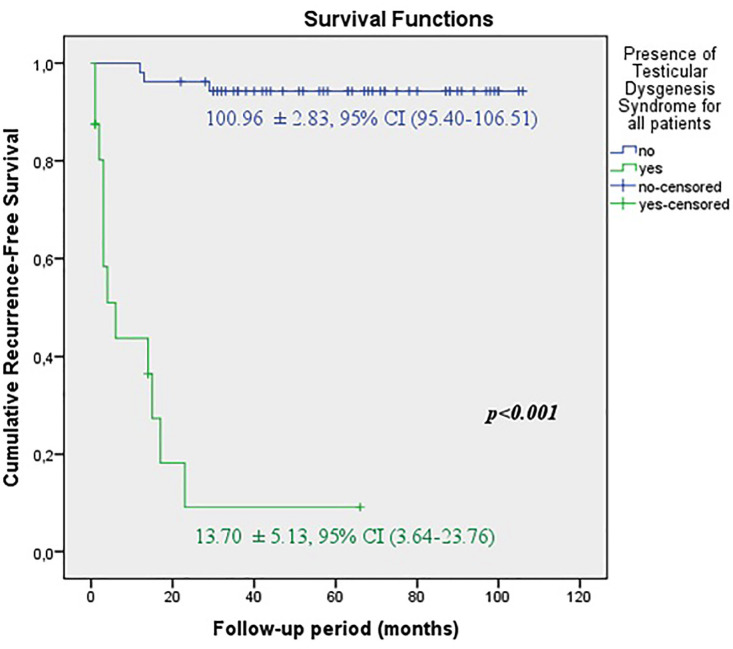
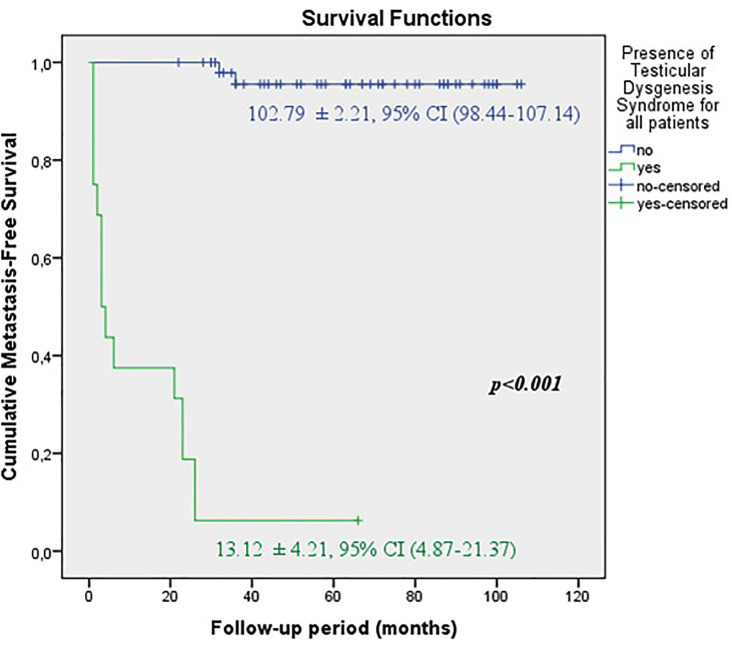
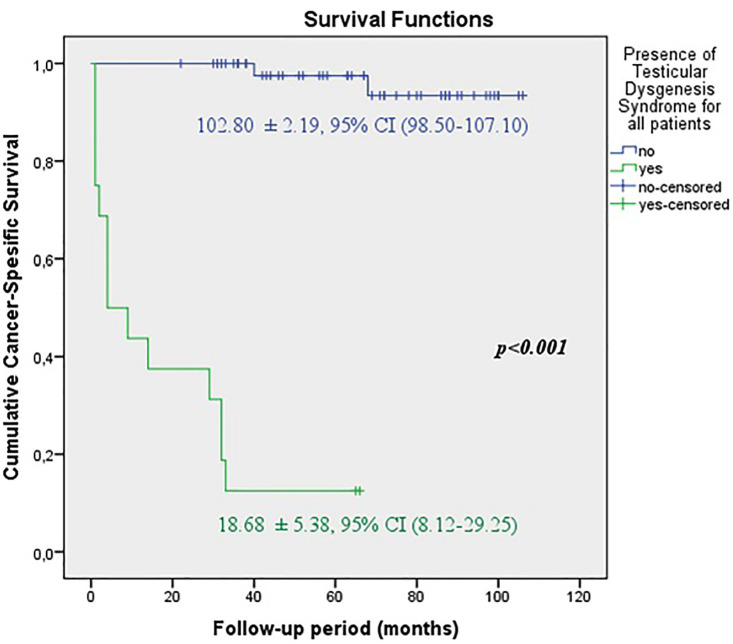
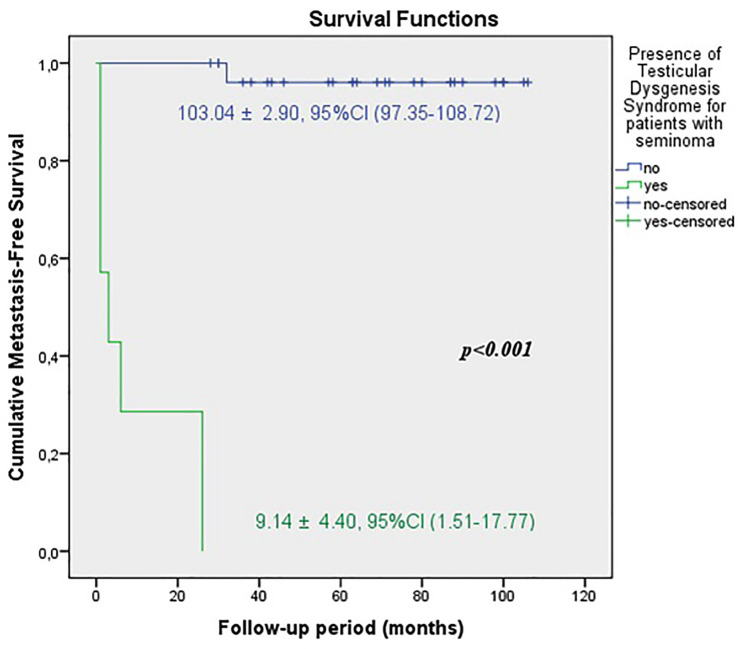
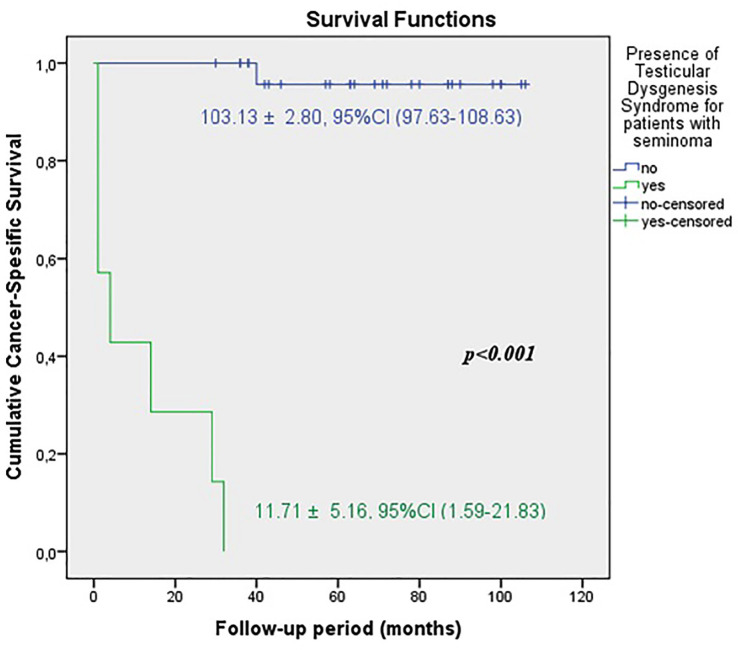
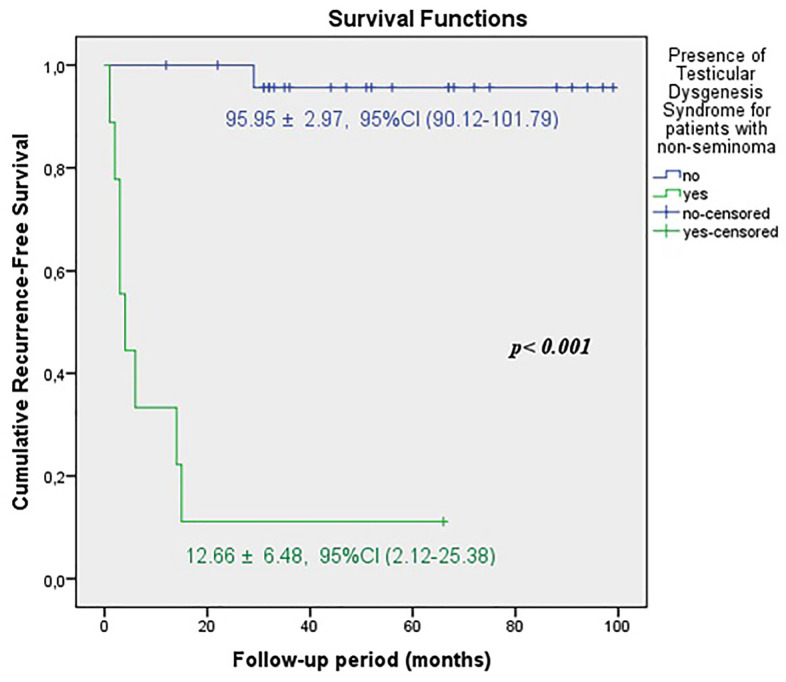
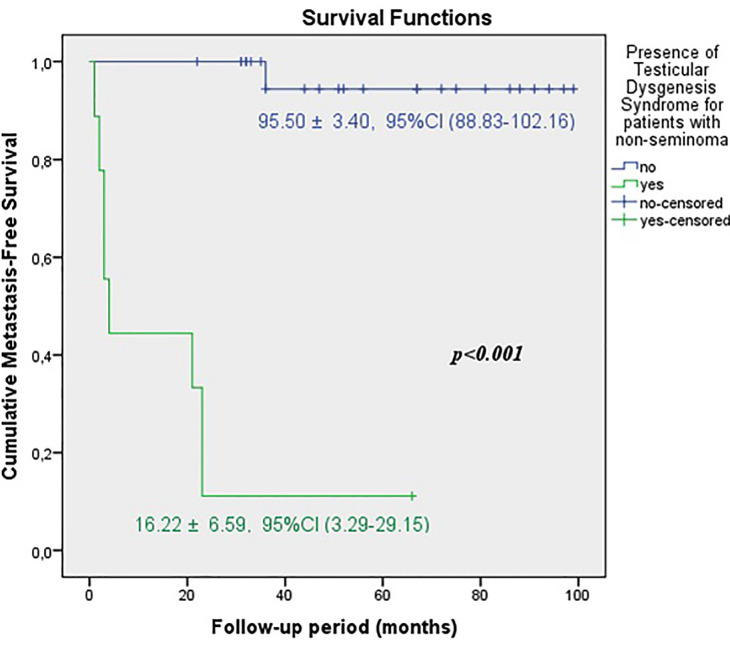
Among 69 patients with TGCT, only 16 (23.1%) had TDS. Significantly higher rate of TDS (36.1% vs. 9.1%) was observed at the advanced stages of TGCT(p=0.008). In the TDS group, the rates of local recurrence (50% vs. 11.3%, p< 0.001), distant metastasis (93.6% vs. 3.8%, p< 0.001) and cancer-spesific mortality (87.5% vs. 3.8%, p< 0.001) were found significantly higher than those without TDS. The predicted time for recurrence-free survival (13.70±5.13 vs. 100.96±2.83 months, p< 0.001) metastasis-free survival (13.12±4.21 vs. 102.79±2.21 months, p< 0.001) and cancer-specific survival (13.68±5.38 vs. 102.80±2.19 months, p< 0.001) were also statistically lower in this group.
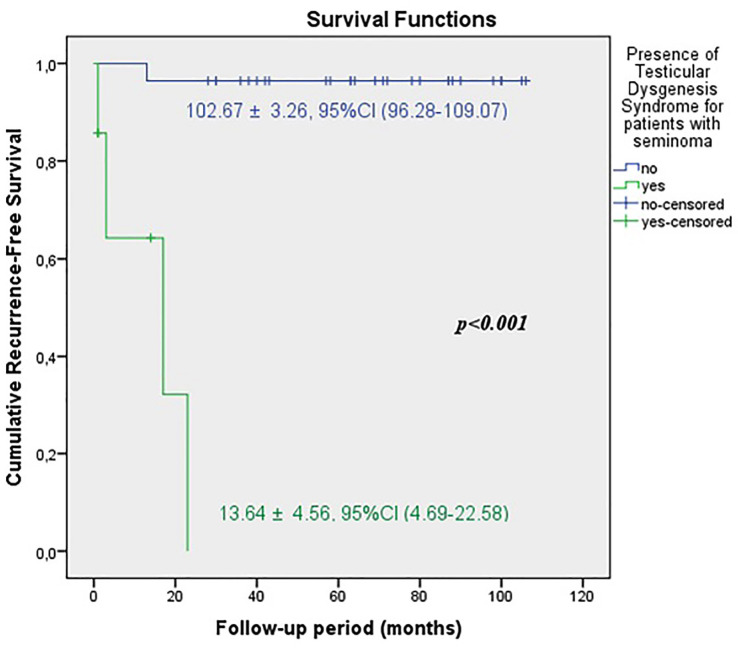
According to our preliminary results, there is an apparent relationship between TDS and tumor prognosis. Even if the components of TDS alone did not contain poor prognostic features for TGCT, the presence of TDS was found as the most important independent predictive factor for oncological outcomes in both seminomas and nonseminomas as well as all patients with TGCT.
评估睾丸发育不良综合征 (TDS) 的各个组成部分是否会影响睾丸生殖细胞肿瘤 (TGCT) 的预后和肿瘤学结果。根据 TDS 假说,未降睾丸、尿道下裂、睾丸癌和精子发生障碍具有相同的危险因素,且具有共同的胎儿起源。
我们回顾性评估了 2010 年 1 月至 2014 年 12 月期间在我科因 TGCT 接受根治性睾丸切除术的 69 例患者的分期和肿瘤学结果。根据患者的病史记录未降睾丸、尿道下裂和精液参数障碍的存在情况。
在 69 例 TGCT 患者中,只有 16 例(23.1%)患有 TDS。在 TGCT 的晚期阶段,TDS 的发生率明显更高(36.1%比 9.1%,p=0.008)。在 TDS 组中,局部复发率(50%比 11.3%,p<0.001)、远处转移率(93.6%比 3.8%,p<0.001)和癌症特异性死亡率(87.5%比 3.8%,p<0.001)均明显高于无 TDS 组。无 TDS 组的无复发生存期(13.70±5.13 比 100.96±2.83 个月,p<0.001)、无转移生存期(13.12±4.21 比 102.79±2.21 个月,p<0.001)和癌症特异性生存期(13.68±5.38 比 102.80±2.19 个月,p<0.001)也明显较低。
根据我们的初步结果,TDS 与肿瘤预后之间存在明显的关系。即使 TDS 的各个组成部分本身不包含 TGCT 的预后不良特征,但 TDS 的存在被发现是影响所有 TGCT 患者以及精原细胞瘤和非精原细胞瘤患者肿瘤学结果的最重要独立预测因素。