Unidad de Investigación Médica en Enfermedades Oncológicas, Centro Médico Nacional Siglo XXI, Instituto Mexicano del Seguro Social, Mexico City, Mexico.
Department of Pathology, Stanford University School of Medicine, Stanford, CA, USA.
Stem Cell Reports. 2020 Aug 11;15(2):317-325. doi: 10.1016/j.stemcr.2020.06.011. Epub 2020 Jul 9.
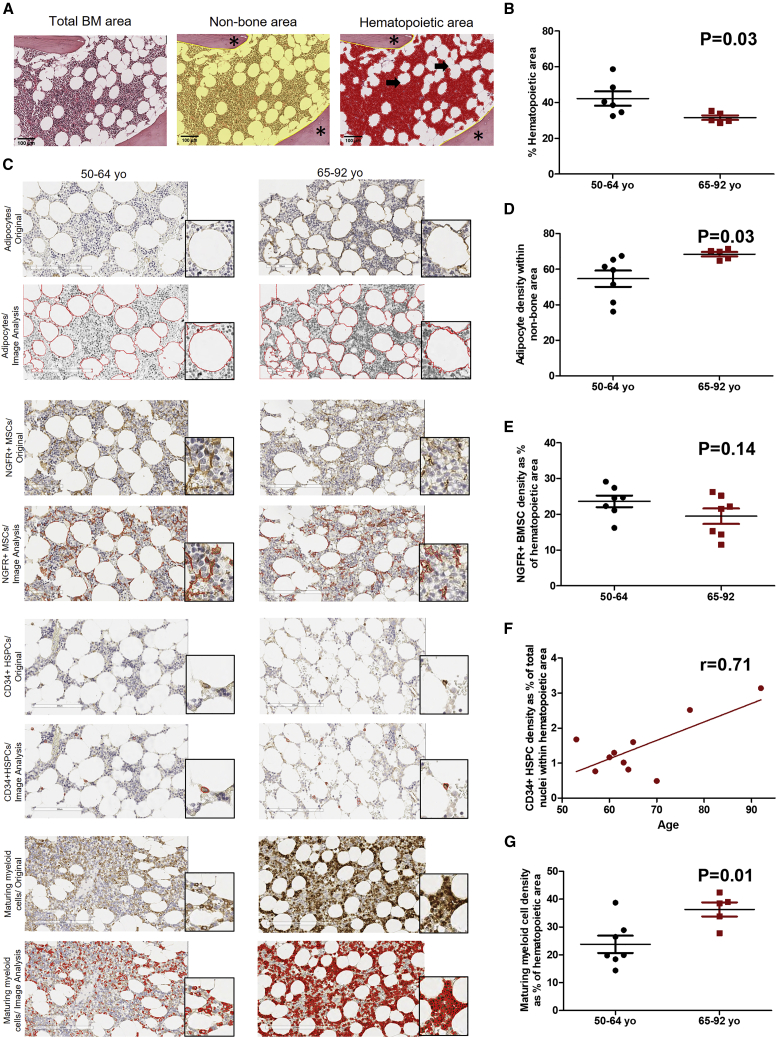
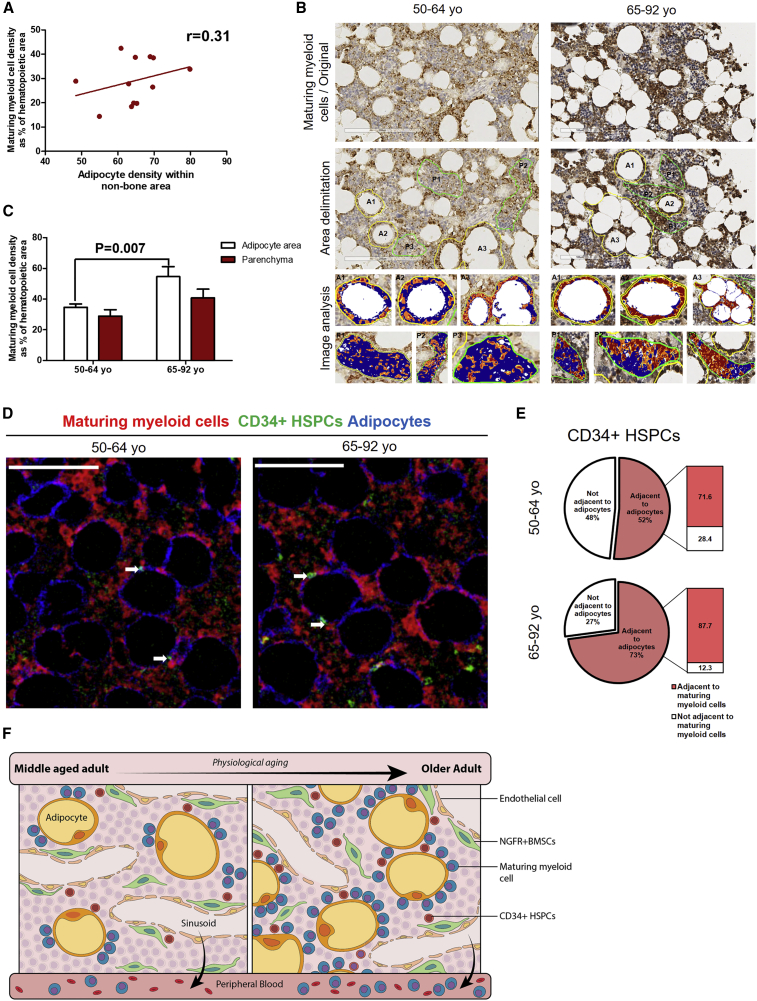
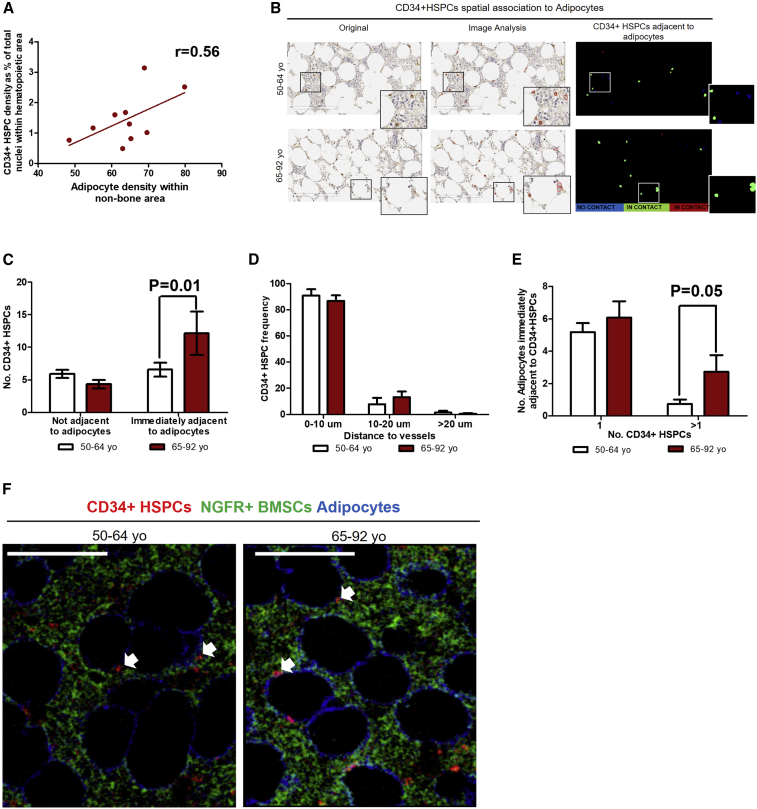
Age-related clonal hematopoiesis is a major risk factor for myeloid malignancy and myeloid skewing is a hallmark of aging. However, while it is known that non-cell-autonomous components of the microenvironment can also influence this risk, there have been few studies of how the spatial architecture of human bone marrow (BM) changes with aging. Here, we show that BM adiposity increases with age, which correlates with increased density of maturing myeloid cells and CD34+ hematopoietic stem/progenitor cells (HSPCs) and an increased proportion of HSPCs adjacent to adipocytes. However, NGFR+ bone marrow stromal cell (NGFR+ BMSC) density and distance to HSPCs and vessels remained stable. Interestingly, we found that, upon aging, maturing myeloid cell density increases in hematopoietic areas surrounding adipocytes. We propose that increased adjacency to adipocytes in the BM microenvironment may influence myeloid skewing of aging HSPCs, contributing to age-related risk of myeloid malignancies.
与年龄相关的克隆性造血是髓系恶性肿瘤的主要危险因素,髓系偏倚是衰老的标志。然而,尽管已知微环境的非细胞自主成分也会影响这种风险,但很少有研究探讨人类骨髓(BM)的空间结构如何随年龄增长而变化。在这里,我们表明,BM 中的脂肪含量随着年龄的增长而增加,这与成熟的髓系细胞和 CD34+造血干细胞/祖细胞(HSPC)密度的增加以及与脂肪细胞相邻的 HSPC 比例的增加相关。然而,NGFR+骨髓基质细胞(NGFR+BMSC)密度以及与 HSPC 和血管的距离保持稳定。有趣的是,我们发现,随着年龄的增长,成熟的髓系细胞密度在围绕脂肪细胞的造血区域增加。我们提出,在 BM 微环境中与脂肪细胞的邻近程度增加可能会影响衰老 HSPC 中髓系的偏倚,从而导致与年龄相关的髓系恶性肿瘤风险增加。