University of Minnesota Medical School, 420 Delaware St SE, Mayo Building B681, Minneapolis, MN, 55455, USA.
National Clinician Scholars Program, Yale School of Medicine, 333 Cedar Street, Sterling Hall of Medicine I-456, New Haven, CT, 06520, USA; VA Connecticut Healthcare System, 950 Campbell Avenue, West Haven, CT, 06516, USA.
Drug Alcohol Depend. 2020 Sep 1;214:108162. doi: 10.1016/j.drugalcdep.2020.108162. Epub 2020 Jul 2.
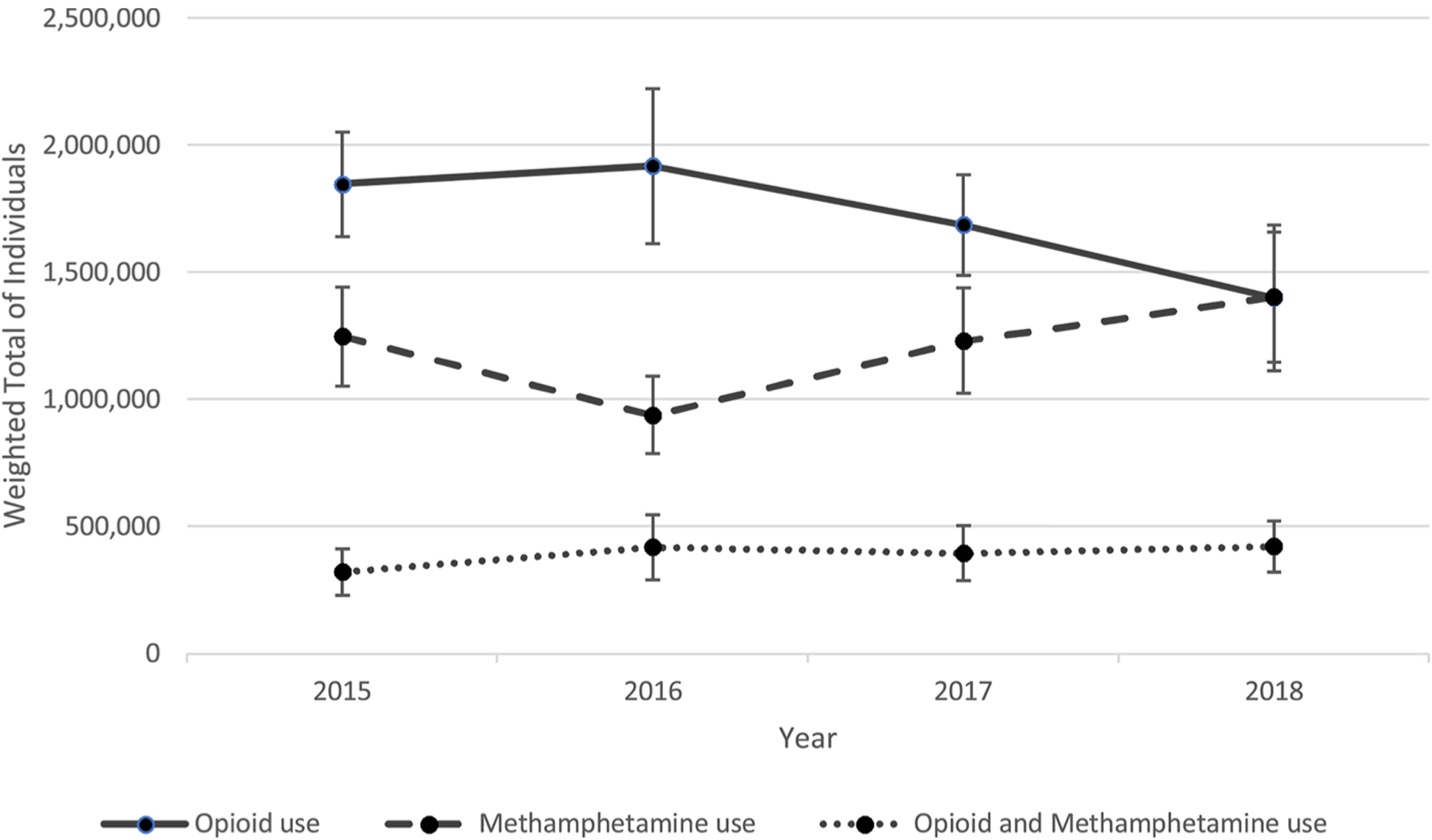
Methamphetamine use, with and without opioids, has increased substantially, but little is known about the sociodemographic characteristics, substance use patterns, or health profiles of individuals who use methamphetamine. To design effective public health interventions, health care professionals and policymakers need data describing individuals who are using methamphetamine in the midst of the opioid crisis.
We used 2015-2018 data from the National Survey on Drug Use and Health and included non-elderly adults aged 18-64 years. We categorized respondents into three groups: use of opioids without methamphetamine use, use of methamphetamine without opioid use, or use of both opioids and methamphetamine. Multiple logistic regression models controlling for sociodemographic factors were used to compare substance use characteristics and measures of individual health between the three groups.
People who used any methamphetamine were more likely to be unstably housed, low-income, and live in rural areas. Use of both opioids and methamphetamine was associated with a 132 % higher prevalence of injection needle use, and a nearly twofold higher prevalence of viral hepatitis compared with opioid use alone. One third of individuals reporting use of both opioids and methamphetamine had a severe mental illness, a 55 % higher prevalence than those using opioids alone.
Individuals who used opioids and methamphetamine had more complex substance use and health profiles than individuals who used opioids alone. These findings suggest public health and harm reduction approaches designed to address opioid use remain important in an era of rising methamphetamine use.
冰毒的使用(包括与阿片类药物共同使用和单独使用)大幅增加,但人们对同时使用冰毒和阿片类药物的个体的社会人口统计学特征、物质使用模式或健康状况知之甚少。为了设计有效的公共卫生干预措施,医疗保健专业人员和政策制定者需要了解在阿片类药物危机中使用冰毒的个人的数据。
我们使用了 2015-2018 年全国毒品使用与健康调查的数据,纳入了年龄在 18-64 岁之间的非老年成年人。我们将受访者分为三组:不使用阿片类药物而使用冰毒、不使用冰毒而使用阿片类药物,或同时使用阿片类药物和冰毒。我们使用控制了社会人口统计学因素的多变量逻辑回归模型,比较了三组之间的物质使用特征和个体健康指标。
使用任何冰毒的人更有可能居住不稳定、收入低、居住在农村地区。同时使用阿片类药物和冰毒与注射针使用的流行率高出 132%有关,与单独使用阿片类药物相比,病毒性肝炎的流行率高出近两倍。报告同时使用阿片类药物和冰毒的人中,有三分之一患有严重精神疾病,比单独使用阿片类药物的人高出 55%。
同时使用阿片类药物和冰毒的个体的物质使用和健康状况比单独使用阿片类药物的个体更为复杂。这些发现表明,在冰毒使用量上升的时代,旨在解决阿片类药物使用问题的公共卫生和减少伤害的方法仍然很重要。