Mondoñedo Jarred R, Bartolák-Suki Elizabeth, Bou Jawde Samer, Nelson Kara, Cao Kun, Sonnenberg Adam, Obrochta Walter Patrick, Imsirovic Jasmin, Ram-Mohan Sumati, Krishnan Ramaswamy, Suki Béla
Department of Biomedical Engineering, College of Engineering, Boston University, Boston, MA, United States.
Boston University School of Medicine, Boston, MA, United States.
Front Physiol. 2020 Jun 5;11:566. doi: 10.3389/fphys.2020.00566. eCollection 2020.
Precision-cut lung slices (PCLSs) are a valuable tool in studying tissue responses to an acute exposure; however, cyclic stretching may be necessary to recapitulate physiologic, tidal breathing conditions.
To develop a multi-well stretcher and characterize the PCLS response following acute exposure to cigarette smoke extract (CSE).
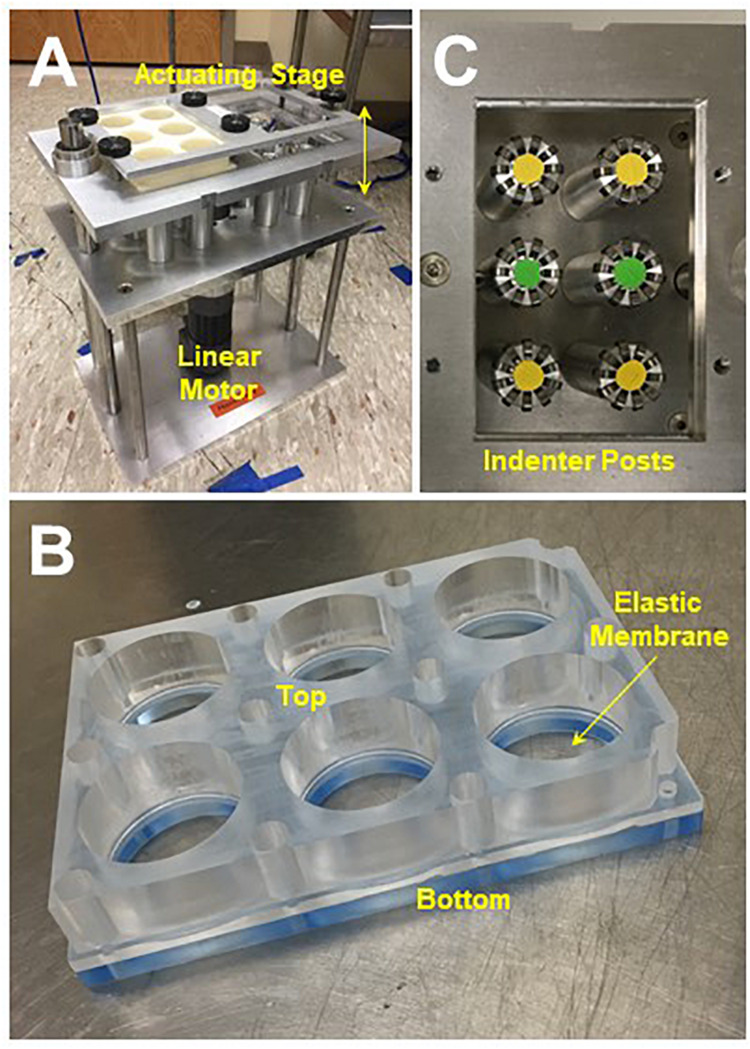
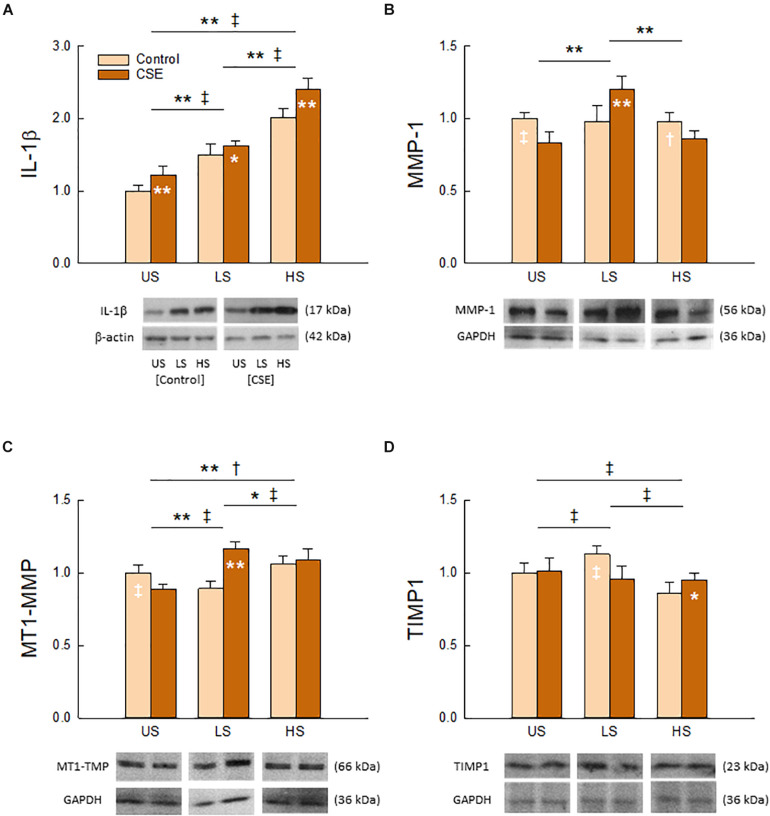
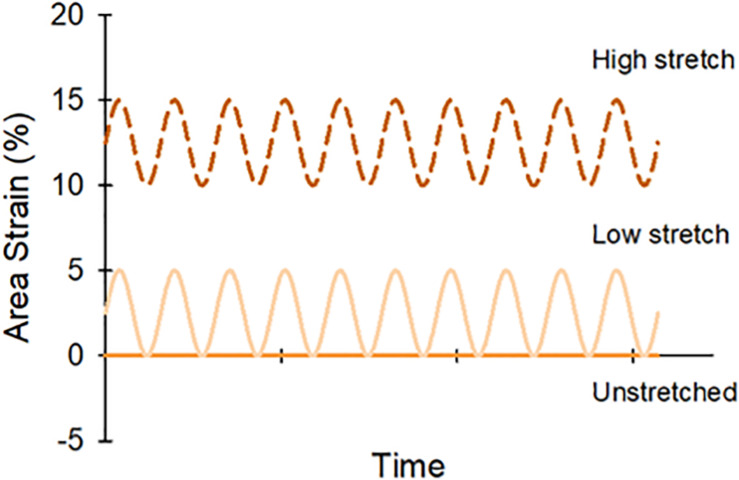
A 12-well stretching device was designed, built, and calibrated. PCLS were obtained from male Sprague-Dawley rats ( = 10) and assigned to one of three groups: 0% (unstretched), 5% peak-to-peak amplitude (low-stretch), and 5% peak-to-peak amplitude superimposed on 10% static stretch (high-stretch). Lung slices were cyclically stretched for 12 h with or without CSE in the media. Levels of Interleukin-1β (IL-1β), matrix metalloproteinase (MMP)-1 and its tissue inhibitor (TIMP1), and membrane type-MMP (MT1-MMP) were assessed via western blot from tissue homogenate.
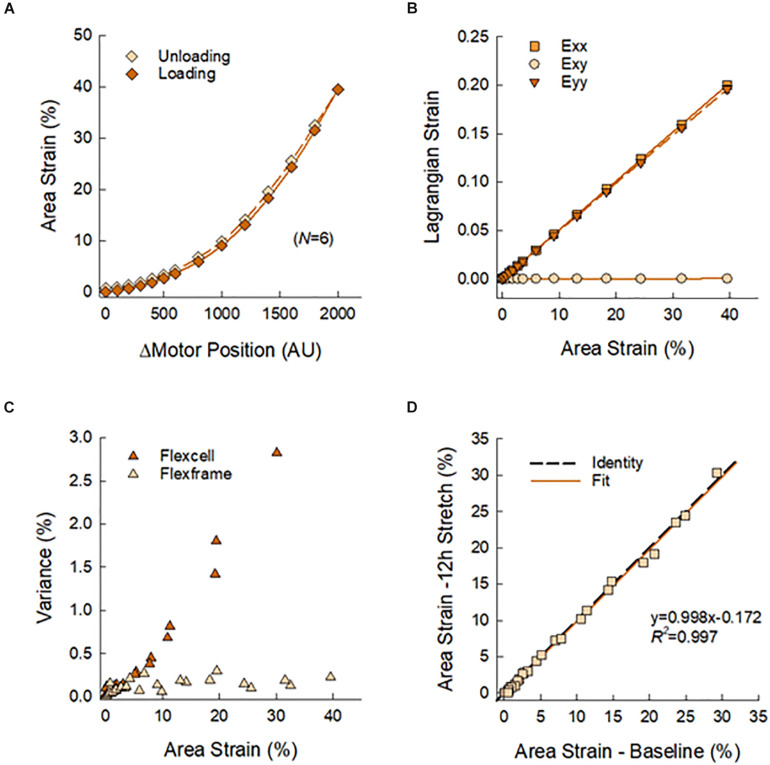
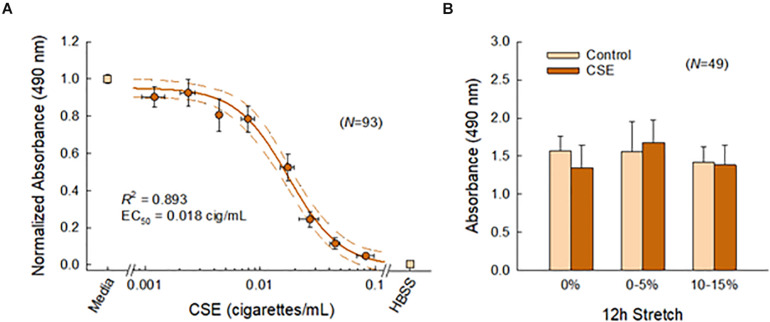
The stretcher system produced nearly identical normal Lagrangian strains ( and , > 0.999) with negligible shear strain ( < 0.0005) and low intra-well variability 0.127 ± 0.073%. CSE dose response curve was well characterized by a four-parameter logistic model ( = 0.893), yielding an IC value of 0.018 cig/mL. Cyclic stretching for 12 h did not decrease PCLS viability. Two-way ANOVA detected a significant interaction between CSE and stretch pattern for IL-1β ( = 0.017), MMP-1, TIMP1, and MT1-MMP ( < 0.001).
This platform is capable of high-throughput testing of an acute exposure under tightly-regulated, cyclic stretching conditions. We conclude that the acute mechano-inflammatory response to CSE exhibits complex, stretch-dependence in the PCLS.
精密切割肺切片(PCLS)是研究组织对急性暴露反应的重要工具;然而,可能需要进行周期性拉伸以模拟生理性潮式呼吸条件。
开发一种多孔拉伸器,并表征急性暴露于香烟烟雾提取物(CSE)后PCLS的反应。
设计、制造并校准了一种12孔拉伸装置。从雄性Sprague-Dawley大鼠(n = 10)获取PCLS,并将其分为三组之一:0%(未拉伸)、5%峰-峰值振幅(低拉伸)和5%峰-峰值振幅叠加10%静态拉伸(高拉伸)。肺切片在有或无CSE的培养基中进行12小时的周期性拉伸。通过蛋白质印迹法从组织匀浆中评估白细胞介素-1β(IL-1β)、基质金属蛋白酶(MMP)-1及其组织抑制剂(TIMP1)以及膜型MMP(MT1-MMP)的水平。
拉伸器系统产生了几乎相同的正常拉格朗日应变(R² 和 R²,> 0.999),剪切应变可忽略不计(< 0.0005),且孔内变异性低(0.127 ± 0.073%)。CSE剂量反应曲线通过四参数逻辑模型得到很好的表征(R² = 0.893),IC值为0.018支香烟/毫升。12小时的周期性拉伸并未降低PCLS的活力。双向方差分析检测到CSE与IL-1β(P = 0.017)、MMP-1、TIMP1和MT1-MMP(P < 0.001)的拉伸模式之间存在显著相互作用。
该平台能够在严格调控的周期性拉伸条件下对急性暴露进行高通量测试。我们得出结论,PCLS中对CSE的急性机械炎症反应表现出复杂的拉伸依赖性。