Department of Biochemistry, University of Pennsylvania School of Dental Medicine, Philadelphia, PA, United States.
Department of Pathology, University of Pennsylvania School of Dental Medicine, Philadelphia, PA, United States.
Front Immunol. 2020 Jun 16;11:1262. doi: 10.3389/fimmu.2020.01262. eCollection 2020.
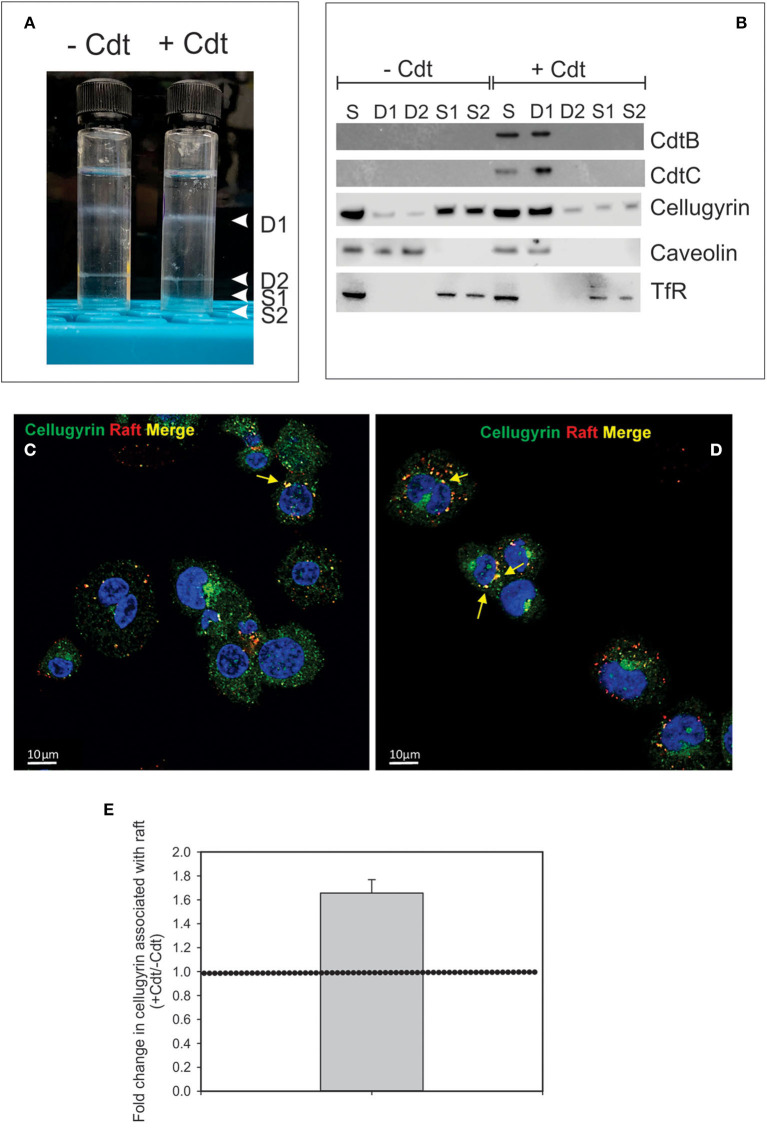
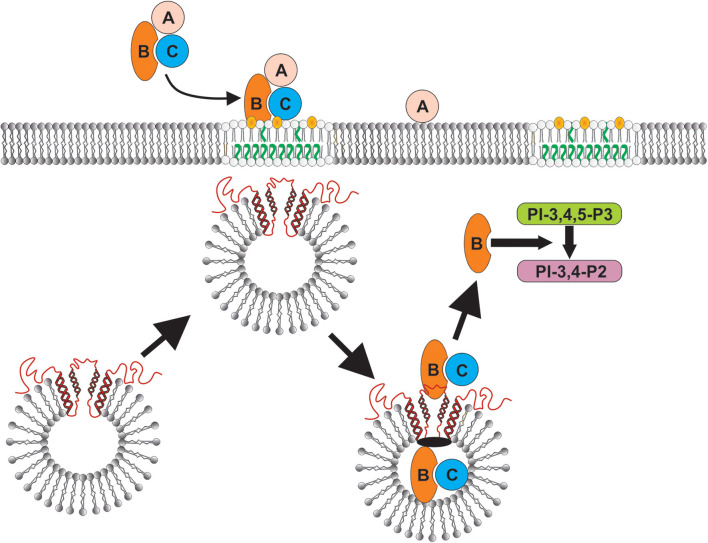
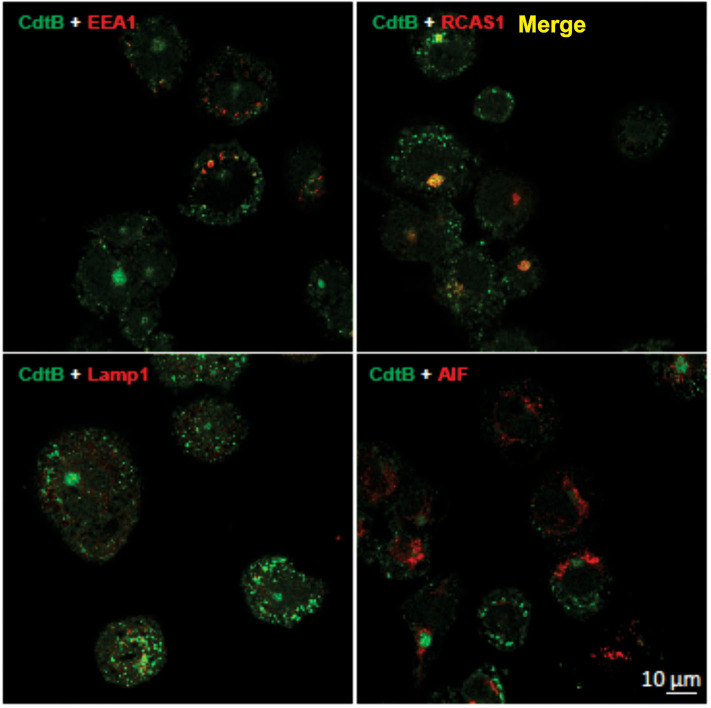
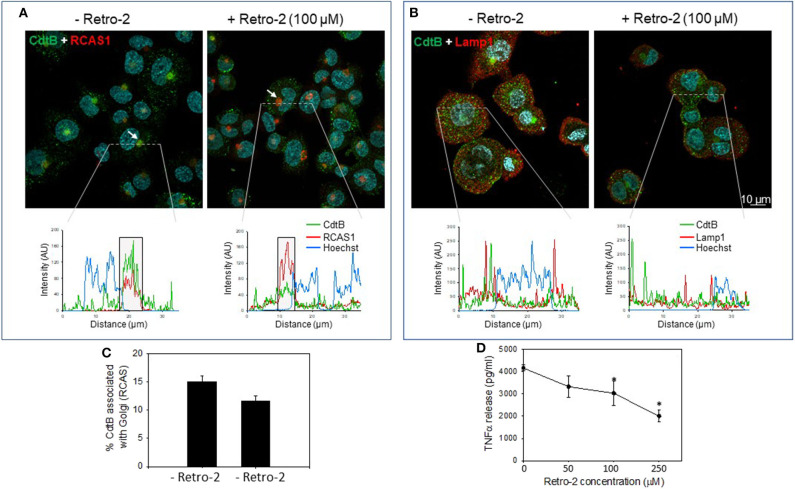
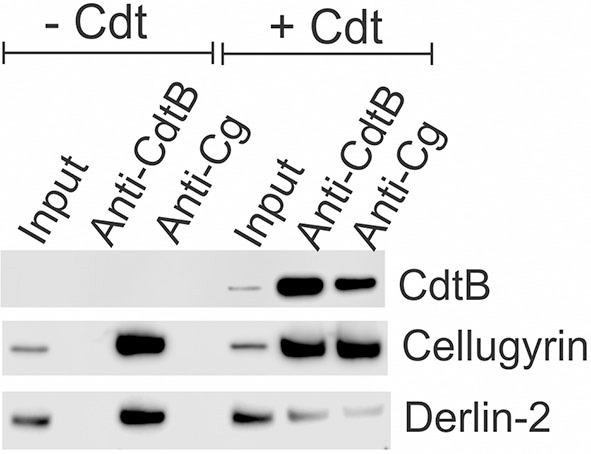
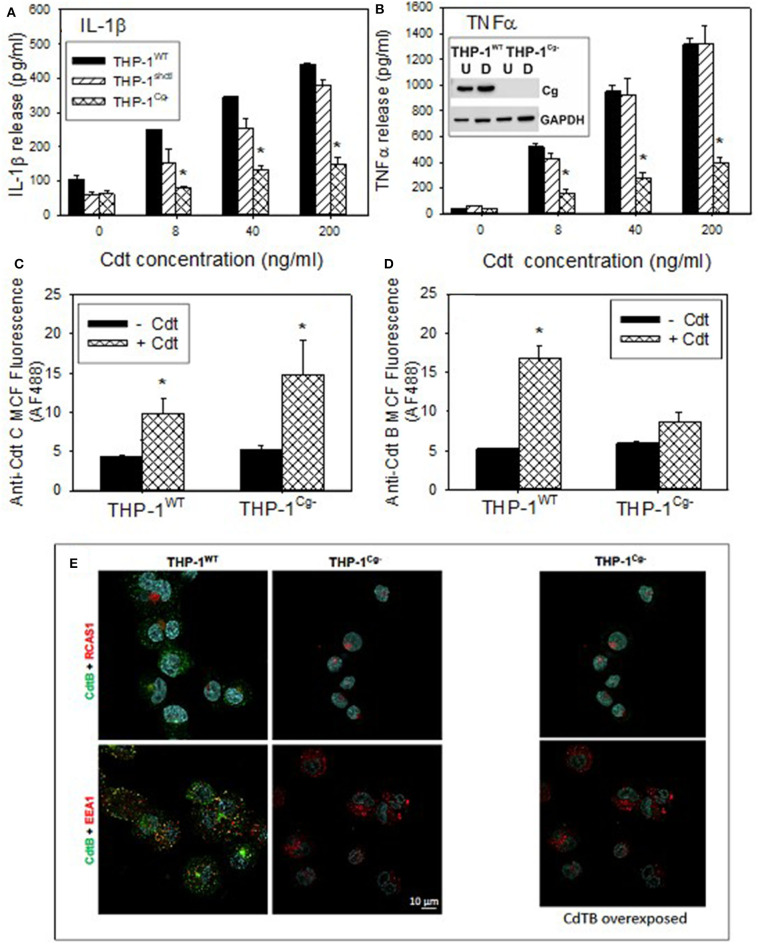
The cytolethal distending toxin (Cdt) is a heterotrimeric AB toxin capable of inducing cell cycle arrest and apoptosis in lymphocytes and other cell types. Recently, we have demonstrated that human macrophages are resistant to Cdt-induced apoptosis but are susceptible to toxin-induced pro-inflammatory cytokine response involving activation of the NLRP3 inflammasome. Exposure to Cdt results in binding to the cell surface followed by internalization and translocation of the active subunit, CdtB, to intracellular compartments. Internalization involves hijacking of retrograde pathways; treatment of cells with Retro-2 leads to a decrease in CdtB-Golgi association. These events are dependent upon toxin binding to cholesterol in the context of lipid rich membrane microdomains often referred to as lipid rafts. We now demonstrate that within 1 h of exposure of macrophages to Cdt, CdtB is internalized and found primarily within lipid rafts; concurrently, cellugyrin (synaptogyrin-2) also translocates into lipid rafts. Further analysis by immunoprecipitation indicates that CdtB associates with complexes containing both cellugyrin and Derlin-2. Moreover, a human macrophage cell line deficient in cellugyrin expression (THP-1) challenged with Cdt failed to internalize CdtB and was resistant to the Cdt-induced pro-inflammatory response. We propose that lipid rafts along with cellugyrin play a critical role in the internalization and translocation of CdtB to critical intracellular target sites in human macrophages. These studies provide the first evidence that cellugyrin is expressed in human macrophages and plays a critical role in Cdt toxicity of these cells.
细胞致死膨胀毒素(Cdt)是一种异源三聚体 AB 毒素,能够诱导淋巴细胞和其他细胞类型的细胞周期停滞和细胞凋亡。最近,我们已经证明,人巨噬细胞对 Cdt 诱导的细胞凋亡具有抗性,但对毒素诱导的涉及 NLRP3 炎性体激活的促炎细胞因子反应敏感。Cdt 的暴露导致与细胞表面结合,随后将活性亚基 CdtB 内化和易位到细胞内隔室。内化涉及逆行途径的劫持;用 Retro-2 处理细胞会导致 CdtB-高尔基体的关联减少。这些事件取决于毒素在富含脂质的膜微区(通常称为脂筏)中与胆固醇结合。我们现在证明,在巨噬细胞暴露于 Cdt 的 1 小时内,CdtB 被内化并且主要存在于脂筏内;同时,细胞糖蛋白(突触糖蛋白-2)也易位到脂筏中。通过免疫沉淀的进一步分析表明,CdtB 与包含细胞糖蛋白和 Derlin-2 的复合物结合。此外,用 Cdt 挑战缺乏细胞糖蛋白表达的人巨噬细胞系(THP-1)未能内化 CdtB 并且对 Cdt 诱导的促炎反应具有抗性。我们提出,脂筏和细胞糖蛋白一起在 CdtB 内化和易位到人巨噬细胞中的关键细胞内靶位中发挥关键作用。这些研究首次证明细胞糖蛋白在人巨噬细胞中表达,并在这些细胞的 Cdt 毒性中发挥关键作用。