Laboratory for Control and Monitoring of the Antibiotic Resistance, National Centre for Infectious and Parasitic Diseases, 26 Yanko Sakazov Blvd, 1504 Sofia, Bulgaria.
Nadezhda Paradise Medical Center, 1330 Sofia, Bulgaria.
Int J Mol Sci. 2023 Mar 22;24(6):5978. doi: 10.3390/ijms24065978.
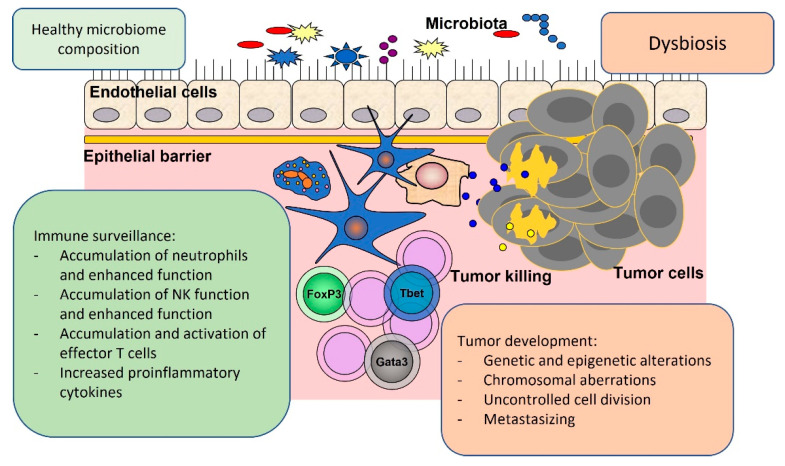
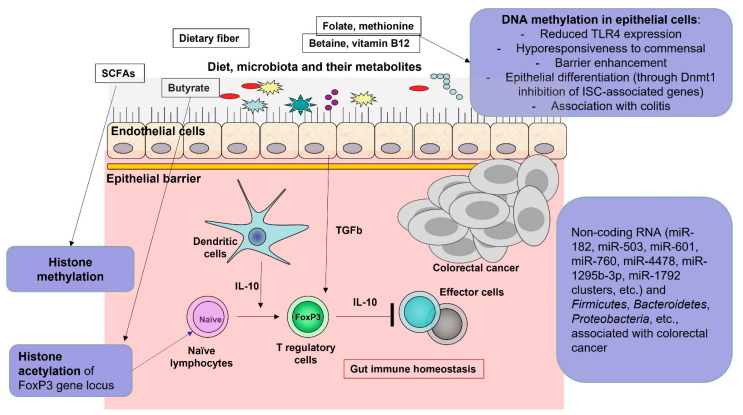
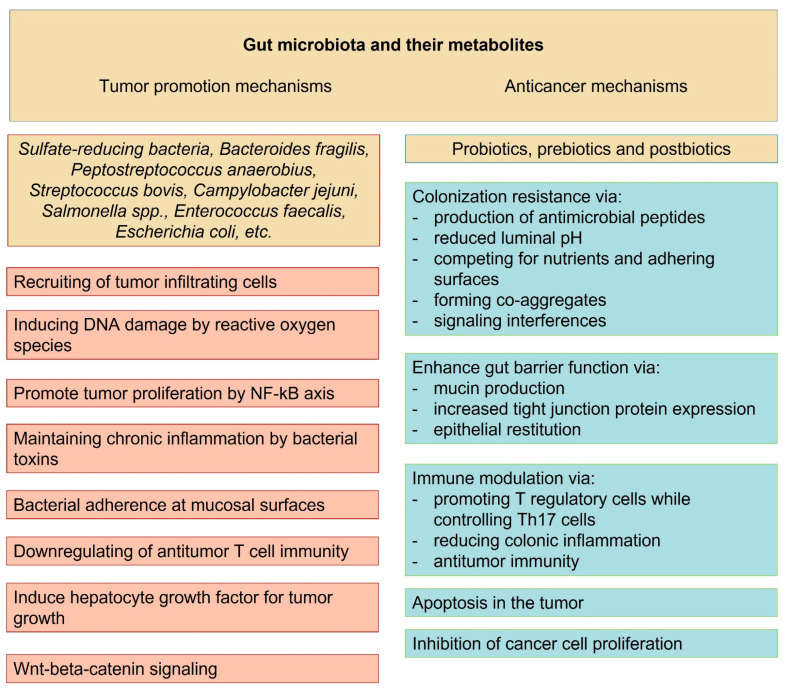
The genetic and metabolomic abundance of the microbiome exemplifies that the microbiome comprises a more extensive set of genes than the entire human genome, which justifies the numerous metabolic and immunological interactions between the gut microbiota, macroorganisms and immune processes. These interactions have local and systemic impacts that can influence the pathological process of carcinogenesis. The latter can be promoted, enhanced or inhibited by the interactions between the microbiota and the host. This review aimed to present evidence that interactions between the host and the gut microbiota might be a significant exogenic factor for cancer predisposition. It is beyond doubt that the cross-talk between microbiota and the host cells in terms of epigenetic modifications can regulate gene expression patterns and influence cell fate in both beneficial and adverse directions for the host's health. Furthermore, bacterial metabolites could shift pro- and anti-tumor processes in one direction or another. However, the exact mechanisms behind these interactions are elusive and require large-scale omics studies to better understand and possibly discover new therapeutic approaches for cancer.
微生物组的遗传和代谢组学丰度表明,微生物组包含的基因比整个人类基因组还要多,这也解释了肠道微生物群、宏观生物和免疫过程之间存在大量的代谢和免疫相互作用。这些相互作用具有局部和全身的影响,可能会影响致癌发生的病理过程。后者可以通过微生物群与宿主之间的相互作用来促进、增强或抑制。本综述旨在提出证据,证明宿主与肠道微生物群之间的相互作用可能是癌症易感性的一个重要外源因素。毫无疑问,微生物群与宿主细胞之间在表观遗传修饰方面的相互作用可以调节基因表达模式,并影响宿主健康的有益和不利方向的细胞命运。此外,细菌代谢物可以使促癌和抑癌过程朝一个方向或另一个方向转变。然而,这些相互作用背后的确切机制尚不清楚,需要进行大规模的组学研究,以更好地理解并可能发现癌症的新治疗方法。