Institute of Experimental Medicine of the Czech Academy of Sciences, Vídenska 1083, 14220 Prague 4, Czech Republic.
Faculty of Natural Science, Charles University, Vinicna 7, 12843 Prague 2, Czech Republic.
Oxid Med Cell Longev. 2020 Jun 21;2020:7435260. doi: 10.1155/2020/7435260. eCollection 2020.
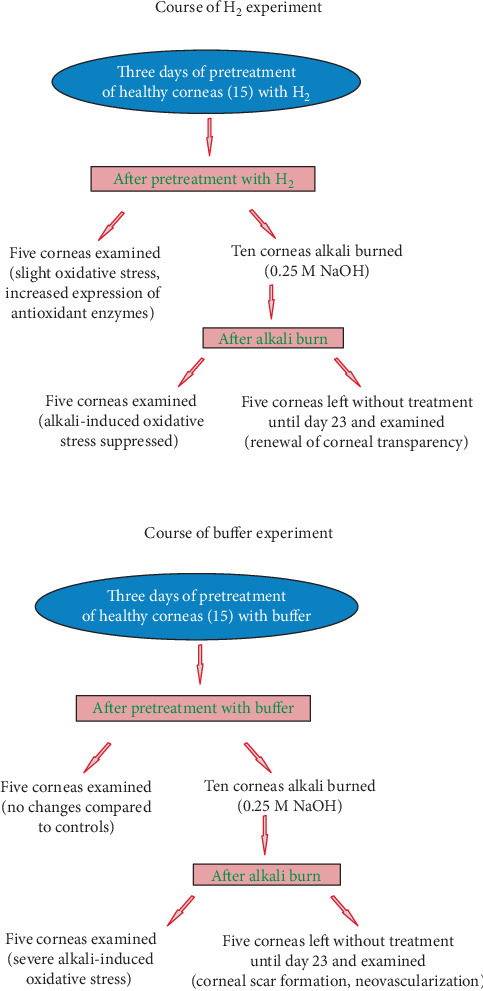
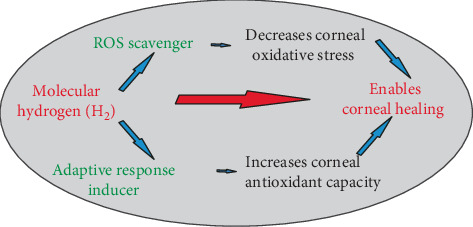
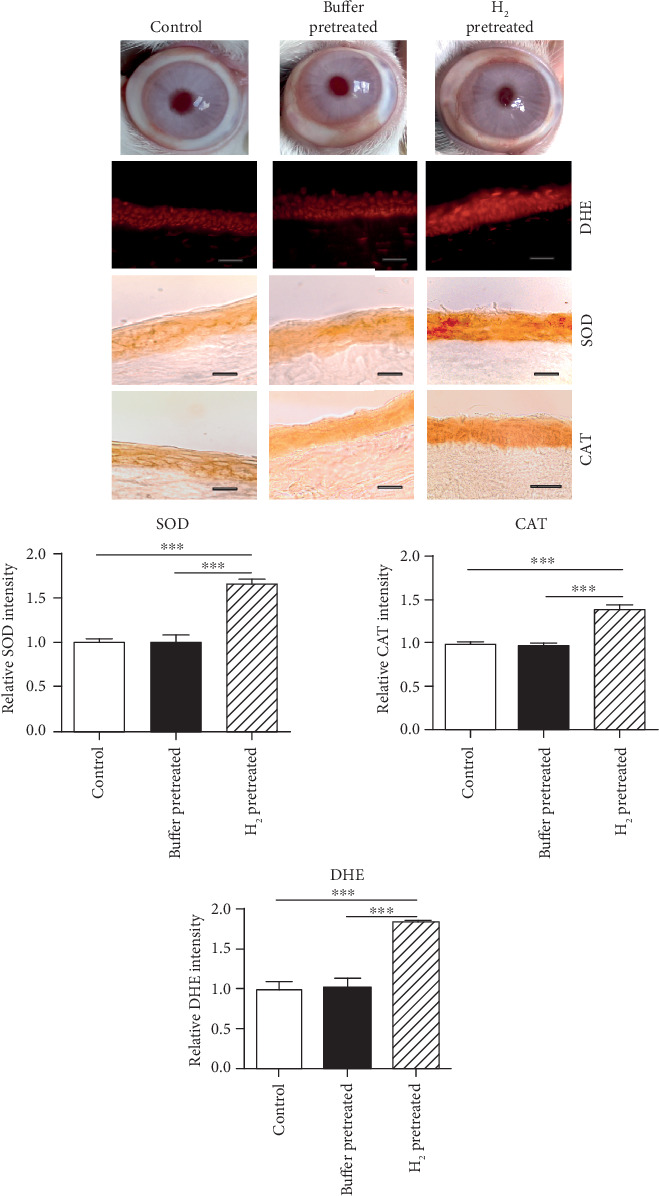
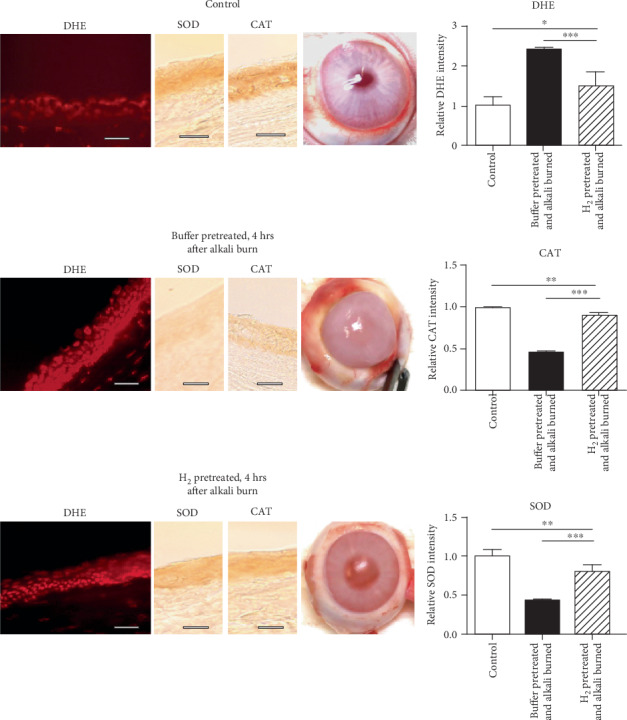
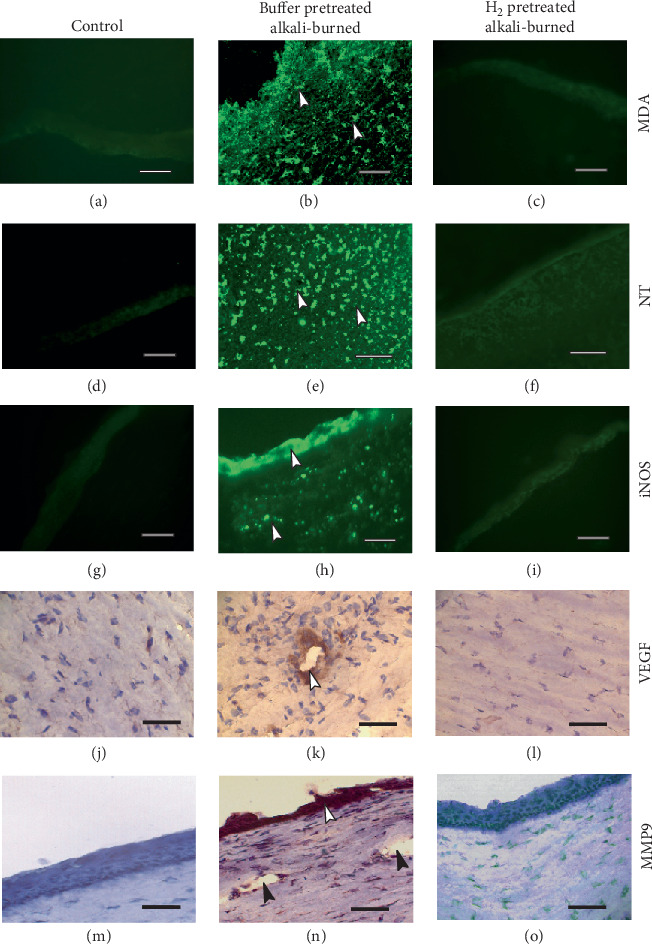
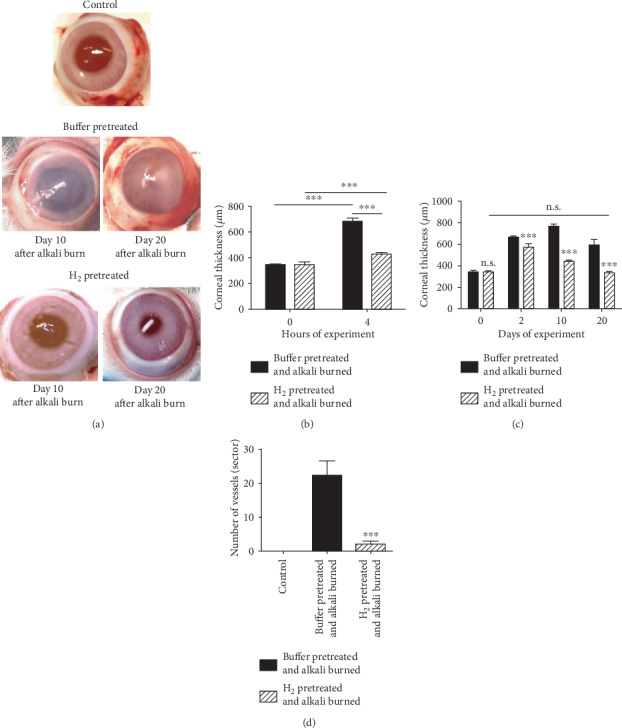
Corneal alkali burns are potentially blinding injuries. Alkali induces oxidative stress in corneas followed by excessive corneal inflammation, neovascularization, and untransparent scar formation. Molecular hydrogen (H), a potent reactive oxygen species (ROS) scavenger, suppresses oxidative stress and enables corneal healing when applied on the corneal surface. The purpose of this study was to examine whether the H pretreatment of healthy corneas evokes a protective effect against corneal alkali-induced oxidative stress. Rabbit eyes were pretreated with a H solution or buffer solution, by drops onto the ocular surface, and the corneas were then burned with 0.25 M NaOH. The results obtained with immunohistochemistry and pachymetry showed that in the corneas of H-pretreated eyes, slight oxidative stress appeared followed by an increased expression of antioxidant enzymes. When these corneas were postburned with alkali, the alkali-induced oxidative stress was suppressed. This was in contrast to postburned buffer-pretreated corneas, where the oxidative stress was strong. These corneas healed with scar formation and neovascularization, whereas corneas of H-pretreated eyes healed with restoration of transparency in the majority of cases. Corneal neovascularization was strongly suppressed. Our results suggest that the corneal alkali-induced oxidative stress was reduced via the increased antioxidant capacity of corneal cells against reactive oxygen species (ROS). It is further suggested that the ability of H to induce the increase in antioxidant cell capacity is important for eye protection against various diseases or external influences associated with ROS production.
角膜碱烧伤是潜在的致盲性损伤。碱会引起角膜的氧化应激,随后导致过度的角膜炎症、新生血管形成和不透明瘢痕形成。氢气(H)是一种有效的活性氧(ROS)清除剂,当应用于角膜表面时,可抑制氧化应激并促进角膜愈合。本研究旨在探讨健康角膜的 H 预处理是否会对角膜碱诱导的氧化应激产生保护作用。通过滴注将 H 溶液或缓冲液滴入兔眼表面,对兔眼进行预处理,然后用 0.25M NaOH 烧伤角膜。免疫组化和角膜测厚术的结果表明,在 H 预处理眼的角膜中,轻微的氧化应激出现后,抗氧化酶的表达增加。当这些角膜被碱烧伤后,碱诱导的氧化应激被抑制。这与被碱烧伤的缓冲液预处理的角膜形成鲜明对比,后者的氧化应激很强。这些角膜形成瘢痕和新生血管化,而 H 预处理眼的角膜则在大多数情况下恢复透明。角膜新生血管化得到了强烈抑制。我们的研究结果表明,角膜细胞的抗氧化能力增强,从而降低了角膜碱诱导的氧化应激。进一步表明,H 诱导抗氧化细胞能力增加的能力对于保护眼睛免受与 ROS 产生相关的各种疾病或外部影响非常重要。