Malanchini Margherita, Rimfeld Kaili, Shakeshaft Nicholas G, McMillan Andrew, Schofield Kerry L, Rodic Maja, Rossi Valerio, Kovas Yulia, Dale Philip S, Tucker-Drob Elliot M, Plomin Robert
Department of Biological and Experimental Psychology, Queen Mary university of London, London, UK.
Social, Genetic and Developmental Psychiatry Centre, Institute of Psychiatry, Psychology and Neuroscience, King's College London, London, UK.
NPJ Sci Learn. 2020 Jul 2;5:9. doi: 10.1038/s41539-020-0067-8. eCollection 2020.
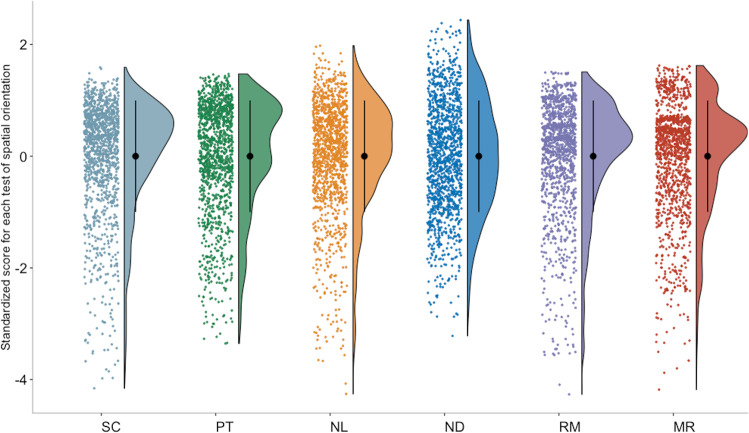
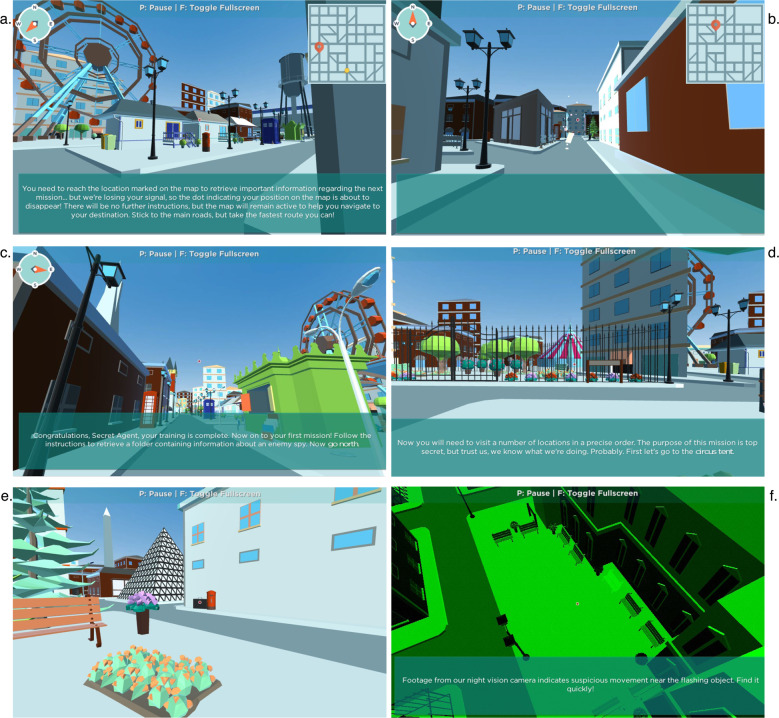
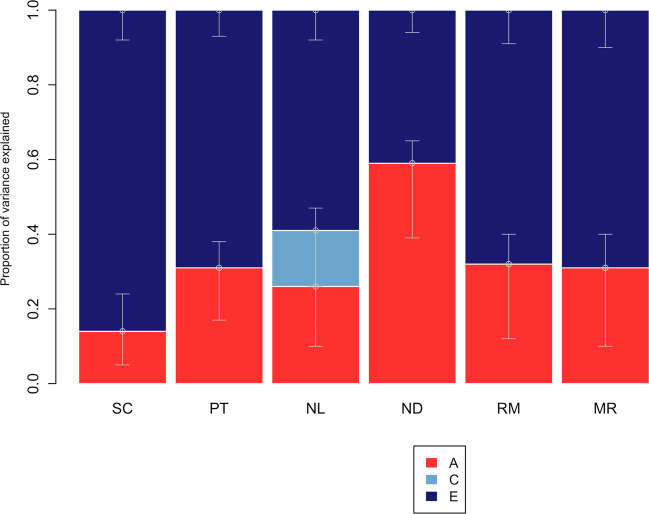
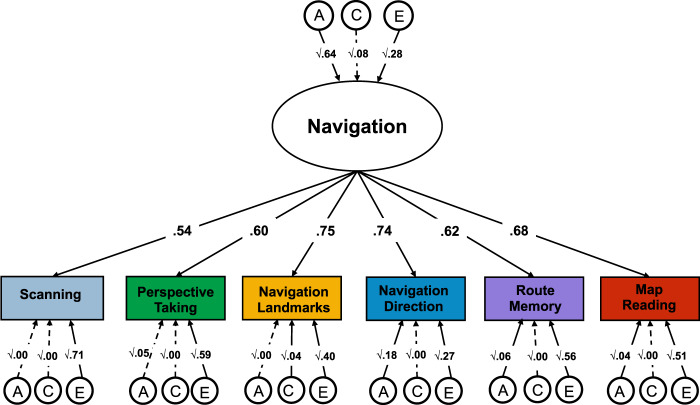
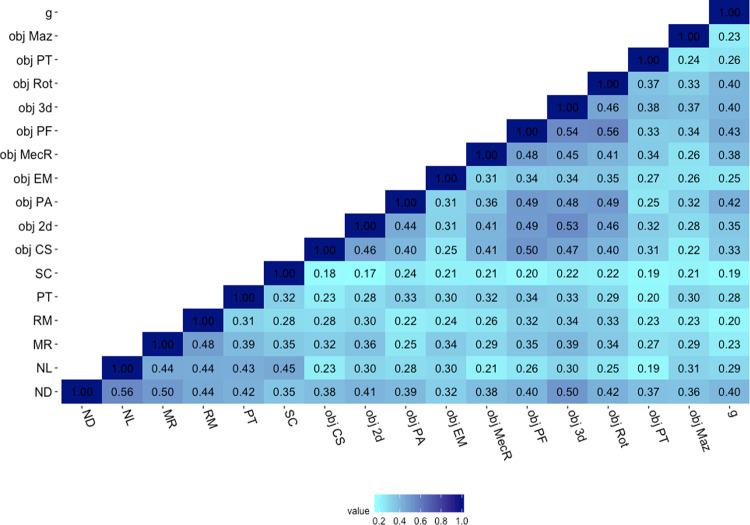
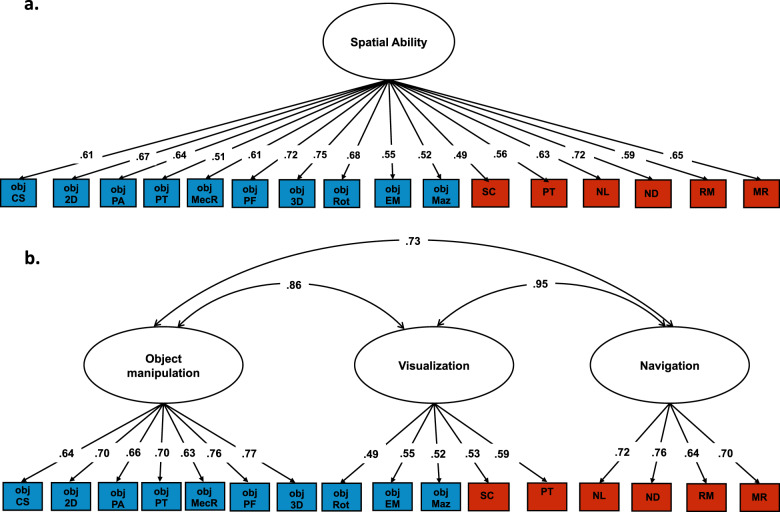
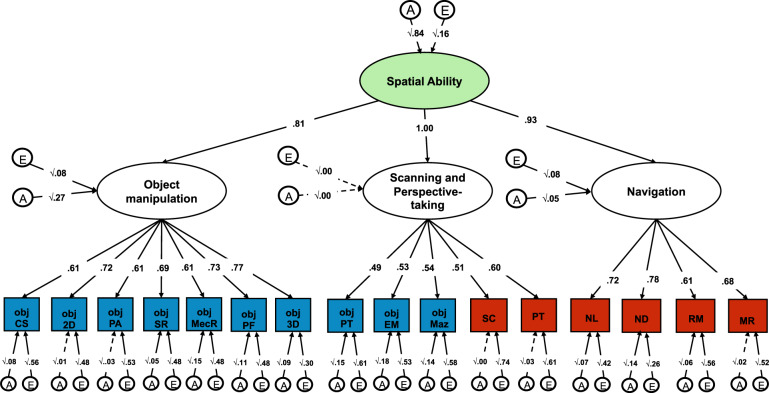
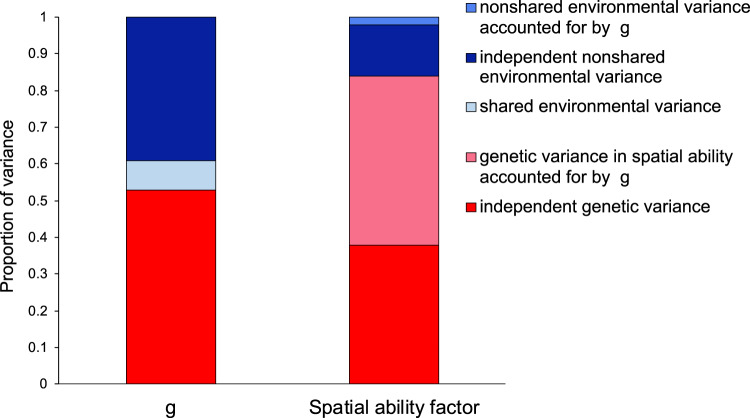
Performance in everyday spatial orientation tasks (e.g., map reading and navigation) has been considered functionally separate from performance on more abstract object-based spatial abilities (e.g., mental rotation and visualization). However, few studies have examined the link between spatial orientation and object-based spatial skills, and even fewer have done so including a wide range of spatial tests. To examine this issue and more generally to test the structure of spatial ability, we used a novel gamified battery to assess six tests of spatial orientation in a virtual environment and examined their association with ten object-based spatial tests, as well as their links to general cognitive ability (). We further estimated the role of genetic and environmental factors in underlying variation and covariation in these spatial tests. Participants ( = 2660; aged 19-22) were part of the Twins Early Development Study. The six tests of spatial orientation clustered into a single ' factor that was 64% heritable. Examining the structure of spatial ability across all 16 tests, three, substantially correlated, factors emerged: , , and . These, in turn, loaded strongly onto a general factor of , which was highly heritable (84%). A large portion (45%) of this high heritability was independent of . The results point towards the existence of a common genetic network that supports all spatial abilities.
日常空间定向任务(如地图阅读和导航)中的表现被认为在功能上与更抽象的基于物体的空间能力(如心理旋转和视觉化)的表现是分开的。然而,很少有研究考察空间定向与基于物体的空间技能之间的联系,更少的研究在纳入广泛的空间测试的情况下进行这样的考察。为了研究这个问题,更广泛地测试空间能力的结构,我们使用了一种新颖的游戏化测试组合,在虚拟环境中评估六项空间定向测试,并考察它们与十项基于物体的空间测试的关联,以及它们与一般认知能力的联系()。我们进一步估计了遗传和环境因素在这些空间测试的潜在变异和协变中的作用。参与者(n = 2660;年龄在19 - 22岁之间)是双胞胎早期发展研究的一部分。六项空间定向测试聚为一个单一的“因素”,该因素的遗传度为64%。考察所有16项测试的空间能力结构,出现了三个高度相关的因素: 、 和 。反过来,这些因素又强烈地加载到一个一般的 因素上,该因素的遗传度很高(84%)。这种高遗传度的很大一部分(45%)独立于 。结果表明存在一个支持所有空间能力的共同遗传网络。