Department of Microbiology, Immunology and Infectious Diseases, University of Calgary Health Sciences Centre, Calgary, Alberta, Canada.
Department of Veterinary Medicine, University of Calgary, Calgary, Alberta, Canada.
Cell Mol Gastroenterol Hepatol. 2021;11(1):77-98. doi: 10.1016/j.jcmgh.2020.07.003. Epub 2020 Jul 10.
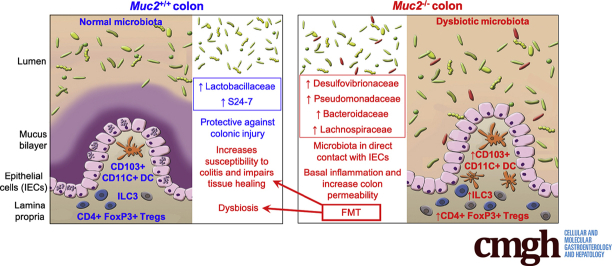
BACKGROUND & AIMS: Alterations in intestinal MUC2 mucin and microbial diversity are closely linked with important intestinal pathologies; however, their impact on each other and on intestinal pathogenesis has been vaguely characterized. Therefore, it was of interest in this study to delineate distinct and cooperative function of commensal microbiota and the Muc2 mucus barrier in maintaining intestinal epithelial barrier function.
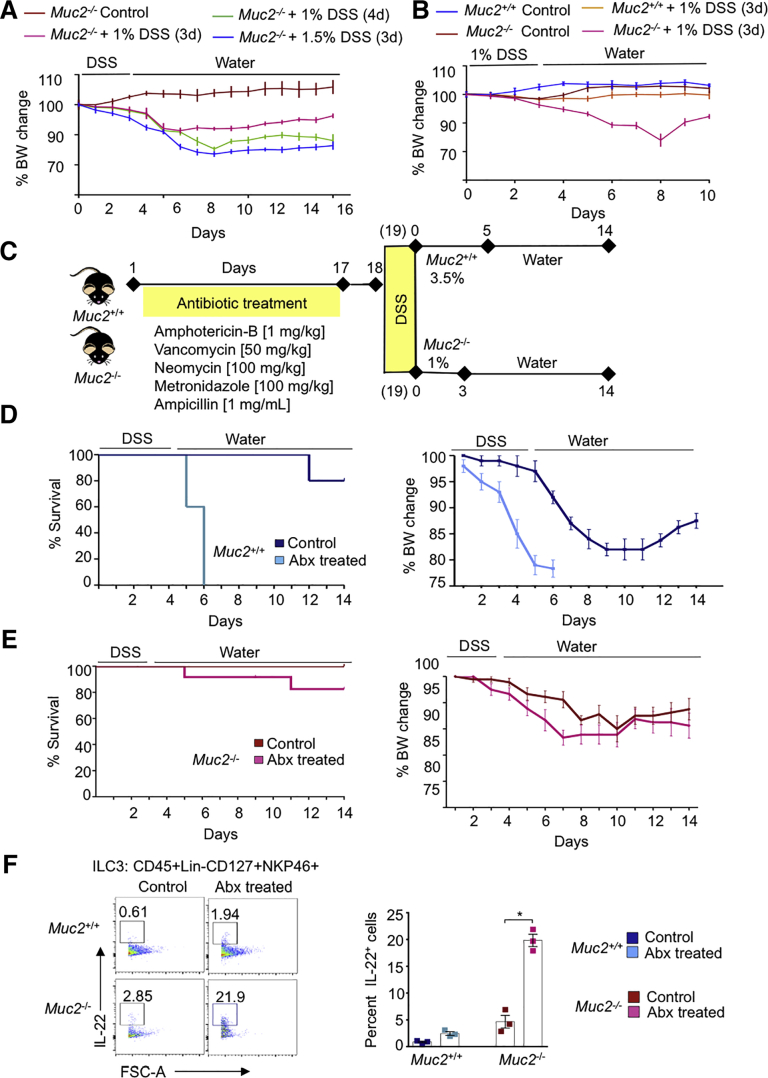
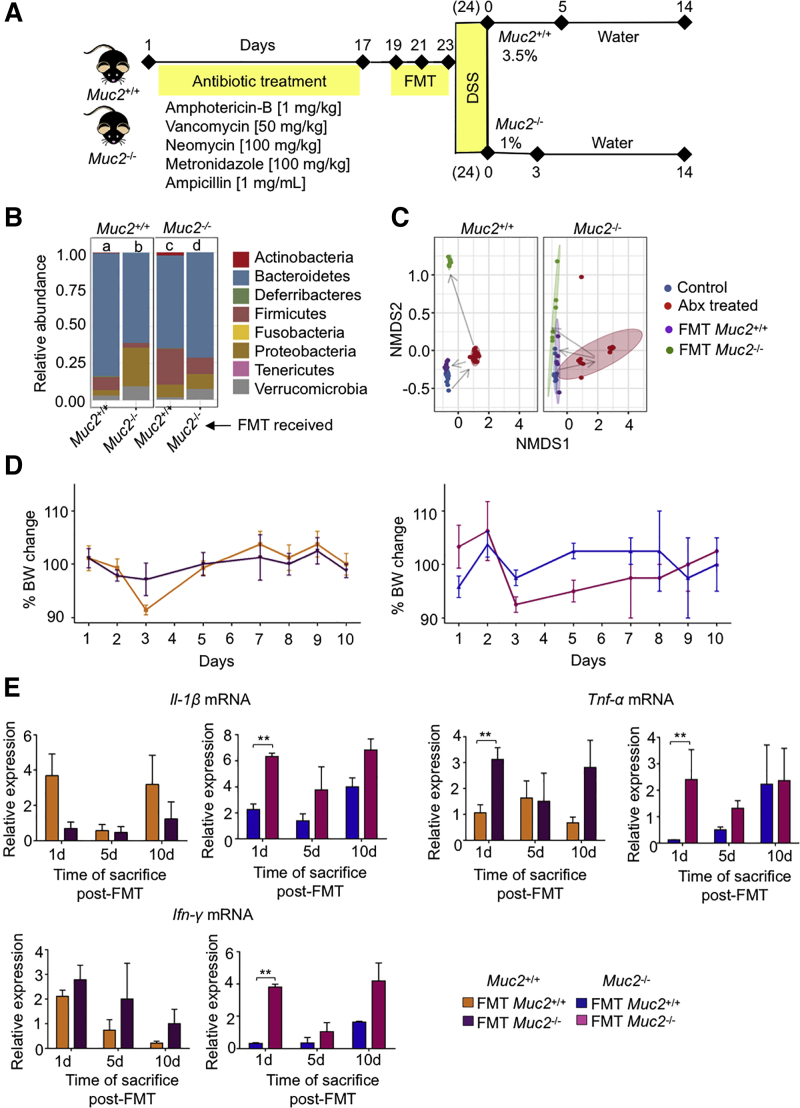
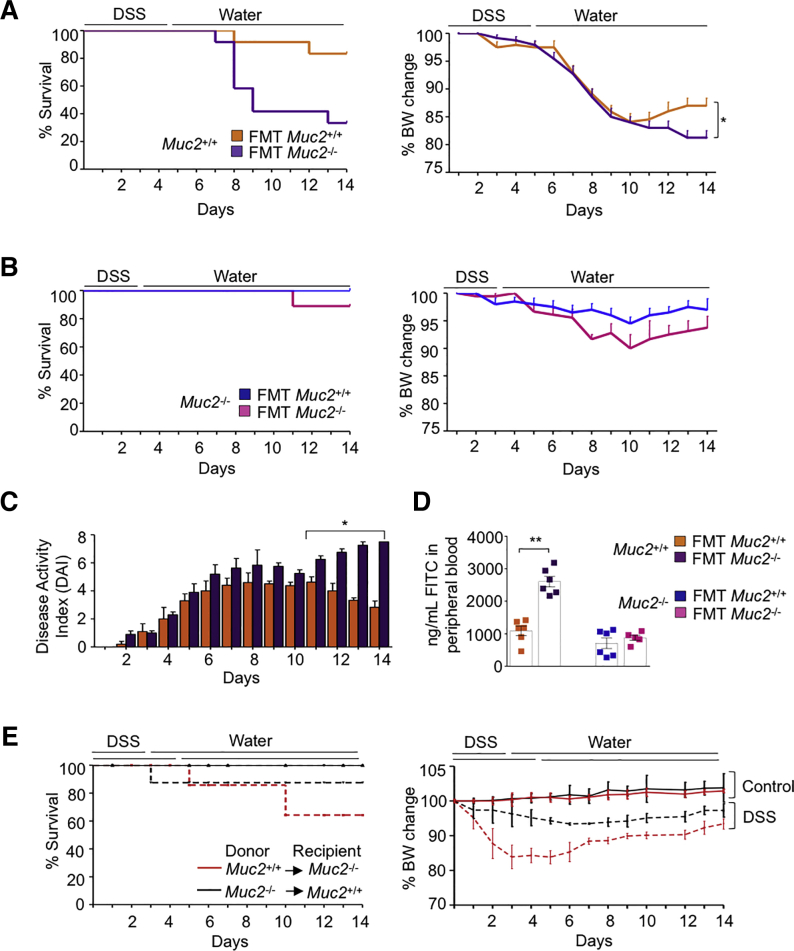
Muc2 mucin deficient (Muc2) and sufficient (Muc2) littermates were used as a model for assessing the role of Muc2. To quantify the role of the microbiota in disease pathogenesis, Muc2 and Muc2 littermates were treated with a cocktail of antibiotics that reduced indigenous bacteria, and then fecal transplanted with littermate stool and susceptibility to dextran sulphate sodium (DSS) quantified.
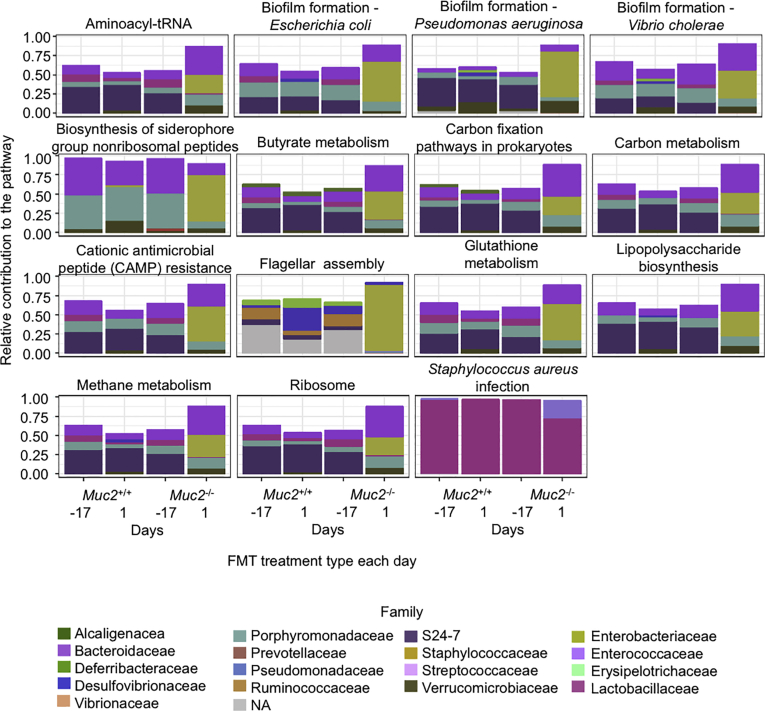
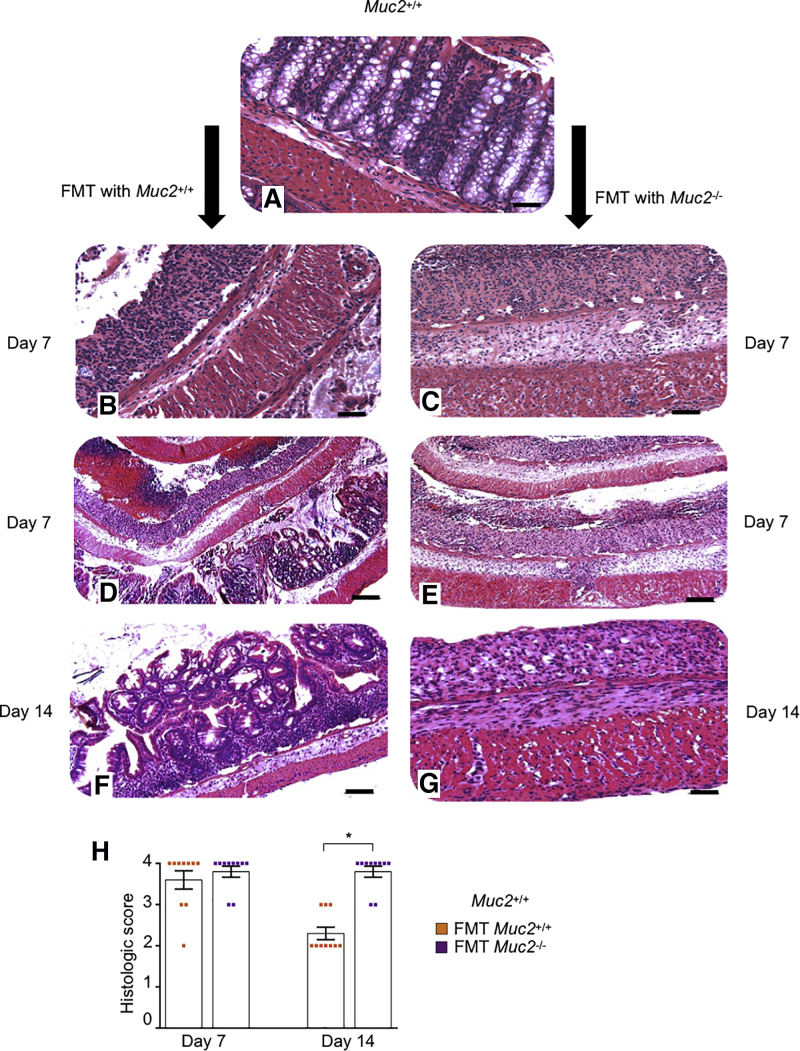
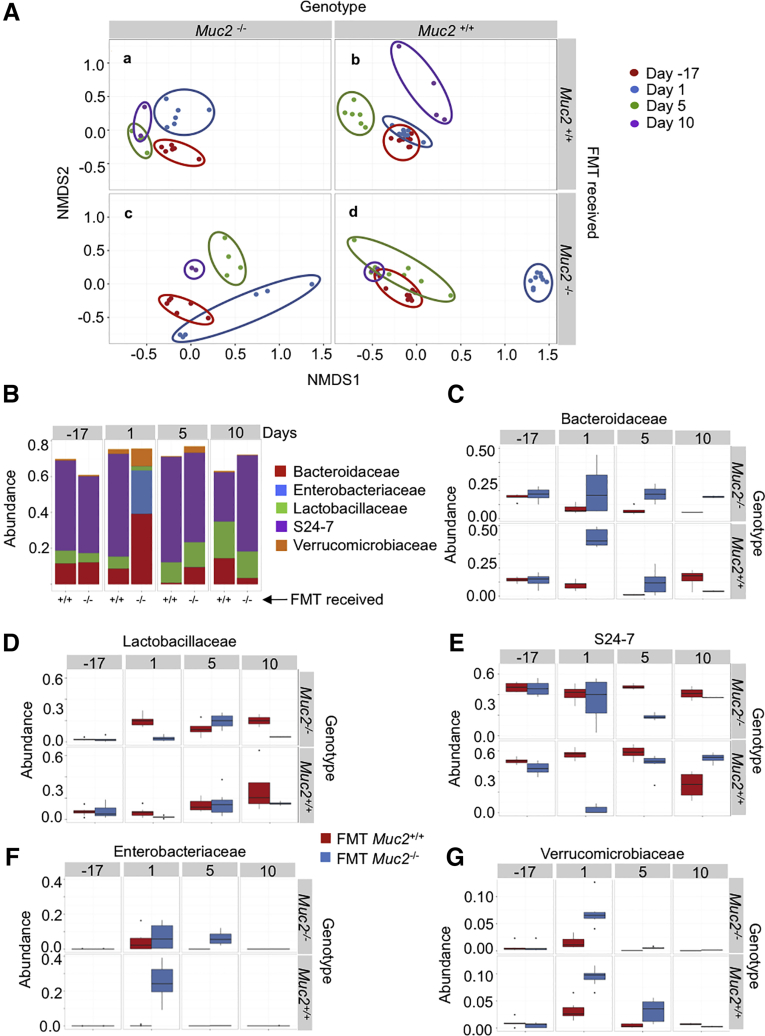
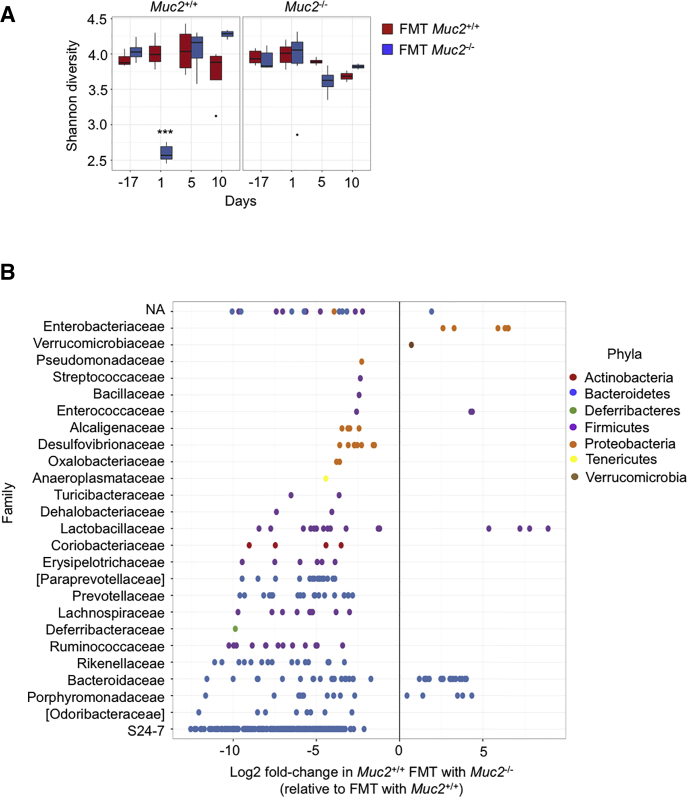
Although, Muc2 and Muc2 littermates share similar phyla distribution as evidenced by 16S sequencing they maintain their distinctive gastrointestinal phenotypes. Basally, Muc2 showed low-grade colonic inflammation with high populations of inflammatory and tolerogenic immune cells that became comparable to Muc2 littermates following antibiotic treatment. Antibiotics treatment rendered Muc2 but not Muc2 littermates highly susceptibility to DSS-induced colitis that was ILC3 dependent. Muc2 microbiota was colitogenic to Muc2 as it worsened DSS-induced colitis. Microbiota dependent inflammation was confirmed by bone-marrow chimera studies, as Muc2 receiving Muc2 bone marrow showed no difference in their susceptibility toward DSS induced colitis. Muc2 microbiota exhibited presence of characteristic OTUs of specific bacterial populations that were transferrable to Muc2 littermates.
These results highlight a distinct role for Muc2 mucin in maintenance of healthy microbiota critical in shaping innate host defenses to promote intestinal homeostasis.
肠道 MUC2 粘蛋白和微生物多样性的改变与重要的肠道病理密切相关;然而,它们之间以及与肠道发病机制的相互影响仍未被明确描述。因此,本研究旨在描绘共生微生物群和 Muc2 粘液屏障在维持肠道上皮屏障功能方面的独特和协同作用。
使用 Muc2 粘蛋白缺乏(Muc2)和充足(Muc2)同窝仔鼠模型来评估 Muc2 的作用。为了量化微生物群在疾病发病机制中的作用,用抗生素混合物处理 Muc2 和 Muc2 同窝仔鼠,减少土著细菌,然后移植同窝仔鼠粪便,并量化对葡聚糖硫酸钠(DSS)的易感性。
尽管 Muc2 和 Muc2 同窝仔鼠通过 16S 测序具有相似的门分布,但它们仍保持着独特的胃肠道表型。在基础状态下,Muc2 表现出低度结肠炎,炎症细胞和耐受性免疫细胞数量较高,抗生素治疗后与 Muc2 同窝仔鼠相当。抗生素治疗使 Muc2 而非 Muc2 同窝仔鼠对 DSS 诱导的结肠炎高度敏感,这依赖于 ILC3。Muc2 微生物群对 Muc2 具有致结肠炎作用,因为它加重了 DSS 诱导的结肠炎。骨髓嵌合体研究证实了微生物群依赖性炎症,因为接受 Muc2 骨髓的 Muc2 没有在其对 DSS 诱导的结肠炎的易感性方面表现出差异。Muc2 微生物群存在特定细菌种群的特征 OTUs,可转移到 Muc2 同窝仔鼠。
这些结果突出了 Muc2 粘蛋白在维持健康微生物群中的独特作用,这对于塑造先天宿主防御以促进肠道内稳态至关重要。