Department of Marine Biology and Oceanography, Institut de Ciències del Mar (CSIC), 08003, Barcelona, Spain.
Department of Biology, Institute of Microbiology, ETH Zurich, Vladimir-Prelog-Weg 1-5/10, CH-8093, Zurich, Switzerland.
BMC Microbiol. 2020 Jul 13;20(1):207. doi: 10.1186/s12866-020-01884-7.
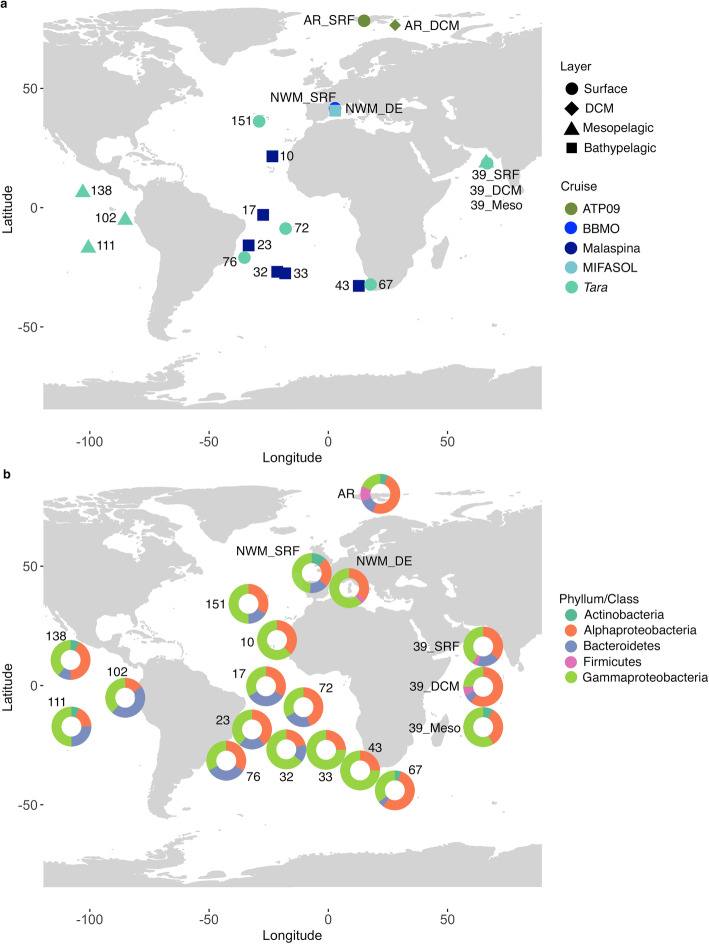
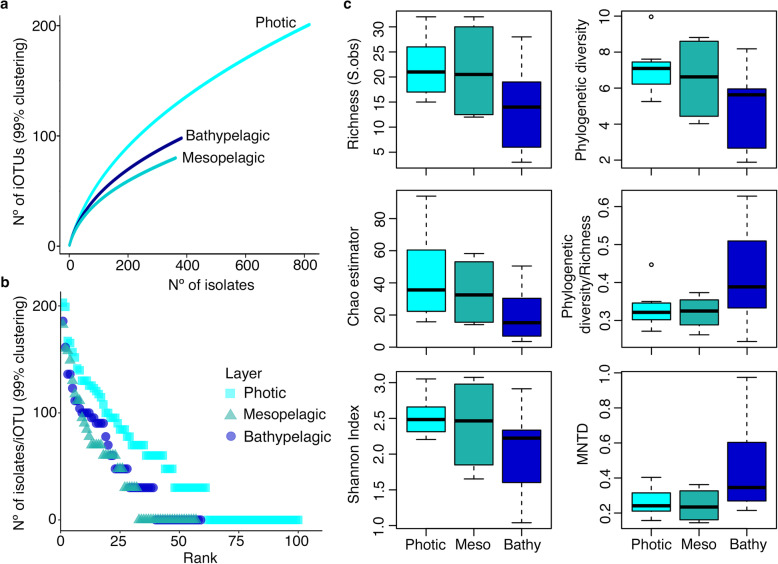
Isolation of marine microorganisms is fundamental to gather information about their physiology, ecology and genomic content. To date, most of the bacterial isolation efforts have focused on the photic ocean leaving the deep ocean less explored. We have created a marine culture collection of heterotrophic bacteria (MARINHET) using a standard marine medium comprising a total of 1561 bacterial strains, and covering a variety of oceanographic regions from different seasons and years, from 2009 to 2015. Specifically, our marine collection contains isolates from both photic (817) and aphotic layers (744), including the mesopelagic (362) and the bathypelagic (382), from the North Western Mediterranean Sea, the North and South Atlantic Ocean, the Indian, the Pacific, and the Arctic Oceans. We described the taxonomy, the phylogenetic diversity and the biogeography of a fraction of the marine culturable microorganisms to enhance our knowledge about which heterotrophic marine isolates are recurrently retrieved across oceans and along different depths.
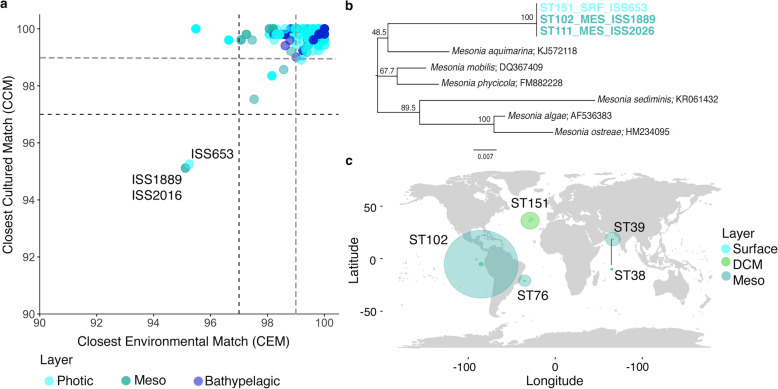
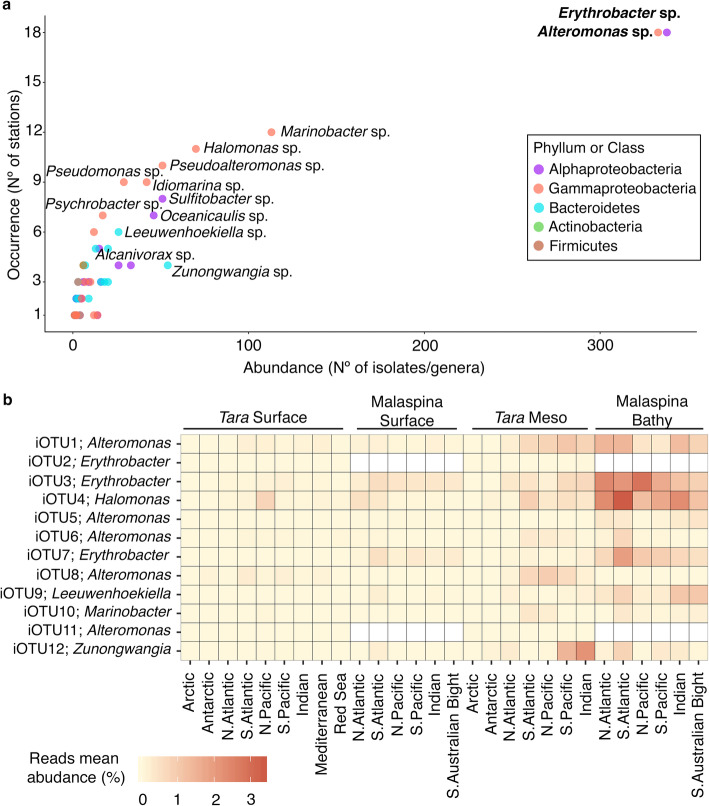
The partial sequencing of the 16S rRNA gene of all isolates revealed that they mainly affiliate with the classes Alphaproteobacteria (35.9%), Gammaproteobacteria (38.6%), and phylum Bacteroidetes (16.5%). In addition, Alteromonas and Erythrobacter genera were found the most common heterotrophic bacteria in the ocean growing in solid agar medium. When comparing all photic, mesopelagic, and bathypelagic isolates sequences retrieved from different stations, 37% of them were 100% identical. This percentage increased up to 59% when mesopelagic and bathypelagic strains were grouped as the aphotic dataset and compared to the photic dataset of isolates, indicating the ubiquity of some bacterial isolates along different ocean depths. Finally, we isolated three strains that represent a new species, and the genome comparison and phenotypic characterization of two of these strains (ISS653 and ISS1889) concluded that they belong to a new species within the genus Mesonia.
Overall, this study highlights the relevance of culture-dependent studies, with focus on marine isolated bacteria from different oceanographic regions and depths, to provide a more comprehensive view of the culturable marine bacteria as part of the total marine microbial diversity.
海洋微生物的分离对于了解其生理学、生态学和基因组组成至关重要。迄今为止,大多数细菌分离工作都集中在光海区,而深海区则较少被探索。我们使用一种包含 1561 株细菌的标准海洋培养基创建了一个异养细菌海洋培养物集合(MARINHET),这些细菌来自不同季节和年份、从 2009 年到 2015 年的各种海洋学区域,包括从西北地中海、北大西洋和南大西洋、印度洋、太平洋和北冰洋采集的光海区(817 株)和无光区(744 株)细菌,其中包括中层带(362 株)和深海带(382 株)细菌。我们描述了一部分海洋可培养微生物的分类学、系统发育多样性和生物地理学,以增强我们对哪些异养海洋分离株在海洋和不同深度反复出现的认识。
对所有分离株的 16S rRNA 基因进行部分测序表明,它们主要与 α-变形菌纲(35.9%)、γ-变形菌纲(38.6%)和拟杆菌门(16.5%)有关。此外,在固体琼脂培养基中生长的海洋最常见的异养菌是交替单胞菌属和赤杆菌属。当比较从不同站位获得的所有光区、中层带和深海带分离株的序列时,其中 37%的序列完全相同。当将中层带和深海带菌株作为无光数据集与光区分离株数据集进行比较时,这一比例增加到 59%,表明一些细菌分离株在不同海洋深度普遍存在。最后,我们分离到 3 株代表新种的菌株,对其中 2 株(ISS653 和 ISS1889)的基因组比较和表型特征分析表明,它们属于 Mesonia 属的一个新种。
总体而言,这项研究强调了依赖培养的研究的重要性,特别是对来自不同海洋学区域和深度的海洋分离细菌的研究,以更全面地了解作为海洋微生物总多样性一部分的可培养海洋细菌。