Bass Alec, Aubertin-Leheudre Mylène, Vincent Claude, Karelis Antony D, Morin Suzanne N, McKerral Michelle, Duclos Cyril, Gagnon Dany H
School of Rehabilitation, Faculty of Medicine, Université de Montréal, Montréal, QC, Canada.
Centre for Interdisciplinary Research in Rehabilitation of Greater Montreal, Centre Intégré Universitaire de Santé et Services Sociaux du Centre-Sud-de-l'Île-de-Montréal, Montréal, QC, Canada.
JMIR Res Protoc. 2020 Sep 24;9(9):e19251. doi: 10.2196/19251.
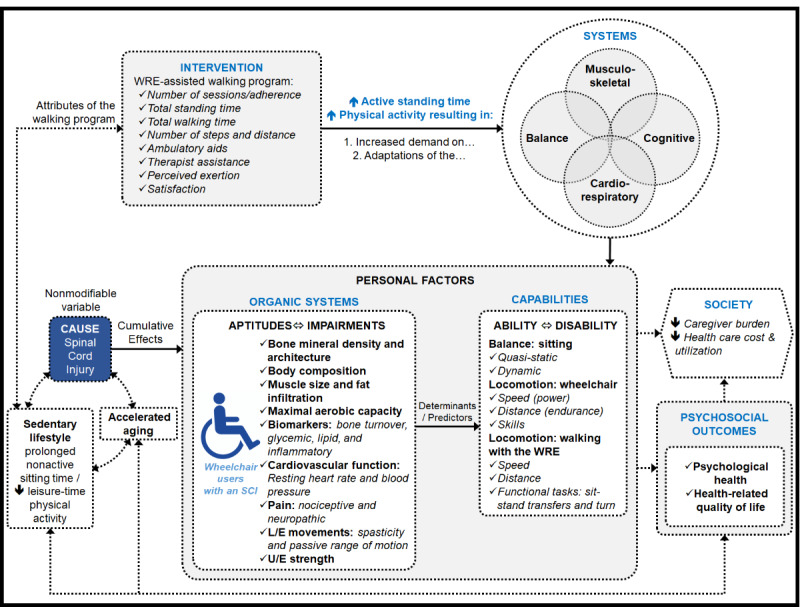
In wheelchair users with a chronic spinal cord injury (WU), prolonged nonactive sitting time and reduced physical activity-typically linked to this mode of mobility-contribute to the development or exacerbation of cardiorespiratory, musculoskeletal, and endocrine-metabolic health complications that are often linked to increased risks of chronic pain or psychological morbidity. Limited evidence suggests that engaging in a walking program with a wearable robotic exoskeleton may be a promising physical activity intervention to counter these detrimental health effects.
This study's overall goals are as follows: (1) to determine the effects of a 16-week wearable robotic exoskeleton-assisted walking program on organic systems, functional capacities, and multifaceted psychosocial factors and (2) to determine self-reported satisfaction and perspectives with regard to the intervention and the device.
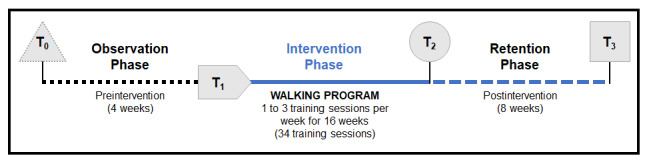
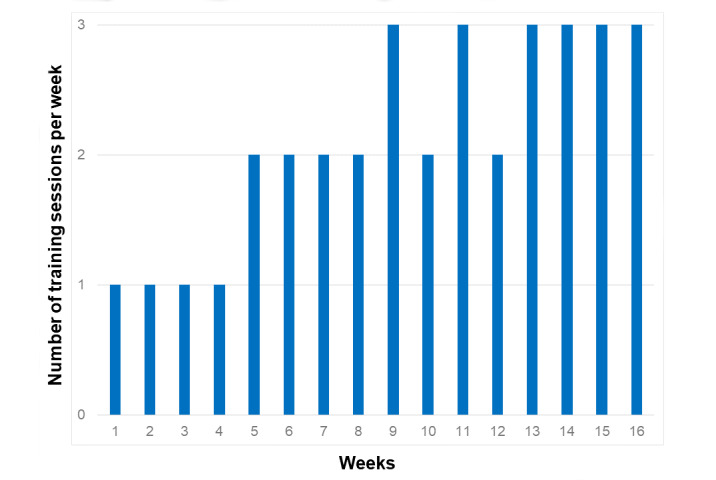
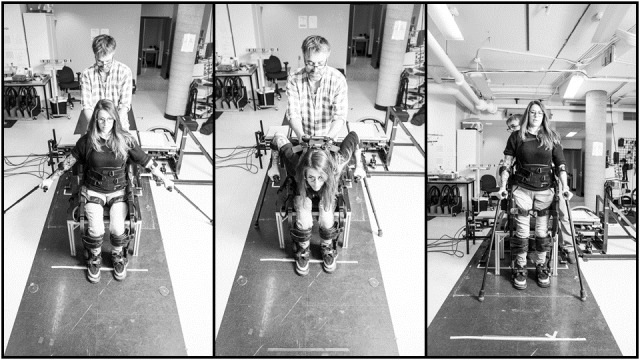
A total of 20 WU, who have had their injuries for more than 18 months, will complete an overground wearable robotic exoskeleton-assisted walking program (34 sessions; 60 min/session) supervised by a physiotherapist over a 16-week period (one to three sessions/week). Data will be collected 1 month prior to the program, at the beginning, and at the end as well as 2 months after completing the program. Assessments will characterize sociodemographic characteristics; anthropometric parameters; sensorimotor impairments; pain; lower extremity range of motion and spasticity; wheelchair abilities; cardiorespiratory fitness; upper extremity strength; bone architecture and mineral density at the femur, tibia, and radius; total and regional body composition; health-related quality of life; and psychological health. Interviews and an online questionnaire will be conducted to measure users' satisfaction levels and perspectives at the end of the program. Differences across measurement times will be verified using appropriate parametric or nonparametric analyses of variance for repeated measures.
This study is currently underway with active recruitment in Montréal, Québec, Canada. Results are expected in the spring of 2021.
The results from this study will be essential to guide the development, implementation, and evaluation of future evidence-based wearable robotic exoskeleton-assisted walking programs offered in the community, and to initiate a reflection regarding the use of wearable robotic exoskeletons during initial rehabilitation following a spinal cord injury.
ClinicalTrials.gov NCT03989752; https://clinicaltrials.gov/ct2/show/NCT03989752.
INTERNATIONAL REGISTERED REPORT IDENTIFIER (IRRID): DERR1-10.2196/19251.
在患有慢性脊髓损伤的轮椅使用者(WU)中,长时间不活动的坐姿以及身体活动减少(这通常与这种移动方式相关)会导致心肺、肌肉骨骼和内分泌代谢健康并发症的发生或加剧,而这些并发症往往与慢性疼痛或心理疾病风险增加有关。有限的证据表明,参与可穿戴机器人外骨骼步行计划可能是一种有前景的身体活动干预措施,以对抗这些有害的健康影响。
本研究的总体目标如下:(1)确定为期16周的可穿戴机器人外骨骼辅助步行计划对机体系统、功能能力和多方面社会心理因素的影响;(2)确定关于该干预措施和设备的自我报告满意度及看法。
共有20名受伤超过18个月的WU将在16周内(每周1至3次训练)完成一项由物理治疗师监督的地面可穿戴机器人外骨骼辅助步行计划(34次训练;每次训练60分钟)。在计划开始前1个月、开始时、结束时以及完成计划后2个月收集数据。评估将包括社会人口统计学特征、人体测量参数、感觉运动障碍、疼痛、下肢活动范围和痉挛、轮椅使用能力、心肺适能、上肢力量、股骨、胫骨和桡骨的骨结构和骨密度、全身和局部身体成分、健康相关生活质量以及心理健康。在计划结束时将进行访谈和在线问卷调查,以测量用户的满意度水平和看法。将使用适当的参数或非参数重复测量方差分析来验证不同测量时间之间的差异。
本研究目前正在加拿大魁北克省蒙特利尔积极招募参与者。预计2021年春季得出结果。
本研究的结果对于指导未来社区中基于证据的可穿戴机器人外骨骼辅助步行计划的开发、实施和评估至关重要,并引发关于脊髓损伤后初期康复期间使用可穿戴机器人外骨骼的思考。
ClinicalTrials.gov NCT03989752;https://clinicaltrials.gov/ct2/show/NCT03989752。
国际注册报告识别码(IRRID):DERR1-10.2196/19251。