Sedlic Filip, Seiwerth Fran, Sepac Ana, Sikiric Suncana, Cindric Marina, Milavic Marija, Batelja Vuletic Lovorka, Jakopovic Marko, Seiwerth Sven
Department of Pathophysiology, University of Zagreb School of Medicine, 10 000 Zagreb, Croatia.
Department of Respiratory Diseases Jordanovac, University Hospital Centre Zagreb, 10 000 Zagreb, Croatia.
Antioxidants (Basel). 2020 Jul 10;9(7):606. doi: 10.3390/antiox9070606.
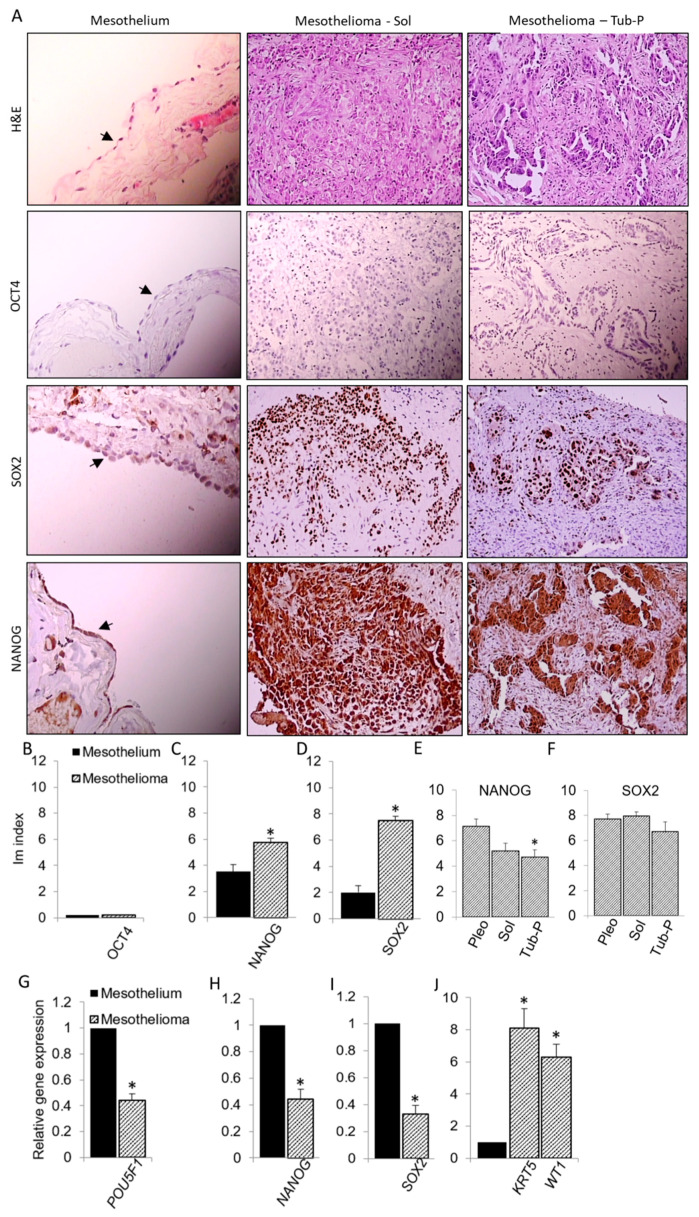
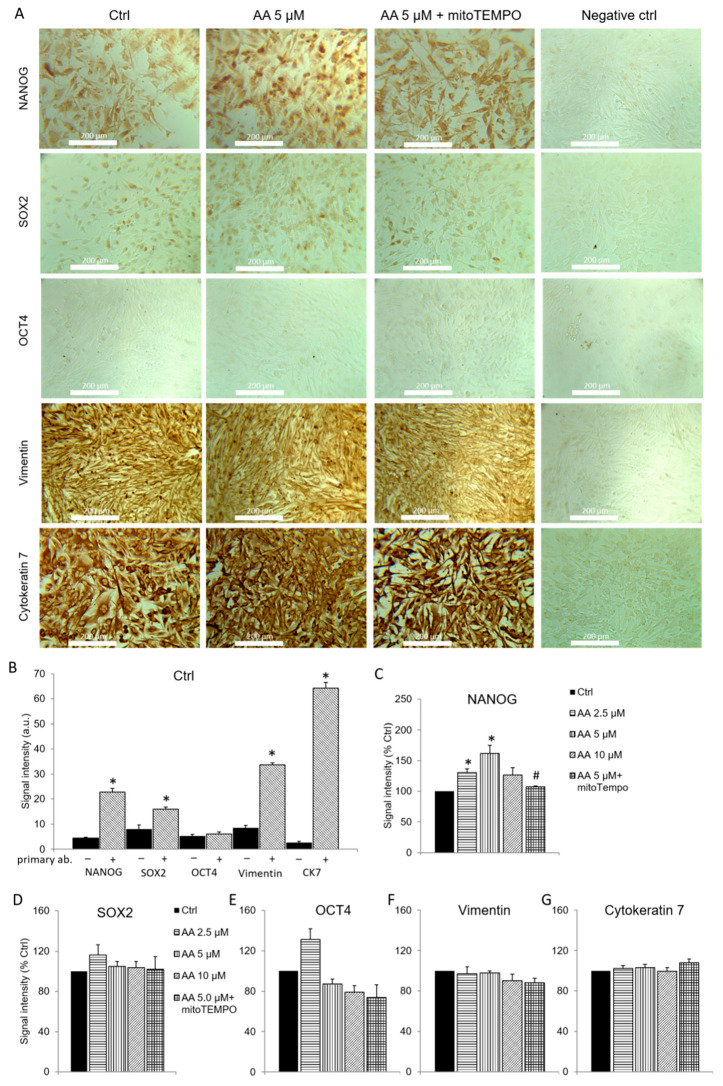
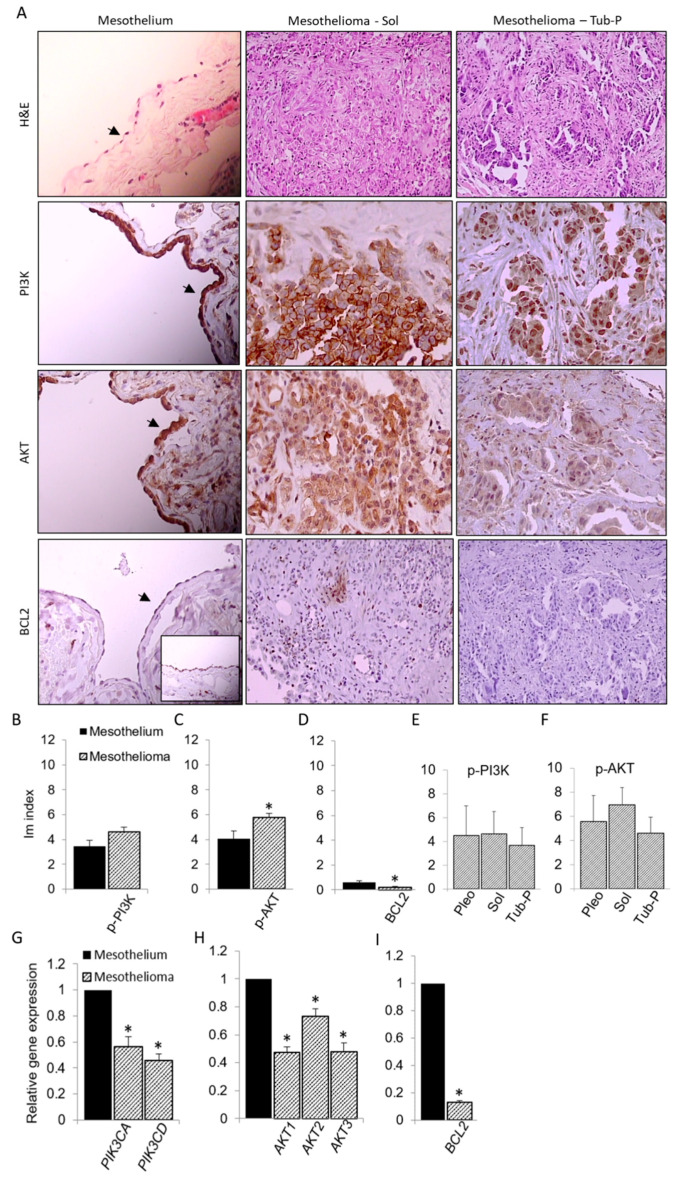
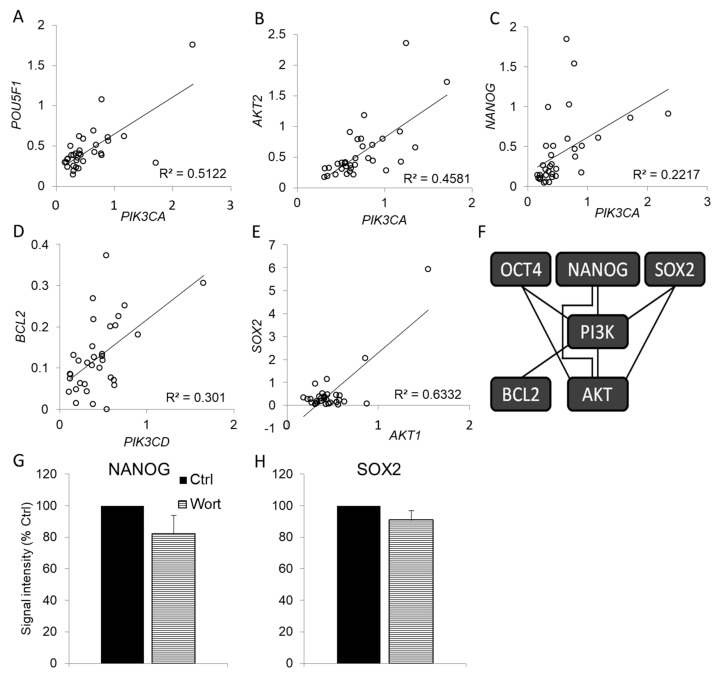
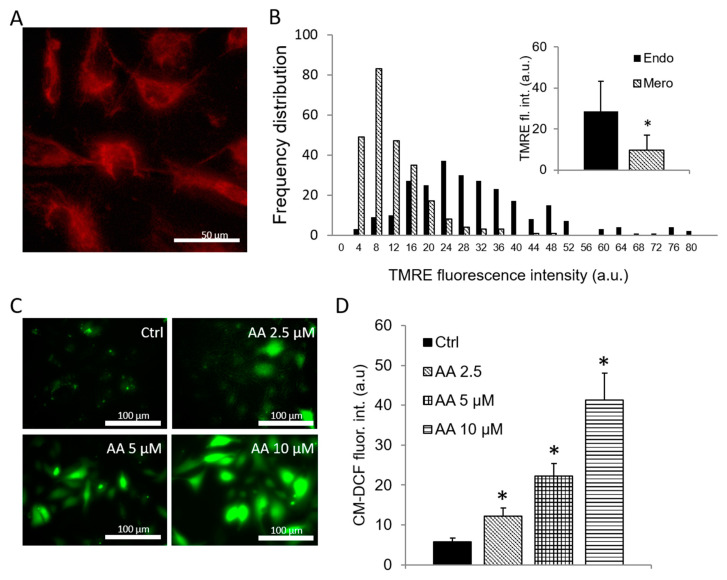
The expression of pluripotency factors is a key regulator of tumor differentiation status and cancer stem cells. The purpose of this study was to examine the expression of pluripotency factors and differentiation status of human mesothelioma and the role of mitochondria in their regulation. We tested the expression of OCT4/, NANOG, SOX2, PI3K-AKT pathway and BCL2 genes and proteins in 65 samples of human mesothelioma and 19 samples of normal mesothelium. Mitochondrial membrane potential, reactive oxygen species (ROS) generation and expression of pluripotency factors were also tested in human mesothelioma cell line. Human mesothelium and mesothelioma expressed SOX2, NANOG, PI3K and AKT genes and proteins and gene, whereby NANOG, SOX2 and phosphorylated (activated) AKT were upregulated in mesothelioma. NANOG protein expression was elevated in less differentiated samples of human mesothelioma. The expression of genes of PI3K-AKT pathway correlated with pluripotency factor genes. Mesothelioma cells had functional, but depolarized mitochondria with large capacity to generate ROS. Mitochondrial ROS upregulated NANOG and mitoTEMPO abrogated it. In conclusion, human mesothelioma displays enhanced expression of NANOG, SOX2 and phosphorylated AKT proteins, while elevated NANOG expression correlates with poor differentiation of human mesothelioma. Mitochondria of mesothelioma cells have a large capacity to form ROS and thereby upregulate NANOG, leading to dedifferentiation of mesothelioma.
多能性因子的表达是肿瘤分化状态和癌症干细胞的关键调节因子。本研究的目的是检测人胸膜间皮瘤中多能性因子的表达、分化状态以及线粒体在其调控中的作用。我们检测了65例人胸膜间皮瘤样本和19例正常间皮样本中OCT4/、NANOG、SOX2、PI3K-AKT通路及BCL2基因和蛋白的表达。还检测了人胸膜间皮瘤细胞系中的线粒体膜电位、活性氧(ROS)生成及多能性因子的表达。人正常间皮和胸膜间皮瘤表达SOX2、NANOG、PI3K和AKT基因及蛋白以及 基因,其中NANOG、SOX2和磷酸化(激活)的AKT在胸膜间皮瘤中上调。NANOG蛋白表达在人胸膜间皮瘤分化较差的样本中升高。PI3K-AKT通路基因的表达与多能性因子基因相关。胸膜间皮瘤细胞的线粒体功能正常,但去极化,具有产生大量ROS的能力。线粒体ROS上调NANOG,而线粒体靶向抗氧化剂mitoTEMPO可消除这种上调作用。总之,人胸膜间皮瘤中NANOG、SOX2和磷酸化AKT蛋白表达增强,而NANOG表达升高与人胸膜间皮瘤的低分化相关。胸膜间皮瘤细胞的线粒体有大量生成ROS的能力,从而上调NANOG,导致胸膜间皮瘤去分化。