Poznyak Anastasia V, Grechko Andrey V, Orekhova Varvara A, Khotina Victoria, Ivanova Ekaterina A, Orekhov Alexander N
Department of Basic Research, Institute for Atherosclerosis Research, Skolkovo Innovative Center, 121609 Moscow, Russia.
Federal Research and Clinical Center of Intensive Care Medicine and Rehabilitology, 14-3 Solyanka Street, 109240 Moscow, Russia.
Biomedicines. 2020 Jul 10;8(7):206. doi: 10.3390/biomedicines8070206.
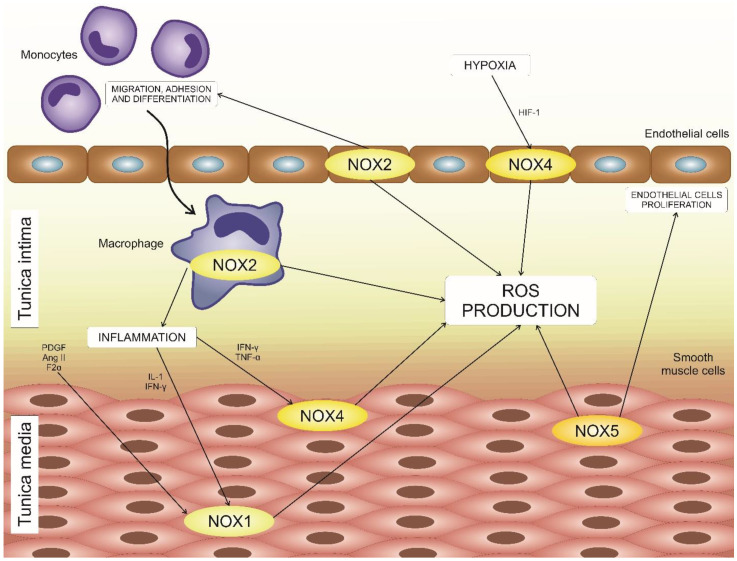
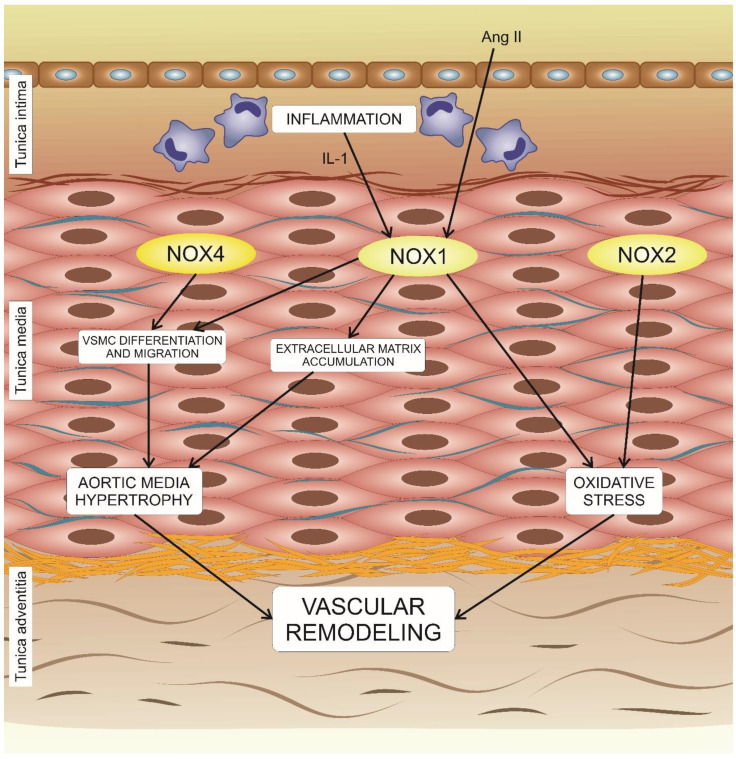
The current view on atherosclerosis positions it as a multifactorial disorder that results from the interplay between lipid metabolism disturbances and inflammatory processes. Oxidative stress is proven to be one of the initiating factors in atherosclerosis development, being implicated both in the inflammatory response and in atherogenic modifications of lipoproteins that facilitate lipid accumulation in the arterial wall. The hallmark of oxidative stress is the elevated level of reactive oxygen species (ROS). Correspondingly, the activity of major ROS-generating enzymes, including nicotinamide adenine dinucleotide phosphate (NADPH) oxidases, xanthine oxidases, and cyclooxygenases, is an important element in atherosclerosis development. In particular, the role of NADPH oxidases in atherosclerosis development has become a subject of intensive research. Aberrant activity of NADPH oxidases was shown to be associated with cardiovascular disease in humans. With regard to atherosclerosis, several important pathological components of the disease development, including endothelial dysfunction, inflammation, and vascular remodeling, involve aberrations in NADPH oxidases functioning. In humans, NADPH oxidases are represented by four isoforms expressed in vascular tissues, where they serve as the main source of ROS during atherogenesis. Moreover, recent studies have demonstrated their impact on vascular remodeling processes. Interestingly, one of the NADPH oxidase isoforms, NOX4, was shown to have an atheroprotective effect. Despite the growing evidence of the crucial involvement of NADPH oxidases in atherosclerosis pathogenesis, the available data still remains controversial. In this narrative review, we summarize the current knowledge of the role of NADPH oxidases in atherosclerosis and outline the future directions of research.
目前对动脉粥样硬化的看法将其定位为一种多因素疾病,它是由脂质代谢紊乱和炎症过程之间的相互作用导致的。氧化应激被证明是动脉粥样硬化发展的起始因素之一,它既参与炎症反应,也参与脂蛋白的致动脉粥样硬化修饰,从而促进脂质在动脉壁的积聚。氧化应激的标志是活性氧(ROS)水平升高。相应地,主要的ROS生成酶的活性,包括烟酰胺腺嘌呤二核苷酸磷酸(NADPH)氧化酶、黄嘌呤氧化酶和环氧化酶,是动脉粥样硬化发展的一个重要因素。特别是,NADPH氧化酶在动脉粥样硬化发展中的作用已成为深入研究的主题。NADPH氧化酶的异常活性被证明与人类心血管疾病有关。关于动脉粥样硬化,该疾病发展的几个重要病理成分,包括内皮功能障碍、炎症和血管重塑,都涉及NADPH氧化酶功能异常。在人类中,NADPH氧化酶由在血管组织中表达的四种同工型代表,它们在动脉粥样硬化形成过程中作为ROS的主要来源。此外,最近的研究表明它们对血管重塑过程有影响。有趣的是,NADPH氧化酶同工型之一,NOX4,被证明具有抗动脉粥样硬化作用。尽管越来越多的证据表明NADPH氧化酶在动脉粥样硬化发病机制中起关键作用,但现有数据仍然存在争议。在这篇叙述性综述中,我们总结了目前关于NADPH氧化酶在动脉粥样硬化中作用的知识,并概述了未来的研究方向。