Department of Anatomy and Medical Imaging and Centre for Brain Research, Faculty of Medical and Health Science, University of Auckland, Private Bag 92019, Auckland, New Zealand.
Laboratory of Functional and Molecular Imaging, National Institute of Neurological Disorders and Stroke, National Institutes of Health, Bethesda, MD, 20892, USA.
Acta Neuropathol Commun. 2020 Jul 14;8(1):109. doi: 10.1186/s40478-020-00986-7.
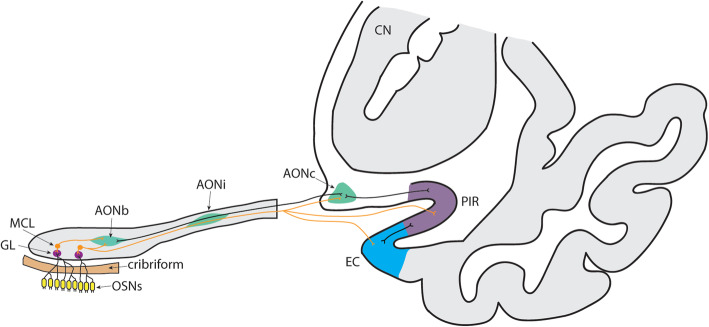
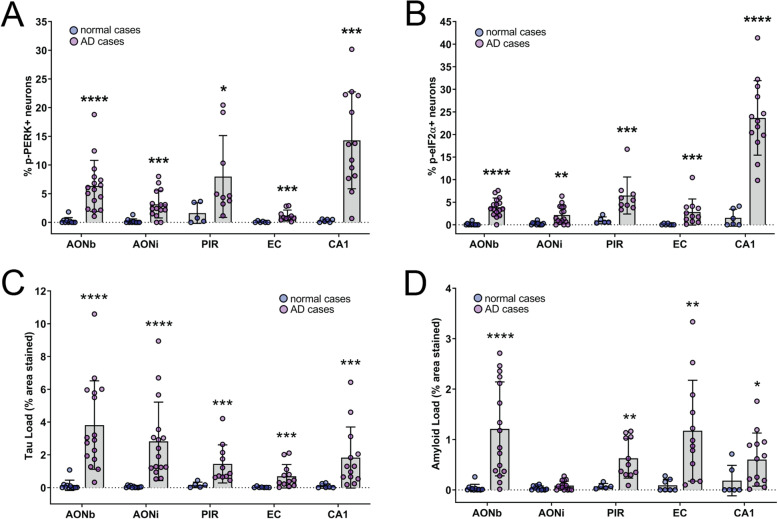
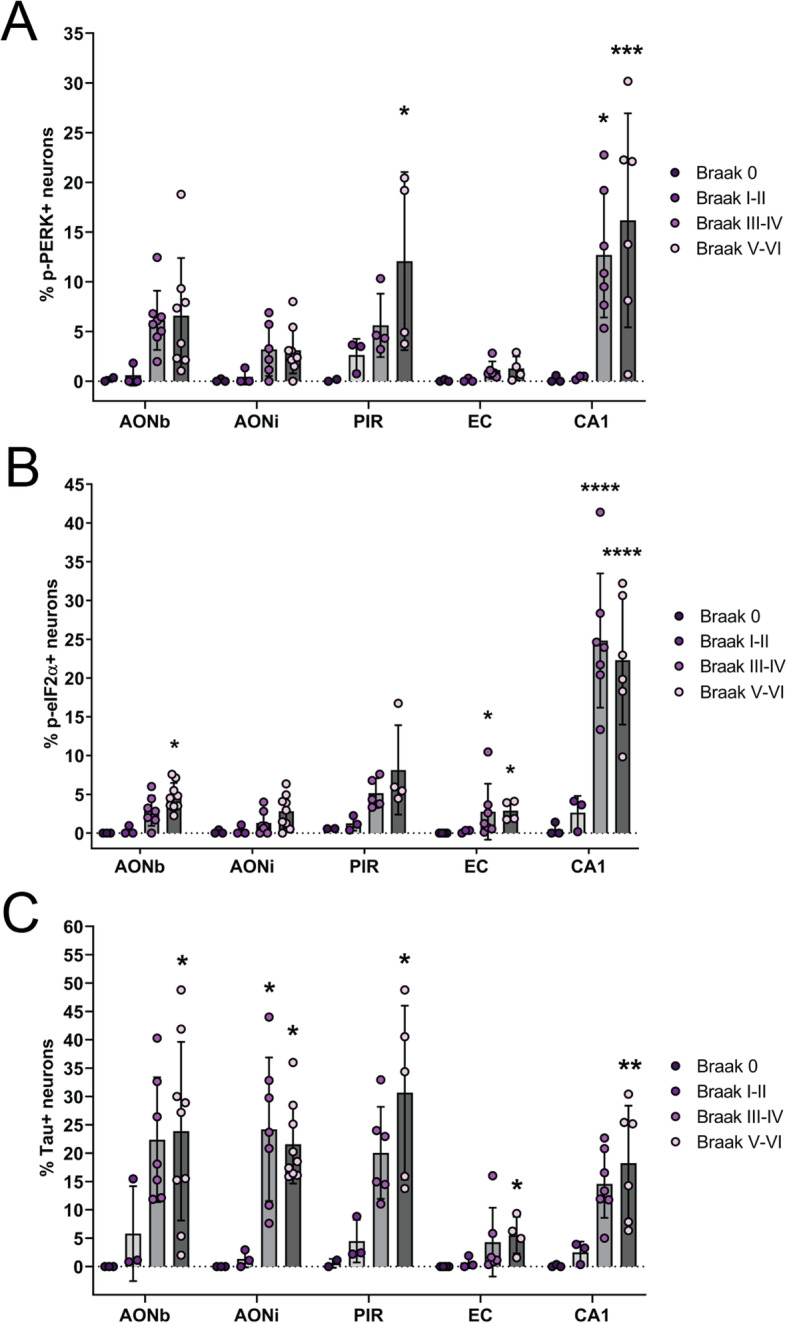
Olfactory dysfunction is an early and prevalent symptom of Alzheimer's disease (AD) and the olfactory bulb is a nexus of beta-amyloid plaque and tau neurofibrillary tangle (NFT) pathology during early AD progression. To mitigate the accumulation of misfolded proteins, an endoplasmic reticulum stress response called the unfolded protein response (UPR) occurs in the AD hippocampus. However, chronic UPR activation can lead to apoptosis and the upregulation of beta-amyloid and tau production. Therefore, UPR activation in the olfactory system could be one of the first changes in AD. In this study, we investigated whether two proteins that signal UPR activation are expressed in the olfactory system of AD cases with low or high amounts of aggregate pathology. We used immunohistochemistry to label two markers of UPR activation (p-PERK and p-eIF2α) concomitantly with neuronal markers (NeuN and PGP9.5) and pathology markers (beta-amyloid and tau) in the olfactory bulb, piriform cortex, entorhinal cortex and the CA1 region of the hippocampus in AD and normal cases. We show that UPR activation, as indicated by p-PERK and p-eIF2α expression, is significantly increased throughout the olfactory system in AD cases with low (Braak stage III-IV) and high-level (Braak stage V-VI) pathology. We further show that UPR activation occurs in the mitral cells and in the anterior olfactory nucleus of the olfactory bulb where tau and amyloid pathology is abundant. However, UPR activation is not present in neurons when they contain NFTs and only rarely occurs in neurons containing diffuse tau aggregates. We conclude that UPR activation is prevalent in all regions of the olfactory system and support previous findings suggesting that UPR activation likely precedes NFT formation. Our data indicate that chronic UPR activation in the olfactory system might contribute to the olfactory dysfunction that occurs early in the pathogenesis of AD.
嗅觉功能障碍是阿尔茨海默病(AD)的早期和常见症状,而嗅球是 AD 早期进展过程中β-淀粉样斑块和 tau 神经原纤维缠结(NFT)病理学的交汇点。为了减轻错误折叠蛋白的积累,内质网应激反应即未折叠蛋白反应(UPR)会在 AD 海马体中发生。然而,慢性 UPR 激活可导致细胞凋亡以及β-淀粉样蛋白和 tau 生成的上调。因此,嗅觉系统中的 UPR 激活可能是 AD 的最早变化之一。在这项研究中,我们研究了在低聚集体病理学或高聚集体病理学 AD 病例的嗅觉系统中,是否有两种信号 UPR 激活的蛋白质表达。我们使用免疫组织化学技术同时标记 UPR 激活的两个标志物(p-PERK 和 p-eIF2α)以及神经元标志物(NeuN 和 PGP9.5)和病理学标志物(β-淀粉样蛋白和 tau),以研究 AD 和正常病例的嗅球、梨状皮层、内嗅皮层和海马体 CA1 区。我们发现,在低(Braak 分期 III-IV)和高(Braak 分期 V-VI)聚集体病理学 AD 病例中,整个嗅觉系统的 UPR 激活显著增加,表现为 p-PERK 和 p-eIF2α 表达增加。我们进一步发现,UPR 激活发生在嗅球的僧帽细胞和前嗅核,这些区域富含 tau 和淀粉样蛋白病理学。然而,当神经元包含 NFT 时,UPR 激活不存在,并且仅在含有弥散性 tau 聚集物的神经元中很少发生。我们得出结论,UPR 激活普遍存在于嗅觉系统的所有区域,并支持先前的研究结果,即 UPR 激活可能先于 NFT 形成。我们的数据表明,嗅觉系统中的慢性 UPR 激活可能导致 AD 发病早期发生的嗅觉功能障碍。