K.G. Jebsen Center for Genetic Epidemiology, Department of Public Health and Nursing, NTNU, Norwegian University of Science and Technology, Trondheim, Norway.
Medical Research Council Integrative Epidemiology Unit, University of Bristol, BS8 2BN, Bristol, UK.
Nat Commun. 2020 Jul 14;11(1):3519. doi: 10.1038/s41467-020-17117-4.
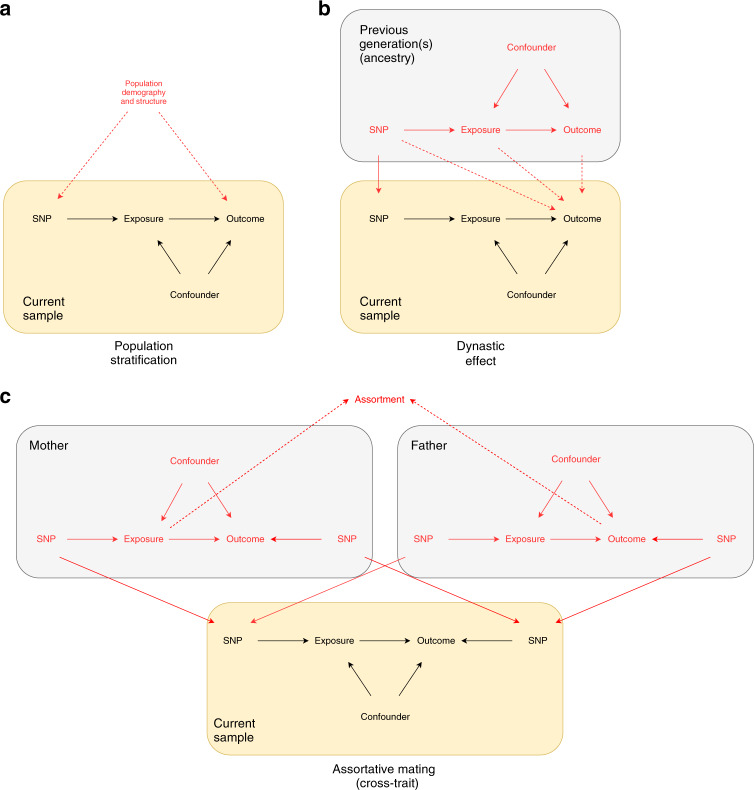
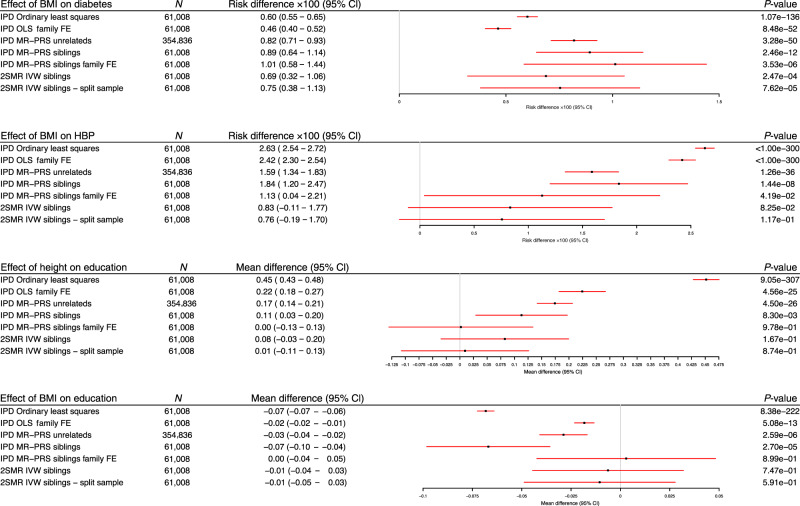
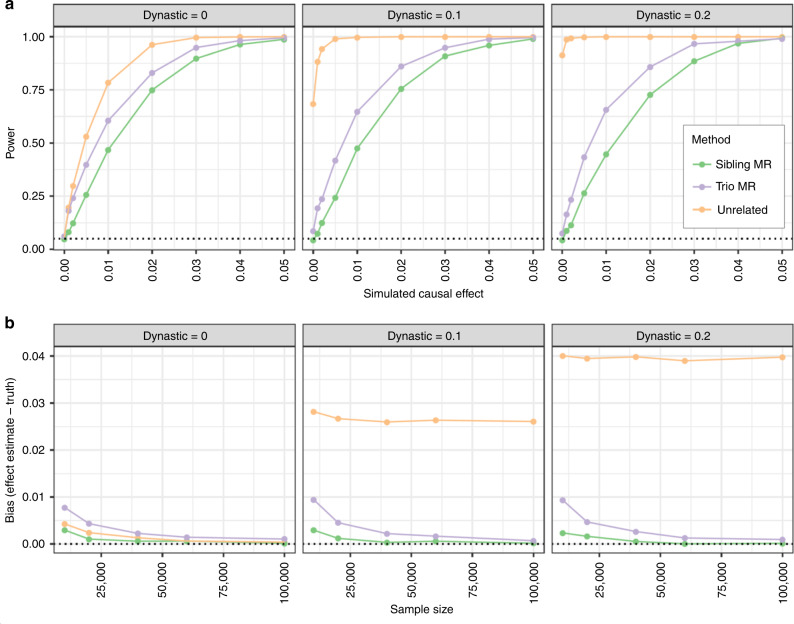
Estimates from Mendelian randomization studies of unrelated individuals can be biased due to uncontrolled confounding from familial effects. Here we describe methods for within-family Mendelian randomization analyses and use simulation studies to show that family-based analyses can reduce such biases. We illustrate empirically how familial effects can affect estimates using data from 61,008 siblings from the Nord-Trøndelag Health Study and UK Biobank and replicated our findings using 222,368 siblings from 23andMe. Both Mendelian randomization estimates using unrelated individuals and within family methods reproduced established effects of lower BMI reducing risk of diabetes and high blood pressure. However, while Mendelian randomization estimates from samples of unrelated individuals suggested that taller height and lower BMI increase educational attainment, these effects were strongly attenuated in within-family Mendelian randomization analyses. Our findings indicate the necessity of controlling for population structure and familial effects in Mendelian randomization studies.
来自非相关个体的孟德尔随机化研究的估计可能会因为家族效应引起的未被控制的混杂而存在偏倚。在这里,我们描述了针对家族内孟德尔随机化分析的方法,并通过模拟研究表明,基于家族的分析可以减少这种偏倚。我们使用来自挪威特隆赫姆健康研究和英国生物库的 61008 对兄弟姐妹以及来自 23andMe 的 222368 对兄弟姐妹的数据进行了实证研究,说明了家族效应如何影响估计值。孟德尔随机化使用非相关个体和家族内方法的估计值都再现了较低 BMI 降低糖尿病和高血压风险的既定效果。然而,虽然来自非相关个体样本的孟德尔随机化估计表明较高的身高和较低的 BMI 会增加教育程度,但这些影响在家族内孟德尔随机化分析中被强烈减弱。我们的研究结果表明,在孟德尔随机化研究中,需要控制人口结构和家族效应。