Hashemzehi Milad, Naghibzadeh Niloufar, Asgharzadeh Fereshteh, Mostafapour Asma, Hassanian Seyed Mahdi, Ferns Gordon A, Cho William C, Avan Amir, Khazaei Majid
Department of Medical Physiology, Faculty of Medicine, Mashhad University of Medical Sciences, Mashhad, Iran.
Student Research Committee, Faculty of Medicine, Mashhad University of Medical Sciences, Mashhad, Iran.
EXCLI J. 2020 Jun 29;19:927-935. doi: 10.17179/excli2020-2093. eCollection 2020.
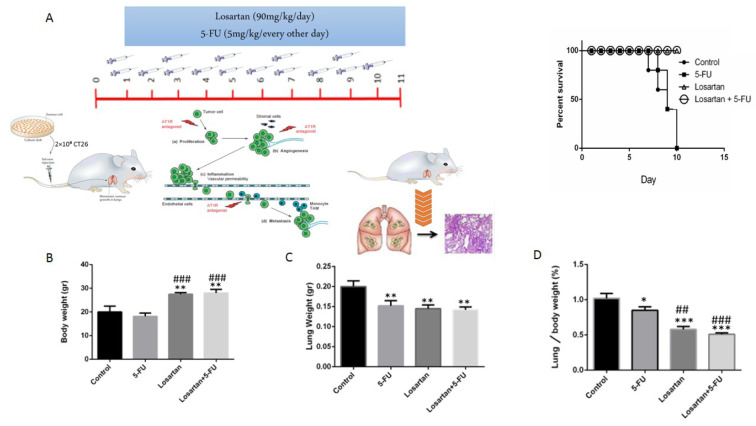
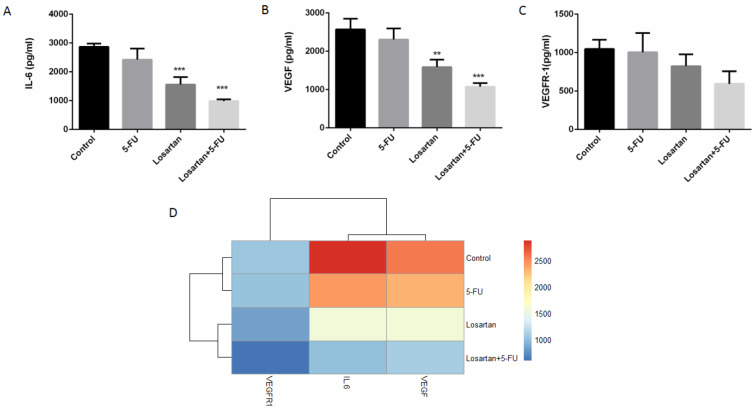
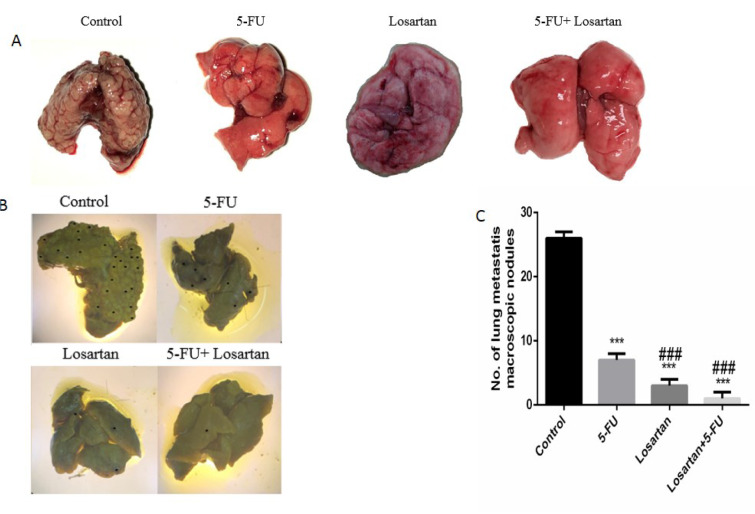
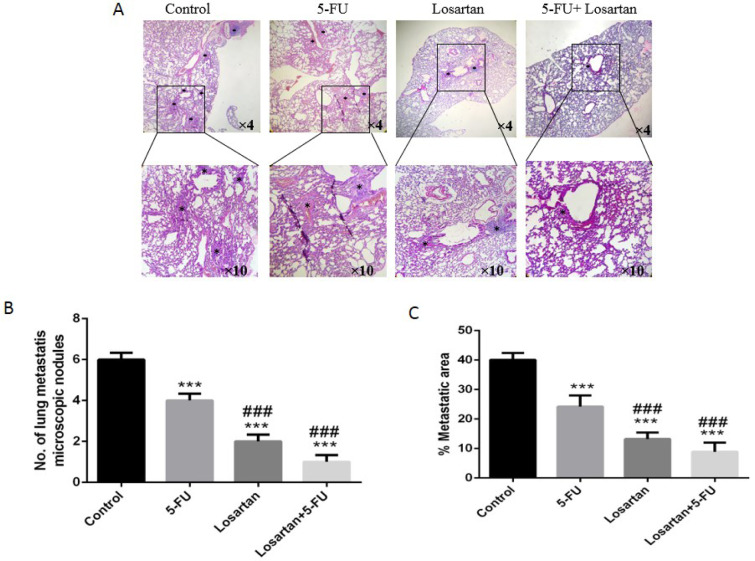
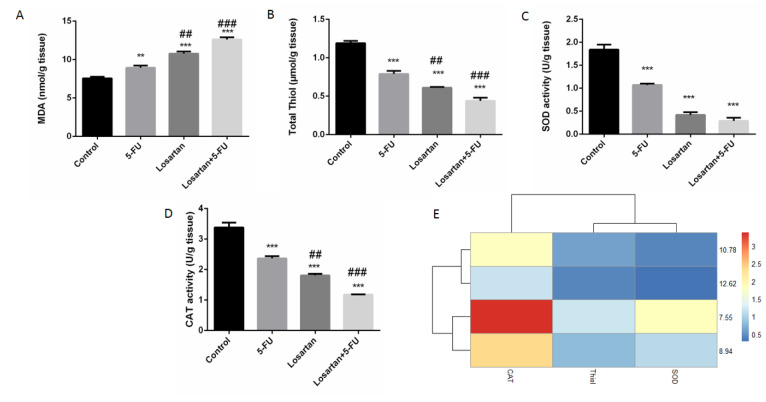
Colorectal cancer (CRC) is a common cancer with a high incidence rate. Components of the renin-angiotensin system (RAS) have been reported to be dysregulated in several malignancies including CRC. Here, we have explored the potential anti-metastatic effects of a RAS inhibitor, losartan, in an experimental model of lung metastasis in CRC. A murine model of lung metastasis of CRC was used, which involved the intravenous injection of CT26 cells via a tail vein. Four experimental groups comprised: an untreated group; a group that received 5-FU which was administered intraperitoneally; a losartan group that received a combination group that received 5-FU plus losartan . We evaluated the anti-inflammatory effects of losartan by histopathological method, and the measurement of oxidative or antioxidant markers including malondialdehyde (MDA) and total-thiols (T-SH) tissue levels, superoxide-dismutase (SOD) and catalase activity. We found that losartan inhibited lung metastasis of CRC and there was a reduction of the IL-6 expression level in the tissue sample. It was also associated with reduced levels of the anti-angiogenic factor Vascular endothelial growth factor (VEGF). Furthermore, we found that losartan induced oxidative stress as assessed by an elevation of MDA level, reduction of T-SH, SOD and catalase activities in lung tissue. Our findings demonstrated that losartan ameliorates angiogenesis, inflammation and the induction of oxidative stress via Angiotensin II type I receptor (AT1R). This may shine some lights on targeting the RAS pathway as a potential therapeutic approach in the treatment of metastatic CRC patients.
结直肠癌(CRC)是一种常见且发病率很高的癌症。据报道,肾素-血管紧张素系统(RAS)的成分在包括CRC在内的几种恶性肿瘤中存在失调。在此,我们在CRC肺转移的实验模型中探究了RAS抑制剂氯沙坦的潜在抗转移作用。使用了CRC肺转移的小鼠模型,该模型通过尾静脉注射CT26细胞。四个实验组包括:未治疗组;接受腹腔注射5-氟尿嘧啶(5-FU)的组;接受氯沙坦的组;接受5-FU加氯沙坦联合治疗的组。我们通过组织病理学方法以及测量氧化或抗氧化标志物(包括丙二醛(MDA)和总硫醇(T-SH)组织水平、超氧化物歧化酶(SOD)和过氧化氢酶活性)来评估氯沙坦的抗炎作用。我们发现氯沙坦抑制了CRC的肺转移,并且组织样本中白细胞介素-6(IL-6)的表达水平有所降低。它还与抗血管生成因子血管内皮生长因子(VEGF)水平的降低有关。此外,我们发现通过肺组织中MDA水平升高、T-SH降低、SOD和过氧化氢酶活性降低评估,氯沙坦诱导了氧化应激。我们的研究结果表明,氯沙坦通过血管紧张素II 1型受体(AT1R)改善血管生成、炎症和氧化应激的诱导。这可能为将RAS途径作为转移性CRC患者的潜在治疗方法提供一些启示。