Department of Kinesiology, McMaster University, Hamilton, Canada.
Department of Nutrition and Metabolism, The University of Texas Medical Branch, Galveston, TX, USA.
Adv Nutr. 2020 Jul 1;11(4):S1058-S1069. doi: 10.1093/advances/nmaa047.
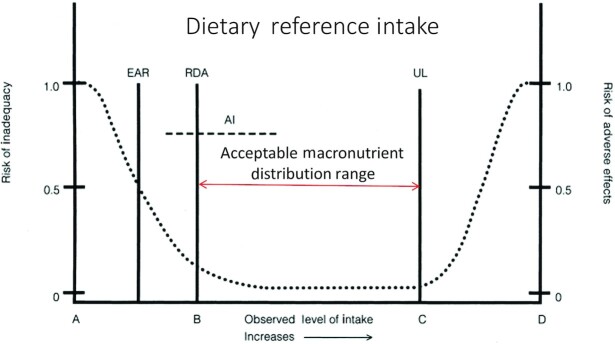
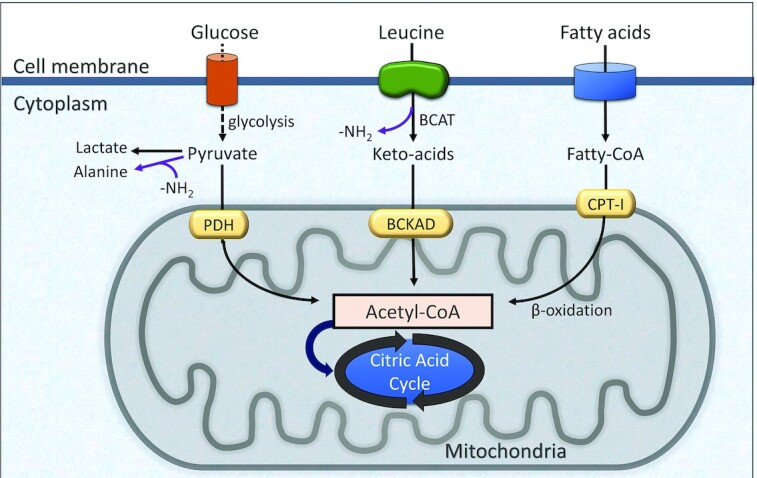
The DRIs define a range of acceptable dietary intakes for each nutrient. The range is defined from the minimum intake to avoid risk of inadequacy (i.e., the RDA) up to an upper limit (UL) based on a detectable risk of adverse effects. For most nutrients, the minimum RDA is based on alleviating a clear deficiency condition, whereas higher intakes are often recommended to optimize specific health outcomes. Evidence is accumulating that similar logic should be applied to dietary recommendations for protein. Although the RDA for protein of 0.8 g/kg body weight is adequate to avoid obvious inadequacies, multiple studies provide evidence that many adults may benefit from protein quantity, quality, and distribution beyond guidelines currently defined by the RDA. Further, the dietary requirement for protein is a surrogate for the constituent amino acids and, in particular, the 9 considered to be indispensable. Leucine provides an important example of an essential amino acid where the RDA of 42 mg/kg body weight is significantly less than the 100-110 mg/kg required to optimize metabolic regulation and skeletal muscle protein synthesis. This review will highlight the benefits of higher protein diets to optimize health during aging, inactivity, bed rest, or metabolic dysfunction such as type 2 diabetes.
DRIs 为每种营养素定义了可接受的饮食摄入量范围。该范围是从避免摄入不足风险的最低摄入量(即 RDA)到基于可检测到的不良反应风险的上限 (UL) 定义的。对于大多数营养素,最低 RDA 是基于缓解明显的缺乏状况,而通常建议更高的摄入量以优化特定的健康结果。有证据表明,类似的逻辑也应该应用于蛋白质的饮食建议。虽然蛋白质的 RDA 为 0.8 g/kg 体重足以避免明显的不足,但多项研究提供的证据表明,许多成年人可能受益于超出 RDA 目前定义的蛋白质数量、质量和分布。此外,蛋白质的膳食需求是构成氨基酸的替代物,特别是被认为是必需的 9 种氨基酸。亮氨酸为必需氨基酸提供了一个重要的例子,其 RDA 为 42 mg/kg 体重,明显低于优化代谢调节和骨骼肌蛋白质合成所需的 100-110 mg/kg。这篇综述将强调高蛋白饮食在衰老、不活动、卧床休息或代谢功能障碍(如 2 型糖尿病)期间优化健康的益处。