INSERM UMR-S-MD 1197, Hôpital Paul Brousse, Villejuif, France.
National Institute of Applied Sciences and Technology (INSAT), Carthage University, LR18ES40, Inflammation, environment and signalization pathologies, Tunis, Tunisia.
Stem Cell Res Ther. 2020 Jul 16;11(1):281. doi: 10.1186/s13287-020-01740-5.
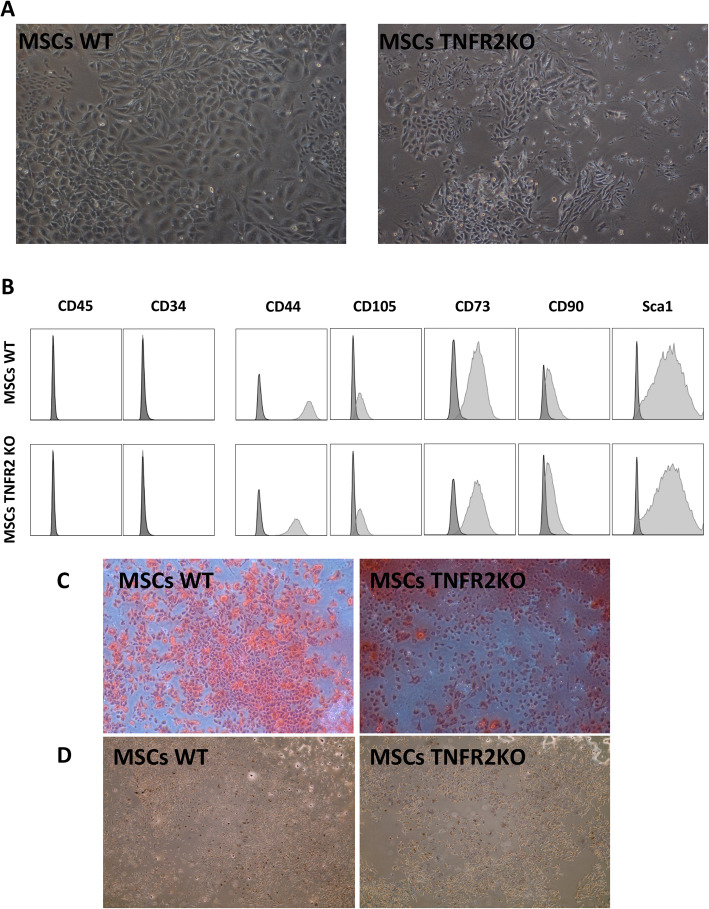
In addition to their multilineage potential, mesenchymal stem cells (MSCs) have a broad range of functions from tissue regeneration to immunomodulation. MSCs have the ability to modulate the immune response and change the progression of different inflammatory and autoimmune disorders. However, there are still many challenges to overcome before their widespread clinical administration including the mechanisms behind their immunoregulatory function. MSCs inhibit effector T cells and other immune cells, while inducing regulatory T cells (T regs), thus, reducing directly and indirectly the production of pro-inflammatory cytokines. TNF/TNFR signaling plays a dual role: while the interaction of TNFα with TNFR1 mediates pro-inflammatory effects and cell death, its interaction with TNFR2 mediates anti-inflammatory effects and cell survival. Many immunosuppressive cells like T regs, regulatory B cells (B regs), endothelial progenitor cells (EPCs), and myeloid-derived suppressor cells (MDSCs) express TNFR2, and this is directly related to their immunosuppression efficiency. In this article, we investigated the role of the TNFα/TNFR2 immune checkpoint signaling pathway in the immunomodulatory capacities of MSCs.
Co-cultures of MSCs from wild-type (WT) and TNFR2 knocked-out (TNFR2 KO) mice with T cells (WT and TNFα KO) were performed under various experimental conditions.
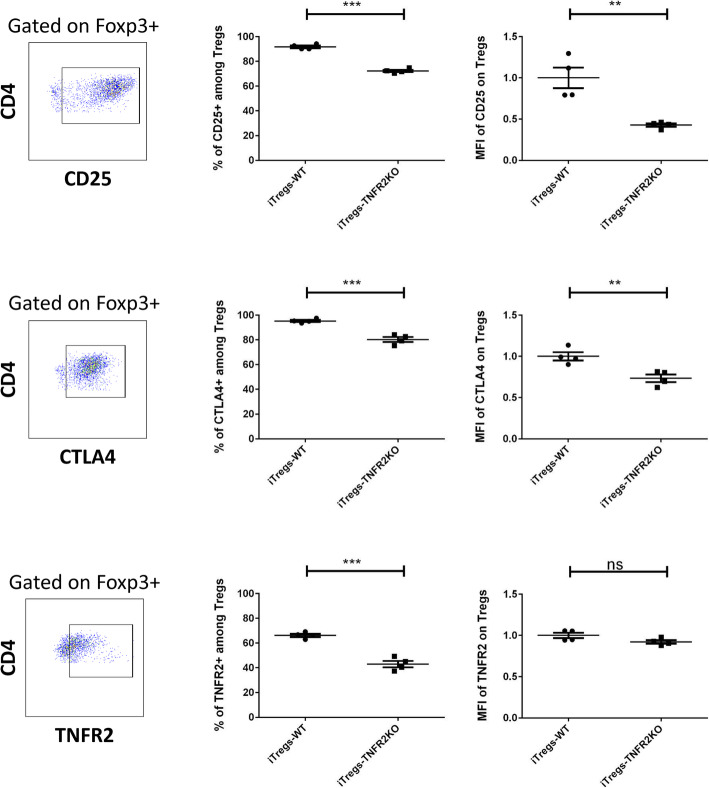
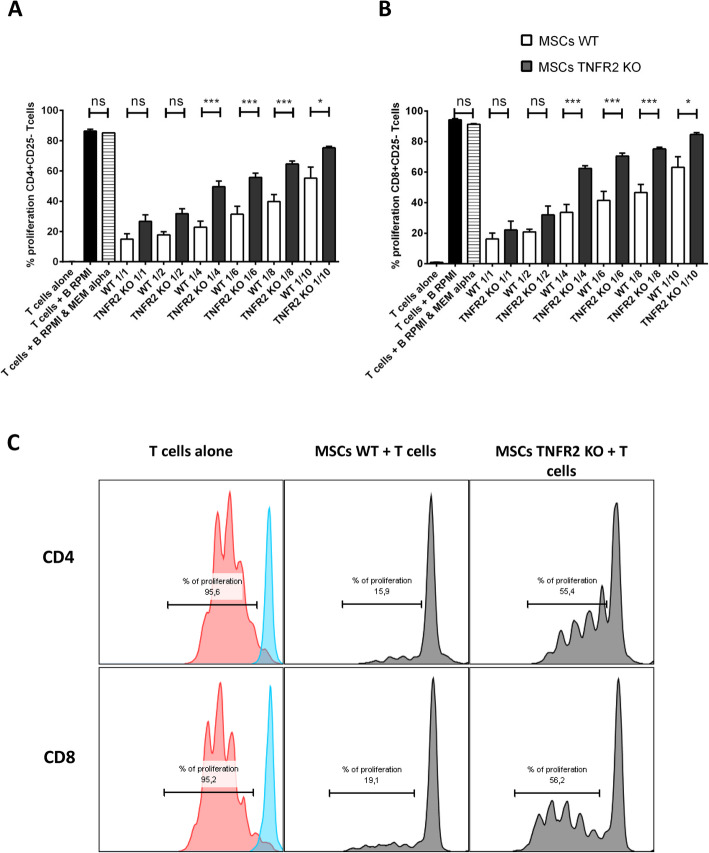
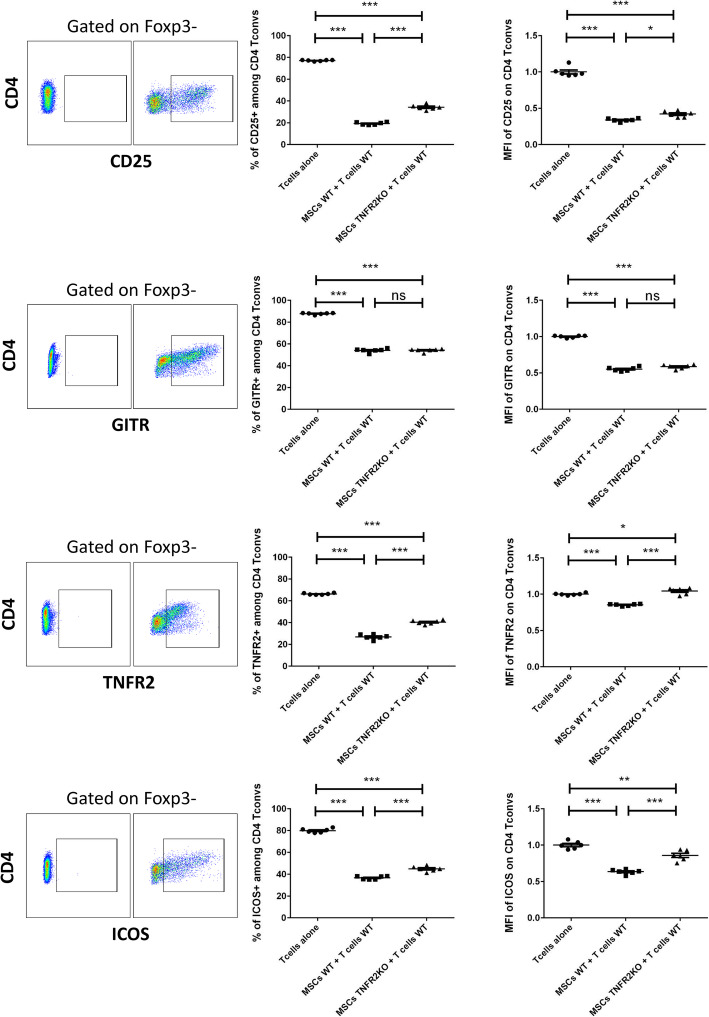
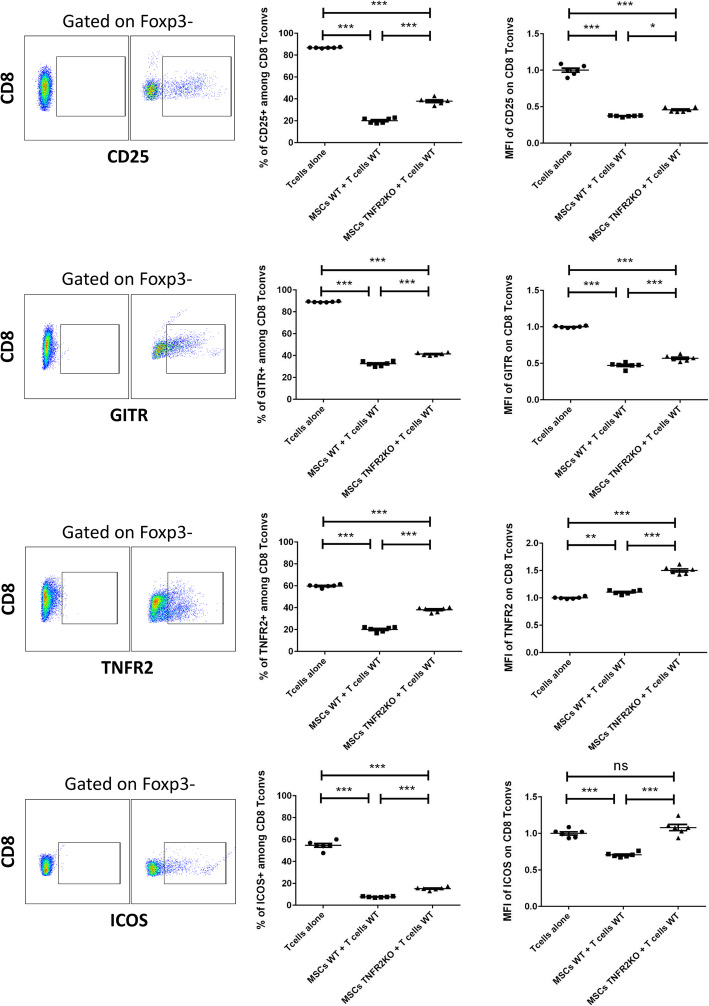
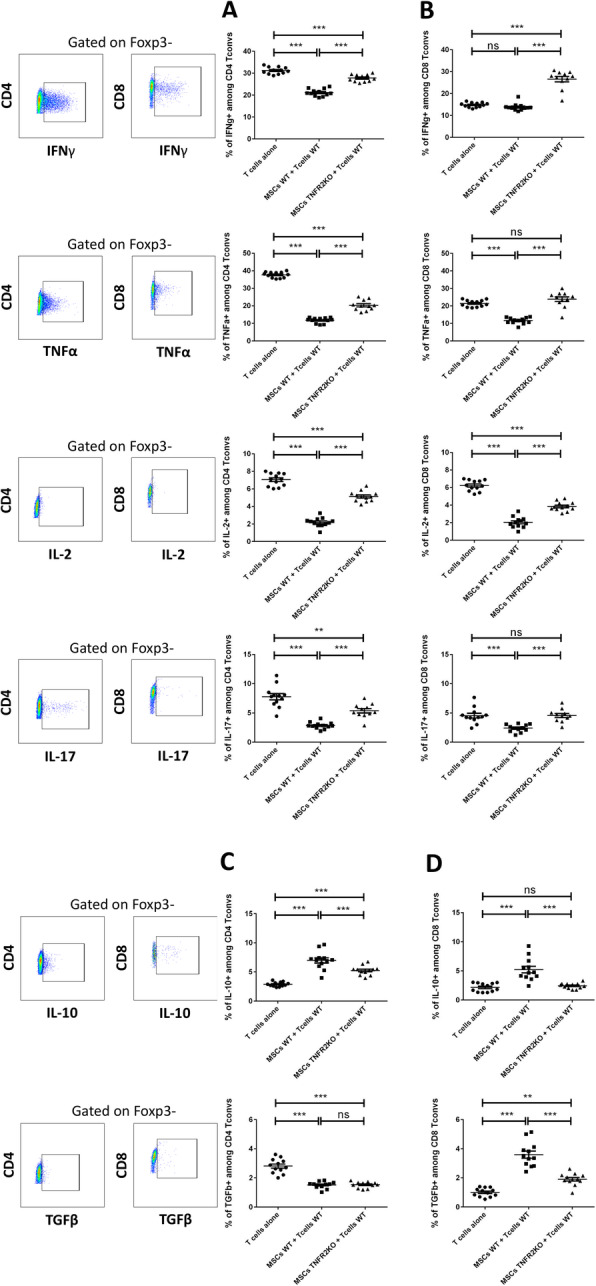
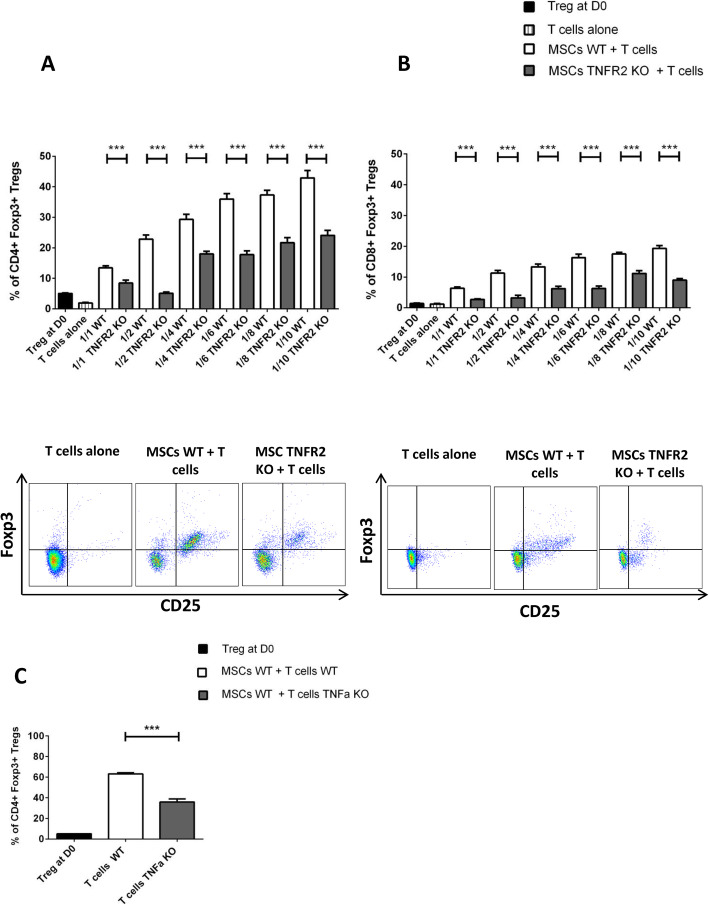
We demonstrate that TNFR2 is a key regulatory molecule which is strongly involved in the immunomodulatory properties of MSCs. This includes their ability to suppress T cell proliferation, activation, and pro-inflammatory cytokine production, in addition to their capacity to induce active T regs.
Our results reveal for the first time the importance of the TNFα/TNFR2 axis as an active immune checkpoint regulating MSC immunological functions.
除了多能性,间充质干细胞(MSCs)具有广泛的功能,从组织再生到免疫调节。MSCs 能够调节免疫反应,改变不同炎症和自身免疫性疾病的进展。然而,在广泛的临床应用之前,仍然有许多挑战需要克服,包括其免疫调节功能背后的机制。MSCs 抑制效应 T 细胞和其他免疫细胞,同时诱导调节性 T 细胞(Tregs),从而减少促炎细胞因子的直接和间接产生。TNF/TNFR 信号传导发挥双重作用:TNFα 与 TNFR1 的相互作用介导促炎作用和细胞死亡,而与 TNFR2 的相互作用介导抗炎作用和细胞存活。许多免疫抑制细胞,如 Tregs、调节性 B 细胞(Bregs)、内皮祖细胞(EPCs)和髓系来源的抑制细胞(MDSCs),表达 TNFR2,这与其免疫抑制效率直接相关。在本文中,我们研究了 TNFα/TNFR2 免疫检查点信号通路在 MSCs 免疫调节能力中的作用。
在各种实验条件下,将野生型(WT)和 TNFR2 敲除(TNFR2 KO)小鼠的 MSCs 与 T 细胞(WT 和 TNFα KO)共培养。
我们证明 TNFR2 是一个关键的调节分子,它强烈参与 MSCs 的免疫调节特性。这包括它们抑制 T 细胞增殖、活化和促炎细胞因子产生的能力,以及它们诱导活性 Tregs 的能力。
我们的结果首次揭示了 TNFα/TNFR2 轴作为调节 MSC 免疫功能的主动免疫检查点的重要性。