Dermatology Unit, National Hospital of Sri Lanka, Colombo, Sri Lanka.
Institute of Neurology, National Hospital of Sri Lanka, Colombo, Sri Lanka.
J Med Case Rep. 2020 Jul 16;14(1):101. doi: 10.1186/s13256-020-02413-w.
Leprosy is one of the oldest mycobacterial infections and tuberculosis is the most common mycobacterial infection with a higher degree of infectivity than leprosy. Although both diseases are prevalent in clusters in developing countries, simultaneous occurrence of them in an individual is a rare entity, even in an endemic setting.
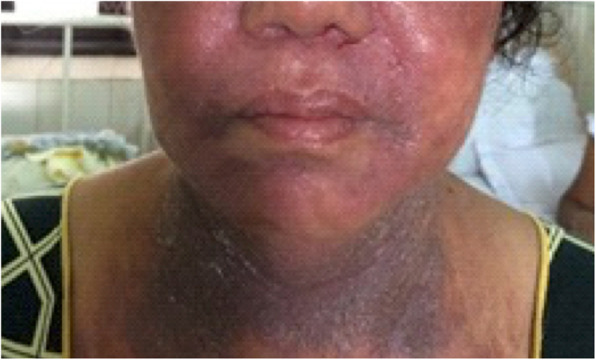
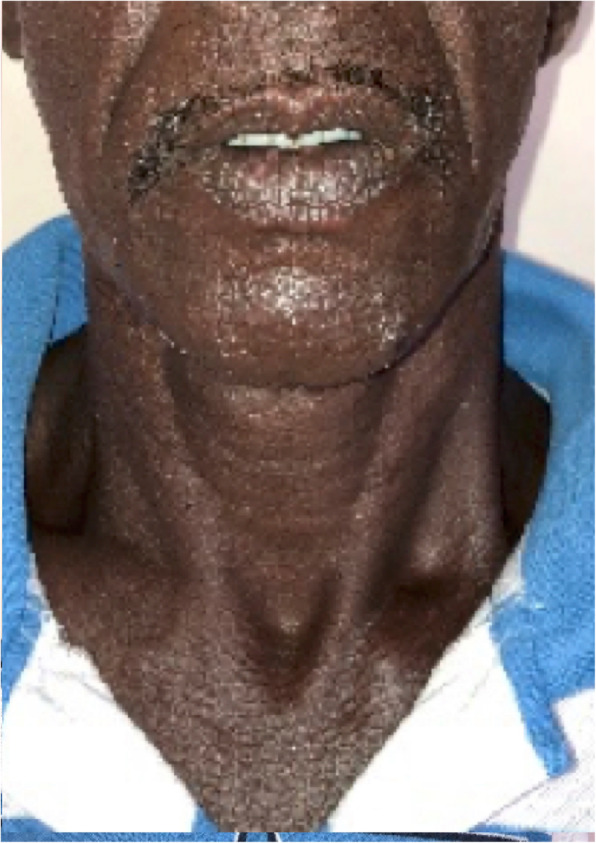
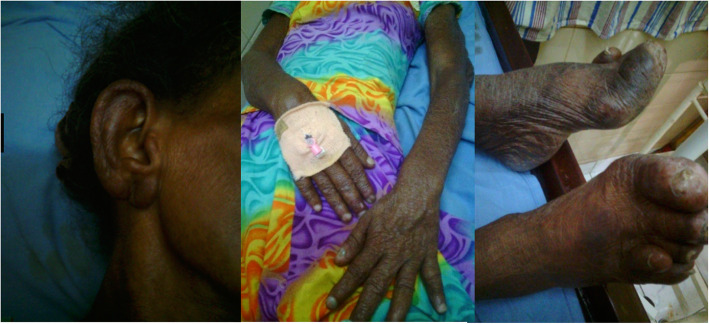
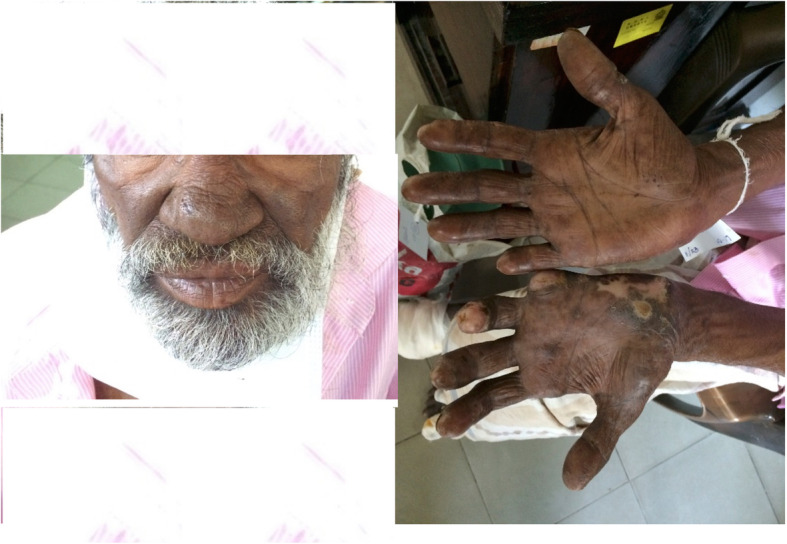
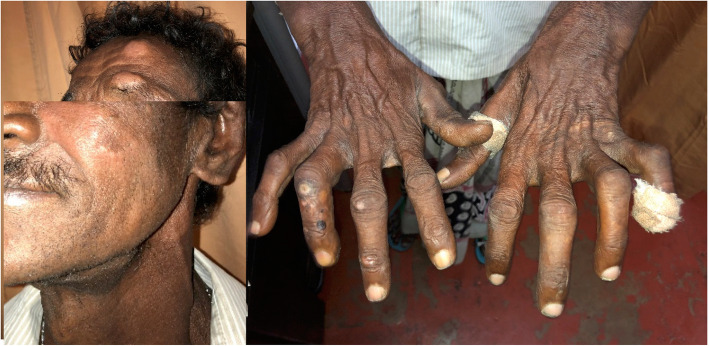
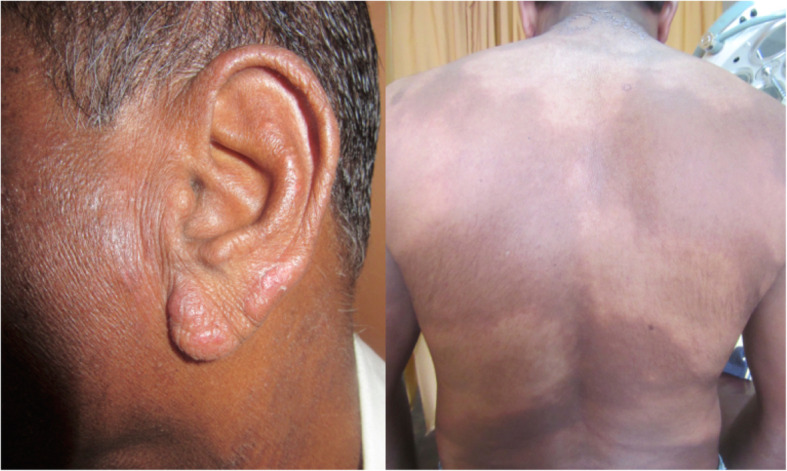
We describe six cases of tuberculosis and leprosy coinfection: a 57-year-old Sinhalese woman, a 47-year-old Tamil woman, a 72-year-old Tamil man, a 59-year-old Sinhalese man, a 54-year-old Sinhalese man, and a 50-year-old Sinhalese man. In this case series, five patients had lepromatous leprosy and the majority of patients were men. Three patients were detected to have tuberculosis at the outset of treatment of leprosy, while two developed tuberculosis later and one had extrapulmonary tuberculosis 5 years before the diagnosis of leprosy. The latter developed pulmonary tuberculosis as a reactivation while on treatment for leprosy. A majority of our patients with pulmonary tuberculosis had positive Mantoux test, high erythrocyte sedimentation rate, radiological evidence, and acid-fast bacilli in sputum. Human immunodeficiency virus and diabetes were detected in one patient. One patient had rifampicin-resistant tuberculosis, while she was on monthly rifampicin therapy for leprosy.
An immunocompromised status, such as human immunodeficiency virus infection, diabetes, and immunosuppressive drugs, are risk factors for tuberculosis infection. The use of steroids in the treatment of leprosy may increase the susceptibility to develop tuberculosis. Development of rifampicin resistance secondary to monthly rifampicin in leprosy is a major concern in treating patients coinfected with tuberculosis. Despite the paucity of reports of coinfection, it is advisable to screen for tuberculosis in patients with leprosy, especially if there are respiratory or constitutional symptoms, high erythrocyte sedimentation rate, and abnormal chest X-ray. The fact is that positive Mantoux and QuantiFERON Gold tests and presence of acid-fast bacilli in sputum are misleading, chest X-ray evidence of active tuberculosis and positive tuberculosis cultures are important diagnostic clues for active tuberculosis infection in a patient with leprosy. This is important to avoid monthly rifampicin in patients with suspected coinfections, which may lead to development of drug resistance to tuberculosis treatment. Whether prolonged steroid therapy in leprosy is a risk factor for development of tuberculosis is still controversial.
麻风病是最古老的分枝杆菌感染之一,而肺结核是最常见的分枝杆菌感染,其传染性高于麻风病。尽管这两种疾病在发展中国家都以集群形式普遍存在,但在个体中同时发生的情况较为罕见,即使在流行地区也是如此。
我们描述了 6 例结核和麻风病合并感染病例:一名 57 岁的僧伽罗女性、一名 47 岁的泰米尔女性、一名 72 岁的泰米尔男性、一名 59 岁的僧伽罗男性、一名 54 岁的僧伽罗男性和一名 50 岁的僧伽罗男性。在本病例系列中,5 名患者患有瘤型麻风病,大多数患者为男性。3 名患者在开始治疗麻风病时被检出患有肺结核,而 2 名患者后来发生肺结核,1 名患者在被诊断为麻风病前 5 年患有肺外结核。后者在治疗麻风病时因复发而出现肺结核。我们的大多数患有肺结核的患者结核菌素试验阳性、红细胞沉降率高、影像学证据和痰液中抗酸杆菌阳性。1 名患者同时患有人类免疫缺陷病毒和糖尿病。1 名患者患有利福平耐药结核病,而她正在接受每月利福平治疗麻风病。
免疫功能低下状态,如人类免疫缺陷病毒感染、糖尿病和免疫抑制药物,是结核感染的危险因素。在治疗麻风病时使用类固醇可能会增加发生肺结核的易感性。在麻风病中每月使用利福平治疗后发生利福平耐药是治疗合并结核感染患者的一个主要关注点。尽管合并感染的报告很少,但建议对麻风病患者进行肺结核筛查,特别是如果有呼吸道或全身症状、红细胞沉降率高和异常胸部 X 线表现。事实上,结核菌素试验和 QuantiFERON Gold 试验阳性以及痰液中抗酸杆菌阳性具有误导性,活动性肺结核的胸部 X 线证据和结核培养阳性是麻风病患者活动性肺结核感染的重要诊断线索。这对于避免对疑似合并感染的患者每月使用利福平至关重要,因为这可能导致结核治疗耐药。在麻风病中长时间使用类固醇治疗是否是发生肺结核的危险因素仍存在争议。