Hull University Teaching Hospitals NHS Trust and University of Hull, Hull, U.K.
University Hospitals of Derby and Burton NHS Foundation Trust, Derby, U.K.
Diabetes Care. 2020 Sep;43(9):2153-2160. doi: 10.2337/dc20-0738. Epub 2020 Jul 15.
The FreeStyle Libre (FSL) flash glucose-monitoring device was made available on the U.K. National Health Service (NHS) drug tariff in 2017. This study aims to explore the U.K. real-world experience of FSL and the impact on glycemic control, hypoglycemia, diabetes-related distress, and hospital admissions.
Clinicians from 102 NHS hospitals in the U.K. submitted FSL user data, collected during routine clinical care, to a secure web-based tool held within the NHS N3 network. The and Mann-Whitney tests were used to compare the baseline and follow-up HbA and other baseline demographic characteristics. Linear regression analysis was used to identify predictors of change in HbA following the use of FSL. Within-person variations of HbA were calculated using [Formula: see text].
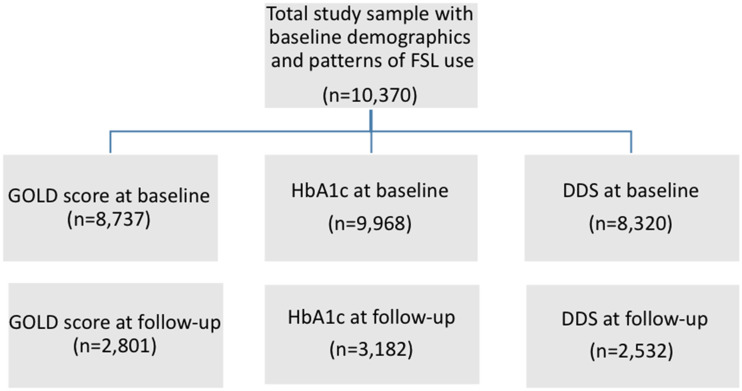
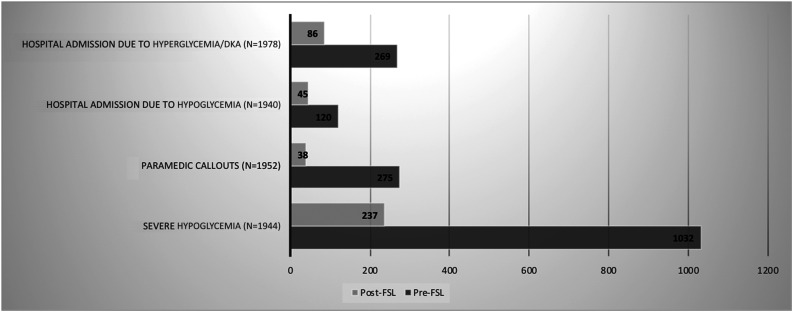
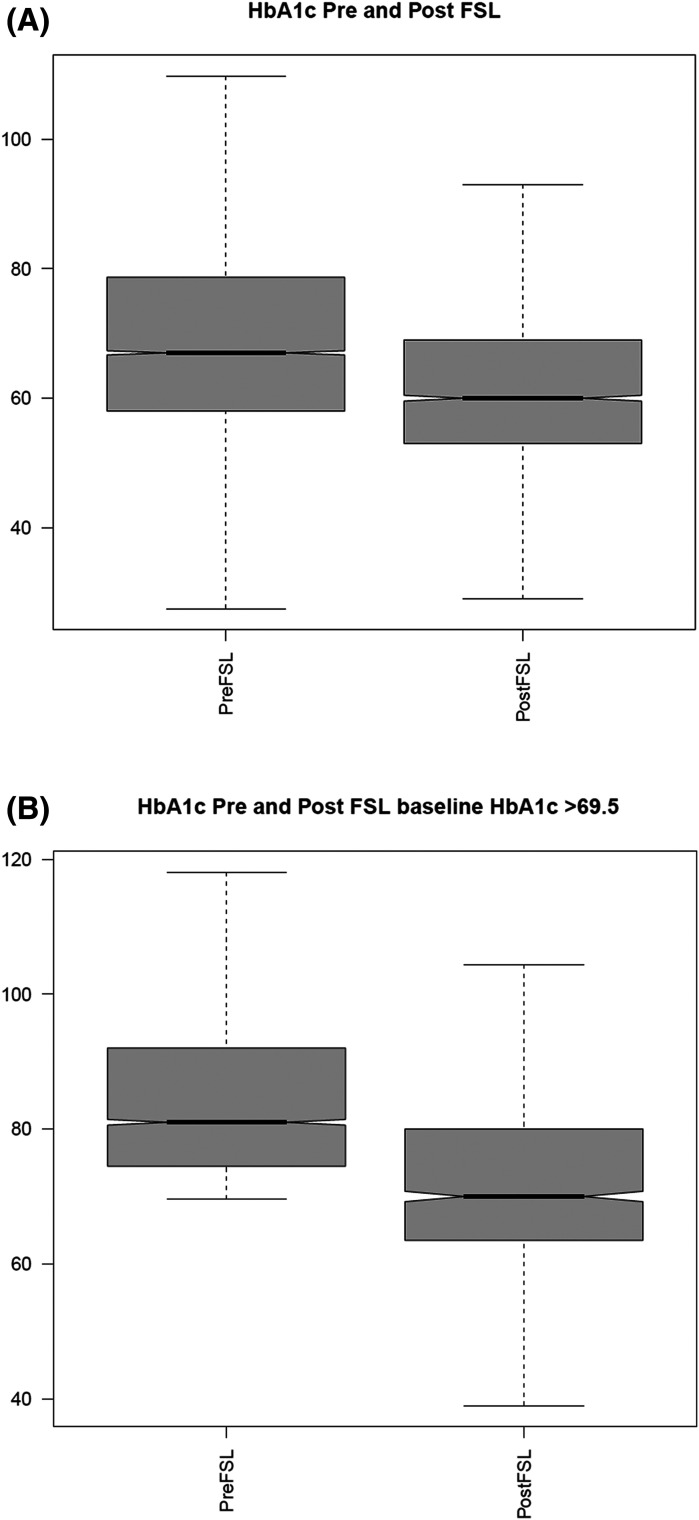
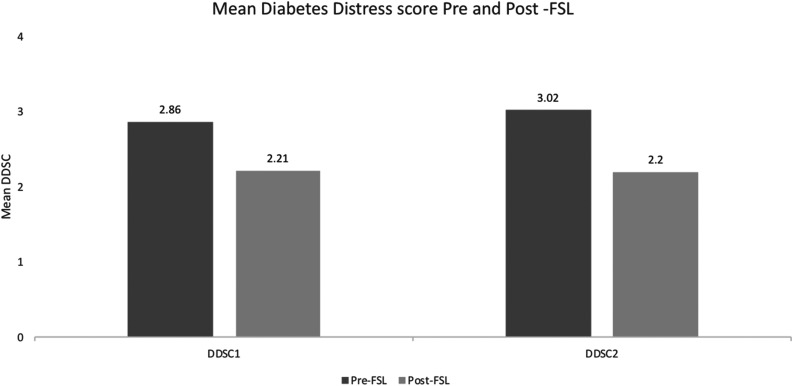
Data were available for 10,370 FSL users (97% with type 1 diabetes), age 38.0 (±18.8) years, 51% female, diabetes duration 16.0 (±49.9) years, and BMI of 25.2 (±16.5) kg/m (mean [±SD]). FSL users demonstrated a -5.2 mmol/mol change in HbA, reducing from 67.5 (±20.9) mmol/mol (8.3%) at baseline to 62.3 (±18.5) mmol/mol (7.8%) after 7.5 (interquartile range 3.4-7.8) months of follow-up ( = 3,182) ( < 0.0001). HbA reduction was greater in those with initial HbA ≥69.5 mmol/mol (>8.5%), reducing from 85.5 (±16.1) mmol/mol (10%) to 73.1 (±15.8) mmol/mol (8.8%) ( < 0.0001). The baseline Gold score (score for hypoglycemic unawareness) was 2.7 (±1.8) and reduced to 2.4 (±1.7) ( < 0.0001) at follow-up. A total of 53% of those with a Gold score of ≥4 at baseline had a score <4 at follow-up. FSL use was also associated with a reduction in diabetes distress ( < 0.0001). FSL use was associated with a significant reduction in paramedic callouts and hospital admissions due to hypoglycemia and hyperglycemia/diabetic ketoacidosis.
We show that the use of FSL was associated with significantly improved glycemic control and hypoglycemia awareness and a reduction in hospital admissions.
自由式利博(FSL)即时血糖监测仪于 2017 年在英国国民保健服务(NHS)药品关税中投入使用。本研究旨在探索英国 FSL 的真实世界应用经验及其对血糖控制、低血糖、与糖尿病相关的痛苦和住院的影响。
英国 102 家 NHS 医院的临床医生从常规临床护理中提交 FSL 用户数据,这些数据被输入 NHS N3 网络中的一个安全的网络工具。使用 和 Mann-Whitney U 检验比较 HbA 和其他基线人口统计学特征的基线和随访值。使用线性回归分析确定使用 FSL 后 HbA 变化的预测因素。使用 [公式:见文本] 计算 HbA 的个体内变化。
共有 10370 名 FSL 用户(97%为 1 型糖尿病患者)的数据可用,年龄 38.0(±18.8)岁,51%为女性,糖尿病病程 16.0(±49.9)年,BMI 为 25.2(±16.5)kg/m(均值[±SD])。FSL 用户的 HbA 降低了 5.2mmol/mol,从基线时的 67.5(±20.9)mmol/mol(8.3%)降至 7.5(四分位距 3.4-7.8)个月随访时的 62.3(±18.5)mmol/mol(7.8%)( = 3182)(<0.0001)。HbA 降低在初始 HbA≥69.5mmol/mol(>8.5%)的患者中更为明显,从 85.5(±16.1)mmol/mol(10%)降至 73.1(±15.8)mmol/mol(8.8%)(<0.0001)。基线时的 Gold 评分(低血糖无意识评分)为 2.7(±1.8),随访时降至 2.4(±1.7)(<0.0001)。基线时 Gold 评分≥4 的患者中,有 53%在随访时评分<4。FSL 的使用还与糖尿病困扰的降低有关(<0.0001)。FSL 的使用与因低血糖和高血糖/糖尿病酮症酸中毒而导致的护理人员呼叫和住院人数的显著减少有关。
我们表明,FSL 的使用与血糖控制的显著改善和低血糖意识的提高以及住院人数的减少有关。