Siebold Lorraine, Krueger Amy C, Abdala Jonathan A, Figueroa Johnny D, Bartnik-Olson Brenda, Holshouser Barbara, Wilson Christopher G, Ashwal Stephen
Department of Basic Sciences, School of Medicine, Loma Linda University, Loma Linda, CA, United States.
The Lawrence D. Longo MD Center for Perinatal Biology, Loma Linda University, Loma Linda, CA, United States.
Front Mol Neurosci. 2020 Jun 26;13:109. doi: 10.3389/fnmol.2020.00109. eCollection 2020.
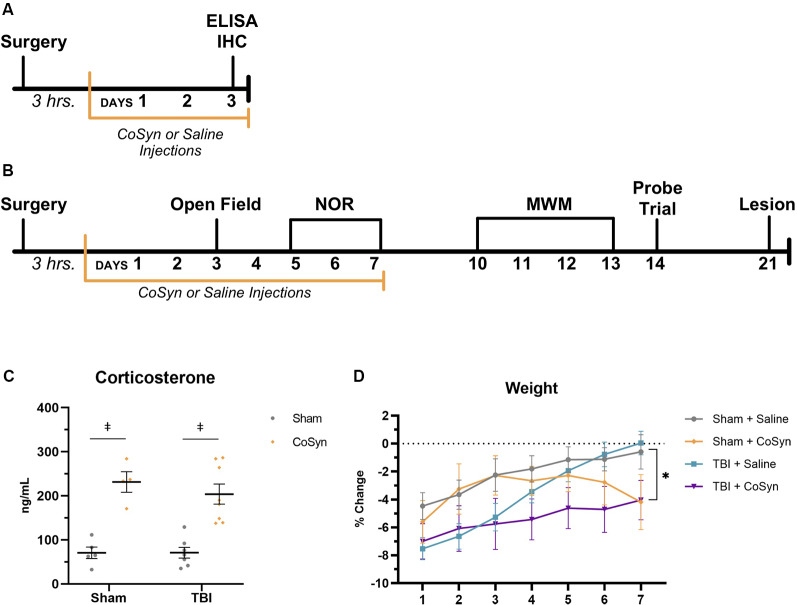
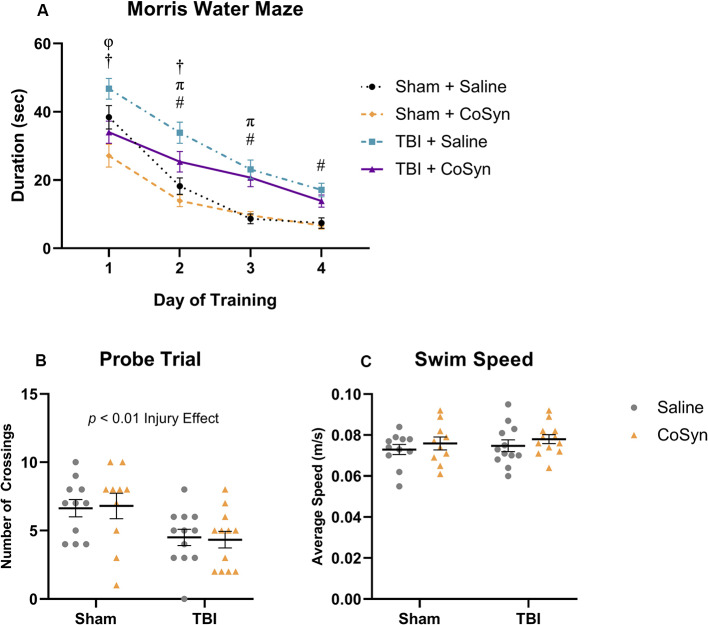
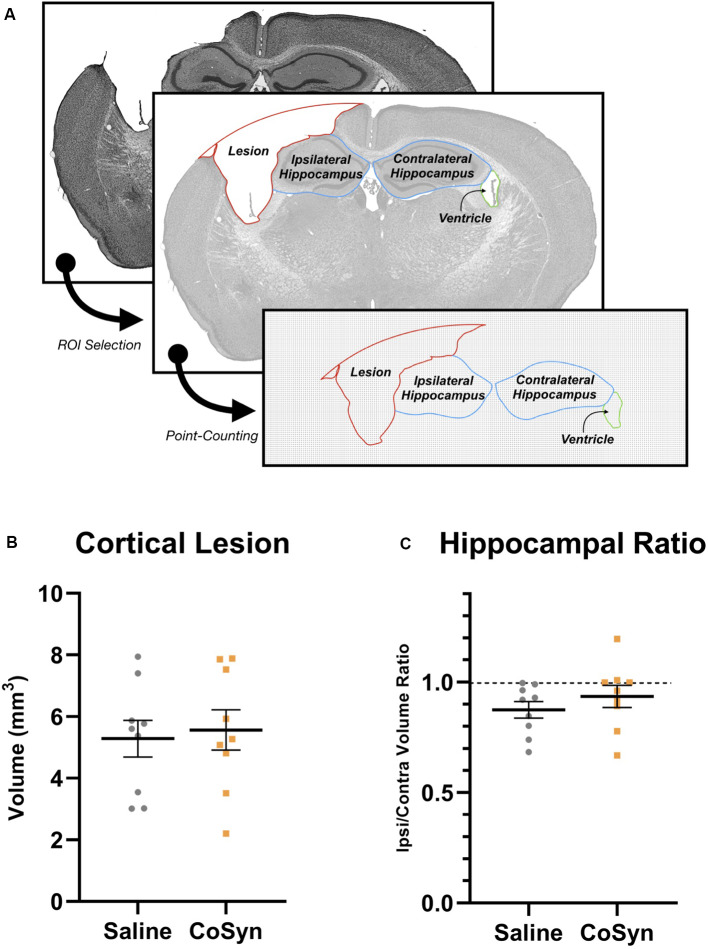
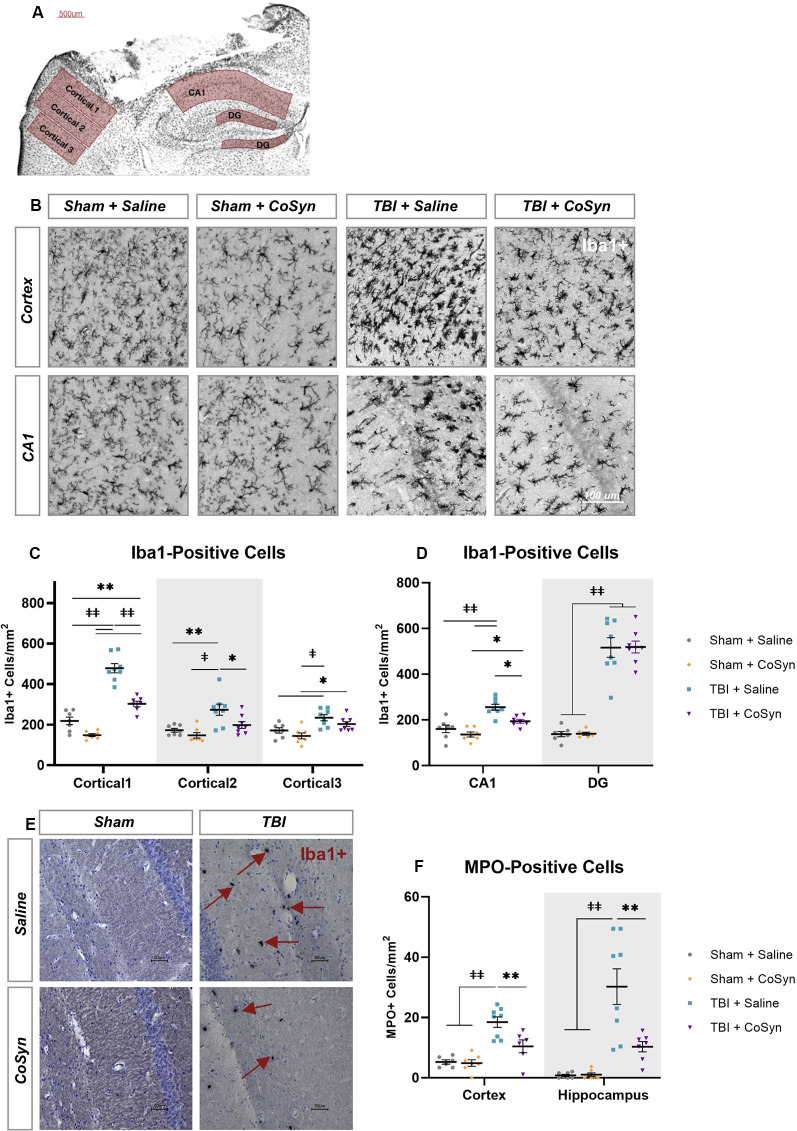
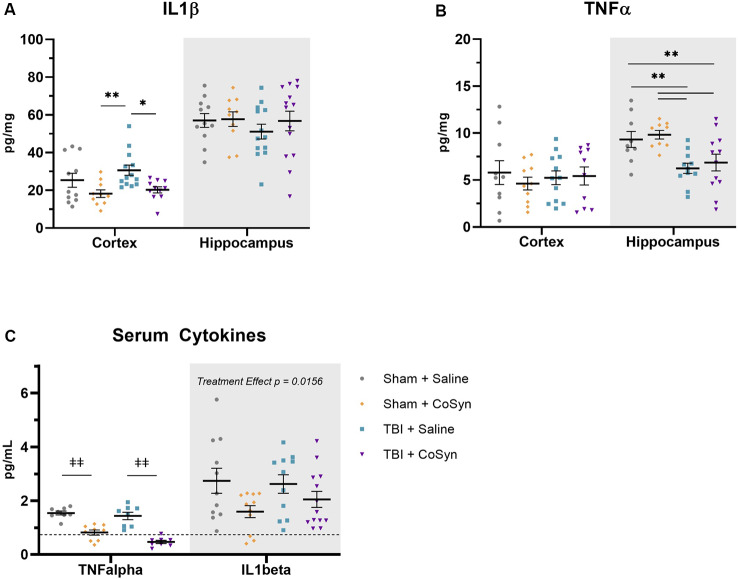
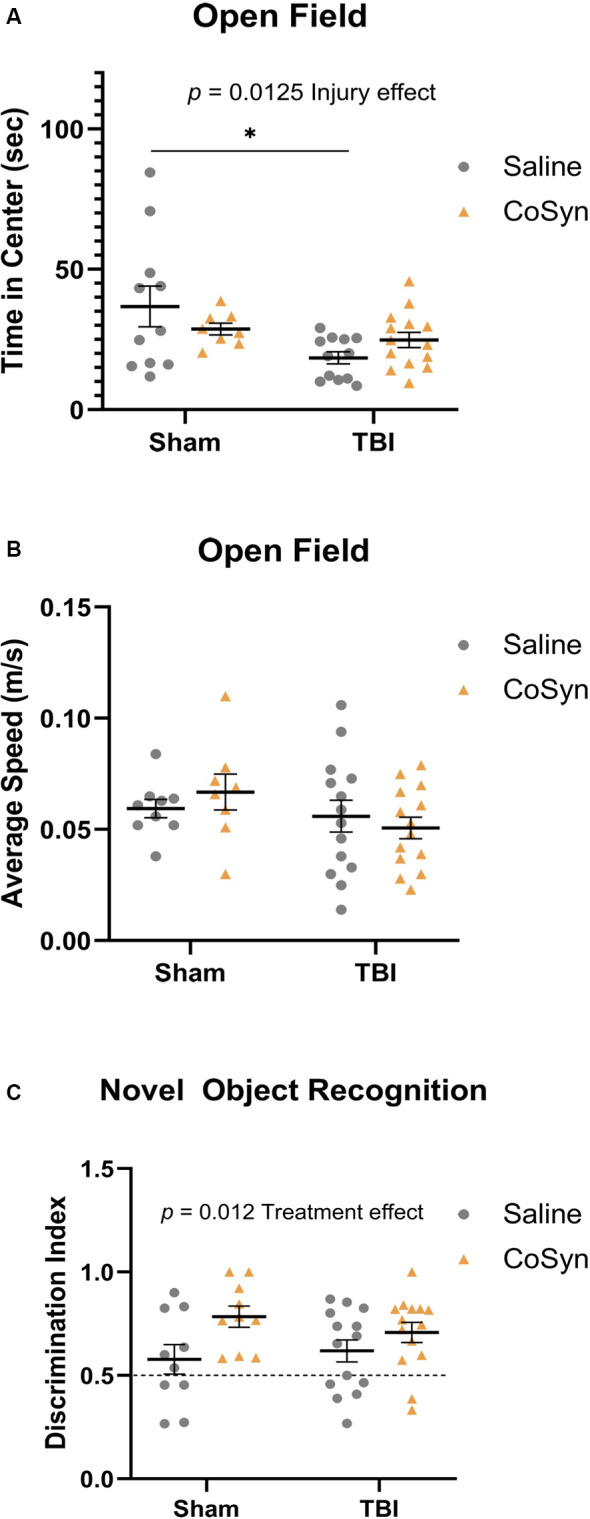
: Traumatic brain injury (TBI) is a leading cause of mortality/morbidity and is associated with chronic neuroinflammation. Melanocortin receptor agonists including adrenocorticotropic hormone (ACTH) ameliorate inflammation and provide a novel therapeutic approach. We examined the effect of long-acting cosyntropin (CoSyn), a synthetic ACTH analog, on the early inflammatory response and functional outcome following experimental TBI. : The controlled cortical impact model was used to induce TBI in mice. Mice were assigned to injury and treatment protocols resulting in four experimental groups including sham + saline, sham + CoSyn, TBI + saline, and TBI + CoSyn. Treatment was administered subcutaneously 3 h post-injury and daily injections were given for up to 7 days post-injury. The early inflammatory response was evaluated at 3 days post-injury through the evaluation of cytokine expression (IL1β and TNFα) and immune cell response. Quantification of immune cell response included cell counts of microglia/macrophages (Iba1+ cells) and neutrophils (MPO+ cells) in the cortex and hippocampus. Behavioral testing ( = 10-14 animals/group) included open field (OF) and novel object recognition (NOR) during the first week following injury and Morris water maze (MWM) at 10-15 days post-injury. : Immune cell quantification showed decreased accumulation of Iba1+ cells in the perilesional cortex and CA1 region of the hippocampus for CoSyn-treated TBI animals compared to saline-treated. Reduced numbers of MPO+ cells were also found in the perilesional cortex and hippocampus in CoSyn treated TBI mice compared to their saline-treated counterparts. Furthermore, CoSyn treatment reduced IL1β expression in the cortex of TBI mice. Behavioral testing showed a treatment effect of CoSyn for NOR with CoSyn increasing the discrimination ratio in both TBI and Sham groups, indicating increased memory performance. CoSyn also decreased latency to find platform during the early training period of the MWM when comparing CoSyn to saline-treated TBI mice suggesting moderate improvements in spatial memory following CoSyn treatment. : Reduced microglia/macrophage accumulation and neutrophil infiltration in conjunction with moderate improvements in spatial learning in our CoSyn treated TBI mice suggests a beneficial anti-inflammatory effect of CoSyn following TBI.
创伤性脑损伤(TBI)是导致死亡/发病的主要原因,且与慢性神经炎症相关。包括促肾上腺皮质激素(ACTH)在内的黑素皮质素受体激动剂可改善炎症反应,并提供一种新的治疗方法。我们研究了长效合成促肾上腺皮质激素类似物长效考的松(CoSyn)对实验性TBI后早期炎症反应和功能转归的影响。
采用控制性皮质撞击模型诱导小鼠TBI。将小鼠分为损伤和治疗方案组,形成四个实验组,包括假手术+生理盐水组、假手术+CoSyn组、TBI+生理盐水组和TBI+CoSyn组。在损伤后3小时皮下给药,损伤后每天注射,持续7天。在损伤后3天,通过评估细胞因子表达(IL1β和TNFα)和免疫细胞反应来评估早期炎症反应。免疫细胞反应的定量分析包括皮质和海马中微胶质细胞/巨噬细胞(Iba1+细胞)和中性粒细胞(MPO+细胞)的细胞计数。行为测试(每组10-14只动物)包括损伤后第一周的旷场试验(OF)和新物体识别试验(NOR),以及损伤后10-15天的莫里斯水迷宫试验(MWM)。
免疫细胞定量分析显示,与生理盐水处理组相比,CoSyn处理的TBI动物在损伤周围皮质和海马CA1区Iba1+细胞的积累减少。与生理盐水处理的TBI小鼠相比,CoSyn处理的TBI小鼠在损伤周围皮质和海马中MPO+细胞的数量也减少。此外,CoSyn处理降低了TBI小鼠皮质中IL1β的表达。行为测试显示CoSyn对NOR有治疗效果,CoSyn增加了TBI组和假手术组的辨别率,表明记忆性能提高。与生理盐水处理的TBI小鼠相比,CoSyn在MWM早期训练期间也缩短了找到平台的潜伏期,表明CoSyn处理后空间记忆有适度改善。
在我们用CoSyn处理的TBI小鼠中,小胶质细胞/巨噬细胞积累减少和中性粒细胞浸润减少,同时空间学习有适度改善,这表明TBI后CoSyn具有有益的抗炎作用。