Hosaka Shinichiro, Yamada Tetsuya, Takahashi Kei, Dan Takashi, Kaneko Keizo, Kodama Shinjiro, Asai Yoichiro, Munakata Yuichiro, Endo Akira, Sugawara Hiroto, Kawana Yohei, Yamamoto Junpei, Izumi Tomohito, Sawada Shojiro, Imai Junta, Miyata Toshio, Katagiri Hideki
Department of Metabolism and Diabetes, Tohoku University Graduate School of Medicine, Sendai, Japan.
Department of Molecular Medicine and Therapy, United Center for Advanced Research and Translational Medicine, Tohoku University Graduate School of Medicine, Sendai, Japan.
Front Pharmacol. 2020 Jun 24;11:943. doi: 10.3389/fphar.2020.00943. eCollection 2020.
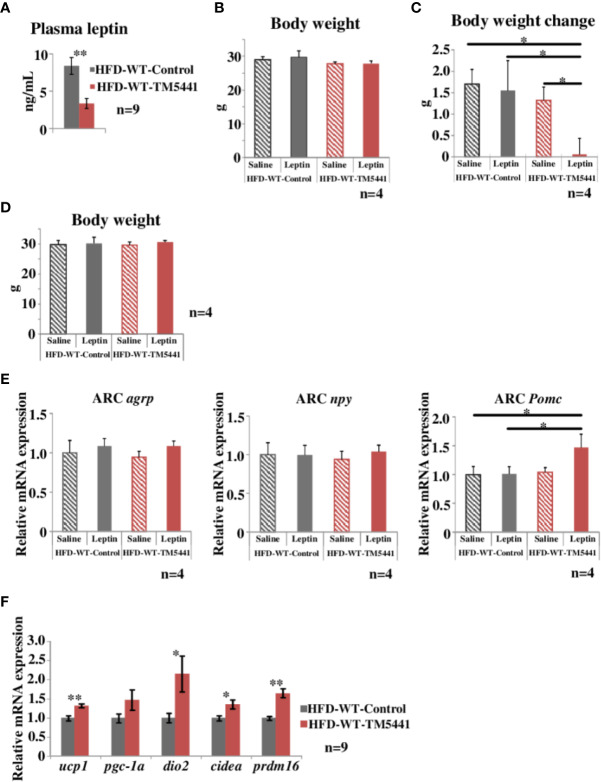
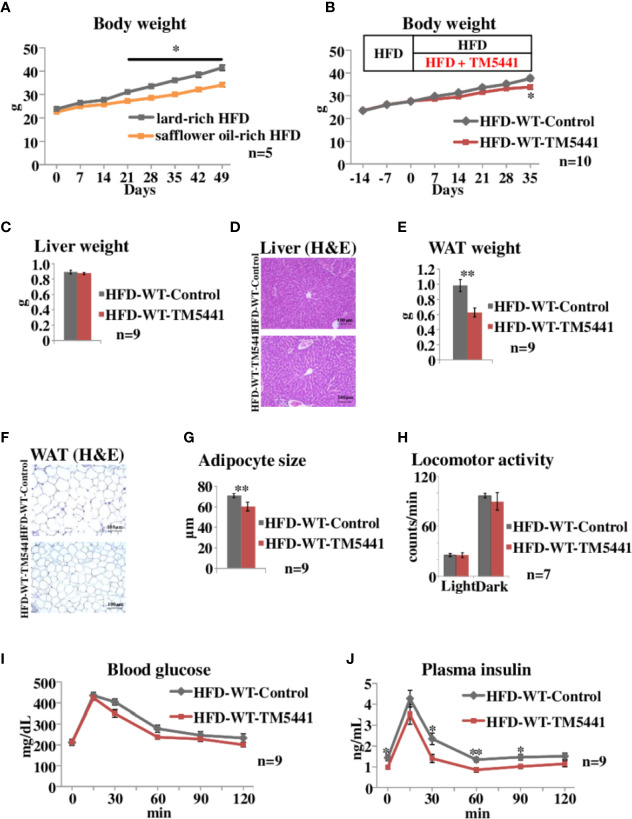
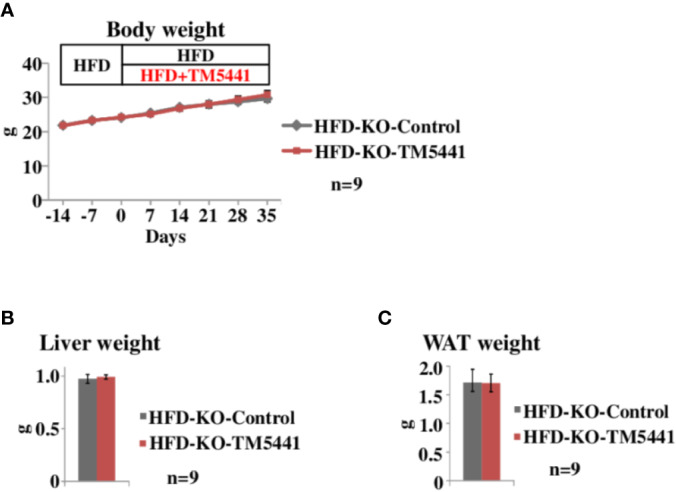
Leptin resistance is an important mechanism underlying the development and maintenance of obesity and is thus regarded as a promising target of obesity treatment. Plasminogen activator inhibitor 1 (PAI-1), a physiological inhibitor of tissue-type and urokinase-type plasminogen activators, is produced at high levels in adipose tissue, especially in states of obesity, and is considered to primarily be involved in thrombosis. PAI-1 may also have roles in inter-organ tissue communications regulating body weight, because PAI-1 knockout mice reportedly exhibit resistance to high fat diet (HFD)-induced obesity. However, the role of PAI-1 in body weight regulation and the underlying mechanisms have not been fully elucidated. We herein studied how PAI-1 affects systemic energy metabolism. We examined body weight and food intake of PAI-1 knockout mice fed normal chow or HFD. We also examined the effects of pharmacological inhibition of PAI-1 activity by a small molecular weight compound, TM5441, on body weight, leptin sensitivities, and expressions of thermogenesis-related genes in brown adipose tissue (BAT) of HFD-fed wild type (WT) mice. Neither body weight gain nor food intake was reduced in PAI-1 KO mice under chow fed conditions. On the other hand, under HFD feeding conditions, food intake was decreased in PAI-1 KO as compared with WT mice (HFD-WT mice 3.98 ± 0.08 g/day HFD-KO mice 3.73 ± 0.07 g/day, = 0.021), leading to an eventual significant suppression of weight gain (HFD-WT mice 40.3 ± 1.68 g HFD-KO mice 34.6 ± 1.84 g, = 0.039). Additionally, TM5441 treatment of WT mice pre-fed the HFD resulted in a marked suppression of body weight gain in a PAI-1-dependent manner (HFD-WT-Control mice 37.6 ± 1.07 g HFD-WT-TM5441 mice 33.8 ± 0.97 g, = 0.017). TM5441 treatment alleviated HFD-induced systemic and hypothalamic leptin resistance, before suppression of weight gain was evident. Moreover, improved leptin sensitivity in response to TM5441 treatment was accompanied by increased expressions of thermogenesis-related genes such as in BAT (HFD-WT-Control mice 1.00 ± 0.07 HFD-WT-TM5441 mice 1.32 ± 0.05, = 0.002). These results suggest that PAI-1 plays a causative role in body weight gain under HFD-fed conditions by inducing hypothalamic leptin resistance. Furthermore, they indicate that pharmacological inhibition of PAI-1 activity is a potential strategy for alleviating diet-induced leptin resistance in obese subjects.
瘦素抵抗是肥胖发生和维持的重要机制,因此被视为肥胖治疗的一个有前景的靶点。纤溶酶原激活物抑制剂1(PAI-1)是组织型和尿激酶型纤溶酶原激活物的生理抑制剂,在脂肪组织中高水平产生,尤其是在肥胖状态下,并且被认为主要参与血栓形成。PAI-1也可能在调节体重的器官间组织通讯中发挥作用,因为据报道PAI-1基因敲除小鼠对高脂饮食(HFD)诱导的肥胖具有抗性。然而,PAI-1在体重调节中的作用及其潜在机制尚未完全阐明。我们在此研究了PAI-1如何影响全身能量代谢。我们检查了喂食正常饲料或HFD的PAI-1基因敲除小鼠的体重和食物摄入量。我们还研究了一种小分子化合物TM5441对PAI-1活性的药理抑制作用,对喂食HFD的野生型(WT)小鼠的体重、瘦素敏感性以及棕色脂肪组织(BAT)中产热相关基因表达的影响。在喂食普通饲料的条件下,PAI-1基因敲除小鼠的体重增加和食物摄入量均未减少。另一方面,在HFD喂养条件下,与WT小鼠相比,PAI-1基因敲除小鼠的食物摄入量减少(HFD-WT小鼠3.98±0.08克/天,HFD-KO小鼠3.73±0.07克/天,P = 0.021),最终导致体重增加受到显著抑制(HFD-WT小鼠40.3±1.68克,HFD-KO小鼠34.6±1.84克,P = 0.039)。此外,用TM5441处理预先喂食HFD的WT小鼠,导致体重增加以PAI-1依赖的方式受到显著抑制(HFD-WT-对照小鼠37.6±1.07克,HFD-WT-TM5441小鼠33.8±0.97克,P = 0.017)。在体重增加明显受到抑制之前,TM5441处理减轻了HFD诱导的全身和下丘脑瘦素抵抗。此外,对TM5441处理的反应中瘦素敏感性的改善伴随着BAT中产热相关基因如Ucp1表达的增加(HFD-WT-对照小鼠1.00±0.07,HFD-WT-TM5441小鼠1.32±0.05,P = 0.002)。这些结果表明,PAI-1通过诱导下丘脑瘦素抵抗在HFD喂养条件下的体重增加中起因果作用。此外,它们表明对PAI-1活性的药理抑制是减轻肥胖受试者饮食诱导的瘦素抵抗的潜在策略。