Ahmad Anum Ali, Yang Chao, Zhang Jianbo, Kalwar Qudratullah, Liang Zeyi, Li Chen, Du Mei, Yan Ping, Long Ruijun, Han Jianlin, Ding Xuezhi
Key Laboratory of Veterinary Pharmaceutical Development, Ministry of Agricultural and Rural Affairs and Key Laboratory of Yak Breeding Engineering, Lanzhou Institute of Husbandry and Pharmaceutical Sciences, Chinese Academy of Agricultural Sciences, Lanzhou, China.
State Key Laboratory of Grassland Agro-Ecosystems, School of Life Sciences, Lanzhou University, Lanzhou, China.
Front Microbiol. 2020 May 15;11:625. doi: 10.3389/fmicb.2020.00625. eCollection 2020.
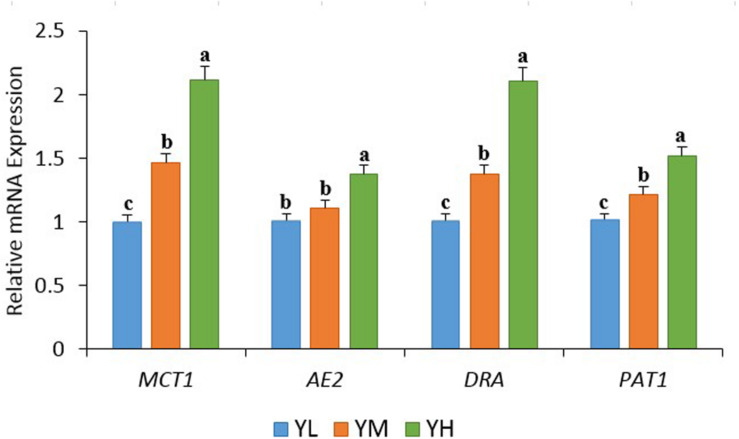
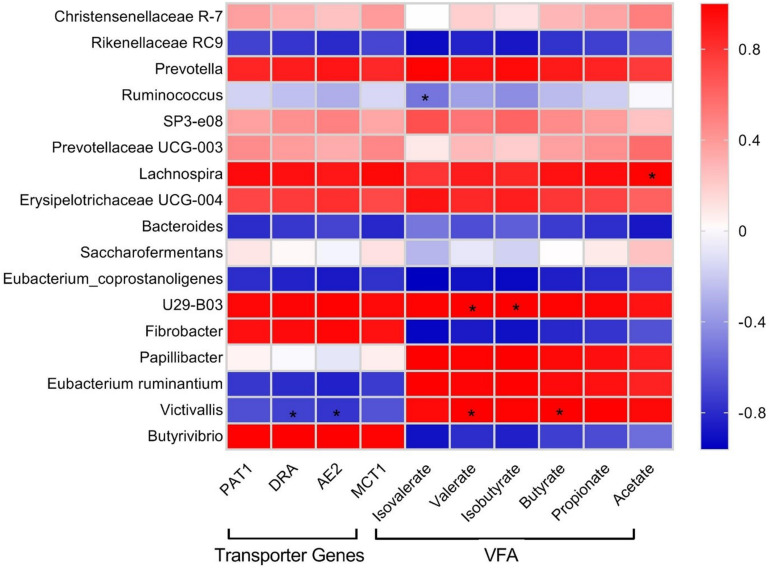
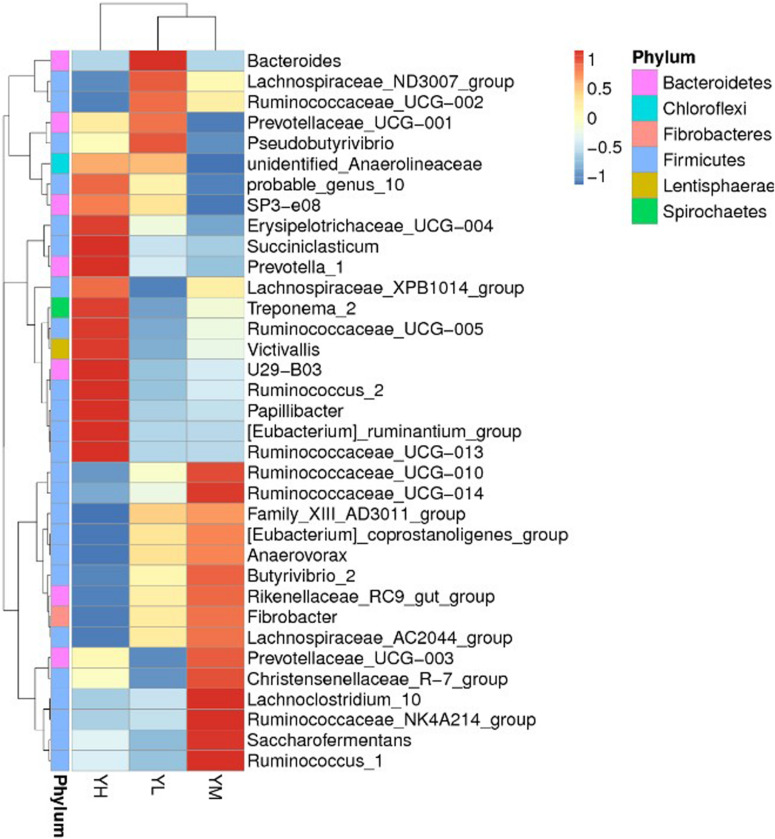
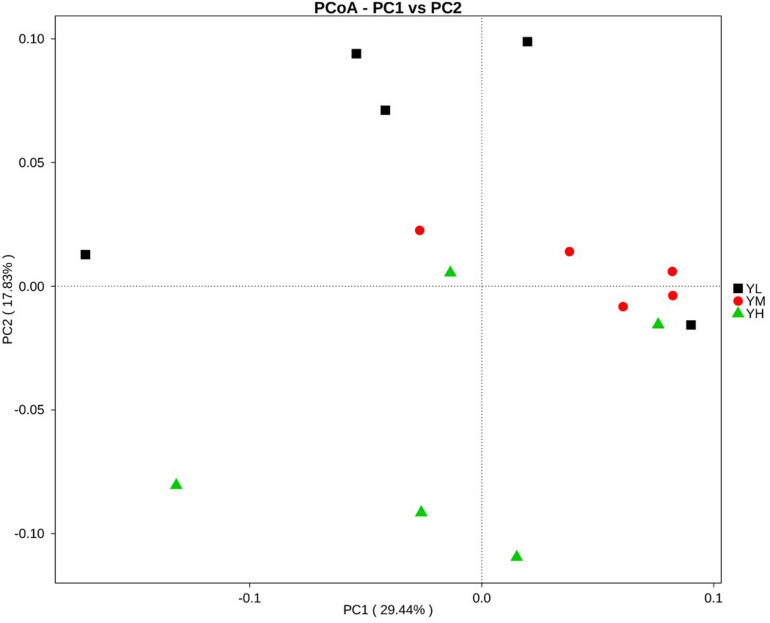
The microbial community of the yak () rumen plays an important role in surviving the harsh Tibetan environment where seasonal dynamic changes in pasture cause nutrient supply imbalances, resulting in weight loss in yaks during the cold season. A better understanding of rumen microbiota under different feeding regimes is critical for exploiting the microbiota to enhance feed efficiency and growth performance. This study explored the impact of different dietary energy levels on feed efficiency, rumen fermentation, bacterial community, and abundance of volatile fatty acid (VFA) transporter transcripts in the rumen epithelium of yaks. Fifteen healthy castrated male yaks were divided into three groups and fed with low (YL), medium (YM), and high energy (YH) levels diet having different NEg of 5.5, 6.2, and 6.9 MJ/kg, respectively. The increase in feed efficiency was recorded with an increase in dietary energy levels. The increase in dietary energy levels decreased the pH and increased the concentrations of acetate, propionate, butyrate, and valerate in yak rumens. The increase in the mRNA abundance of VFA transporter genes (, , , and ) in the rumen epithelium of yaks was recorded as dietary energy level increased. High relative abundances of Firmicutes and Bacteroidetes were recorded with the increase in dietary energy levels. Significant population shifts at the genus level were recorded among the three treatments. This study provides new insights into the dietary energy-derived variations in rumen microbial community.
牦牛瘤胃中的微生物群落对于其在恶劣的青藏高原环境中生存起着重要作用,在该环境中,季节性的牧场动态变化会导致营养供应失衡,进而使牦牛在寒冷季节体重减轻。更好地了解不同饲养方式下的瘤胃微生物群对于利用微生物群提高饲料效率和生长性能至关重要。本研究探讨了不同日粮能量水平对牦牛饲料效率、瘤胃发酵、细菌群落以及瘤胃上皮中挥发性脂肪酸(VFA)转运体转录本丰度的影响。将15头健康去势雄性牦牛分为三组,分别饲喂低能量(YL)、中等能量(YM)和高能量(YH)水平的日粮,其净能分别为5.5、6.2和6.9 MJ/kg。随着日粮能量水平的提高,饲料效率有所增加。日粮能量水平的提高降低了牦牛瘤胃的pH值,并增加了乙酸、丙酸、丁酸和戊酸的浓度。随着日粮能量水平的提高,牦牛瘤胃上皮中VFA转运体基因(、、、)的mRNA丰度也有所增加。随着日粮能量水平的提高,厚壁菌门和拟杆菌门的相对丰度较高。在三种处理之间,在属水平上记录到了显著的种群变化。本研究为日粮能量引起的瘤胃微生物群落变化提供了新的见解。