Tehran Heart Center, Tehran University of Medical Sciences, Tehran, Iran.
Department of Clinical Pharmacy, Tehran University of Medical Sciences, Tehran, Iran.
Cardiovasc Drugs Ther. 2021 Apr;35(2):249-259. doi: 10.1007/s10557-020-07037-2. Epub 2020 Jul 15.
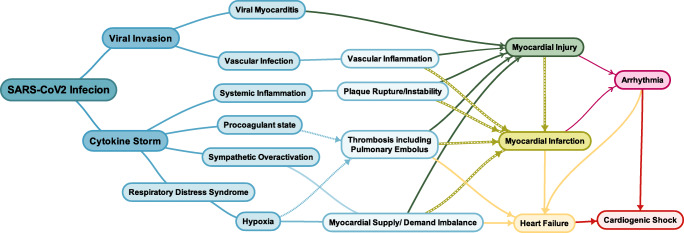
Coronavirus disease of 2019 (COVID-19), which is caused by severe acute respiratory syndrome coronavirus 2 (SARS-CoV-2), is spreading rapidly the world over. The disease was declared "pandemic" by the World Health Organization. An approved therapy for patients with COVID-19 has yet to emerge; however, there are some medications used in the treatment of SARS-CoV-2 infection globally including hydroxychloroquine, remdesivir, dexamethasone, protease inhibitors, and anti-inflammatory agents. Patients with underlying cardiovascular disease are at increased risk of mortality and morbidity from COVID-19. Moreover, patients with chronic stable states and even otherwise healthy individuals might sustain acute cardiovascular problems due to COVID-19 infection. This article seeks to review the latest evidence with a view to explaining possible pharmacotherapies for the cardiovascular complications of COVID-19 including acute coronary syndrome, heart failure, myocarditis, arrhythmias, and venous thromboembolism, as well as possible interactions between these medications and those currently administered (or under evaluation) in the treatment of COVID-19.
2019 年冠状病毒病(COVID-19)是由严重急性呼吸系统综合征冠状病毒 2(SARS-CoV-2)引起的,正在全球迅速蔓延。世界卫生组织已宣布该病为“大流行”。目前尚未出现针对 COVID-19 患者的经批准的治疗方法;但是,全球有一些用于治疗 SARS-CoV-2 感染的药物,包括羟氯喹、瑞德西韦、地塞米松、蛋白酶抑制剂和抗炎药。患有基础心血管疾病的患者因 COVID-19 而死亡和发病的风险增加。此外,患有慢性稳定状态的患者甚至健康个体也可能因 COVID-19 感染而发生急性心血管问题。本文旨在综述最新证据,以解释 COVID-19 心血管并发症(包括急性冠状动脉综合征、心力衰竭、心肌炎、心律失常和静脉血栓栓塞)的可能药物治疗方法,以及这些药物与目前正在 COVID-19 治疗中使用(或正在评估)的药物之间的可能相互作用。