Hacker Ulrich T, Bentler Martin, Kaniowska Dorota, Morgan Michael, Büning Hildegard
Department of Oncology, Gastroenterology, Hepatology, Pulmonology, and Infectious Diseases, University Cancer Center Leipzig (UCCL), Leipzig University Medical Center, 04103 Leipzig, Germany.
Institute of Experimental Hematology, Hannover Medical School, 30625 Hannover, Germany.
Cancers (Basel). 2020 Jul 14;12(7):1889. doi: 10.3390/cancers12071889.
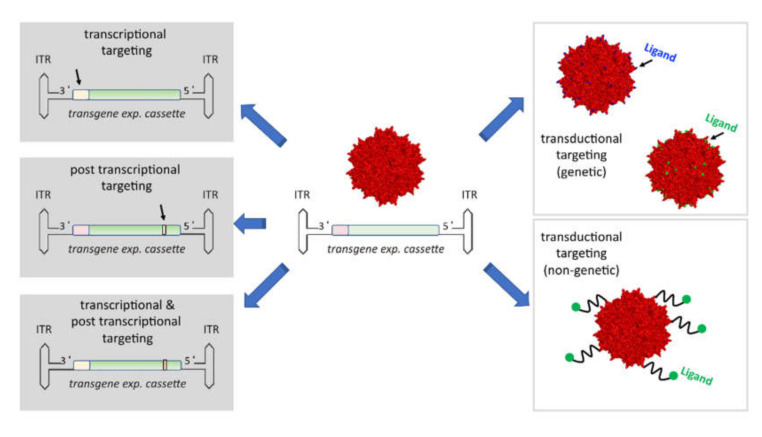
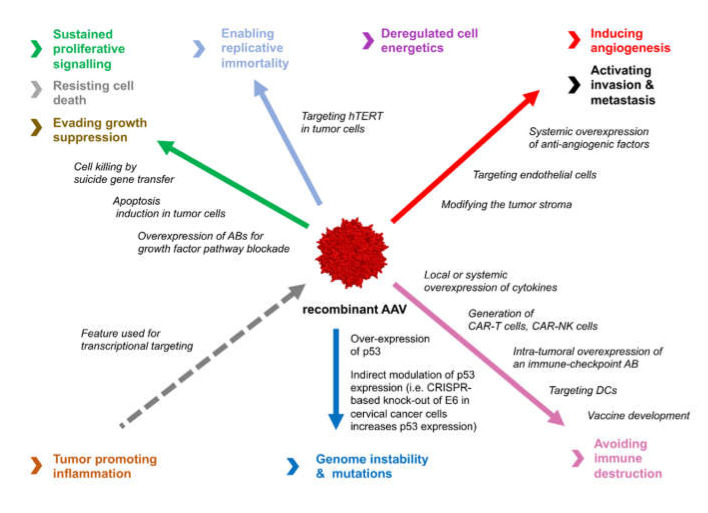
Adeno-associated virus (AAV) vectors have gained tremendous attention as in vivo delivery systems in gene therapy for inherited monogenetic diseases. First market approvals, excellent safety data, availability of large-scale production protocols, and the possibility to tailor the vector towards optimized and cell-type specific gene transfer offers to move from (ultra) rare to common diseases. Cancer, a major health burden for which novel therapeutic options are urgently needed, represents such a target. We here provide an up-to-date overview of the strategies which are currently developed for the use of AAV vectors in cancer gene therapy and discuss the perspectives for the future translation of these pre-clinical approaches into the clinic.
腺相关病毒(AAV)载体作为遗传性单基因疾病基因治疗的体内递送系统,已引起了极大关注。首次获得市场批准、出色的安全性数据、大规模生产方案的可用性,以及使载体针对优化的细胞类型特异性基因转移进行定制的可能性,为从(超)罕见疾病向常见疾病的治疗拓展提供了条件。癌症是一种急需新型治疗选择的重大健康负担,是此类治疗的一个目标。我们在此提供了一份关于目前为在癌症基因治疗中使用AAV载体而开发的策略的最新综述,并讨论了将这些临床前方法转化为临床应用的未来前景。