Department of Microbiology & Immunology, Dalhousie University, 5850 College Street, Halifax, NS B3H 4R2, Canada.
Viruses. 2020 Jul 14;12(7):757. doi: 10.3390/v12070757.
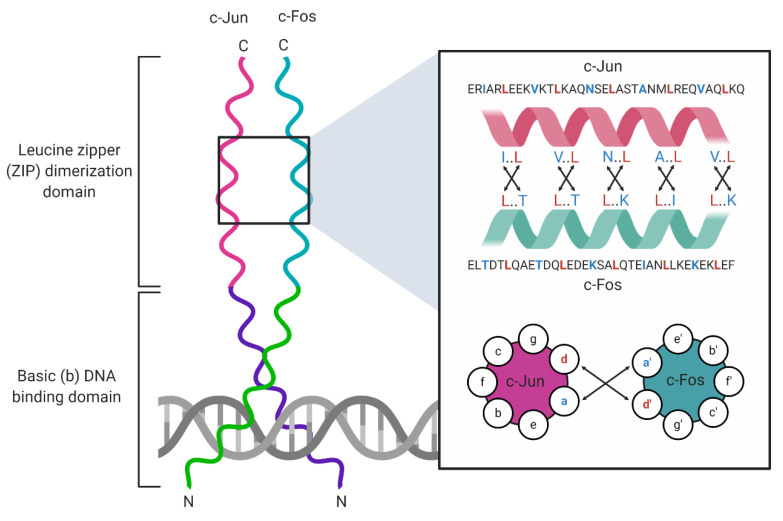
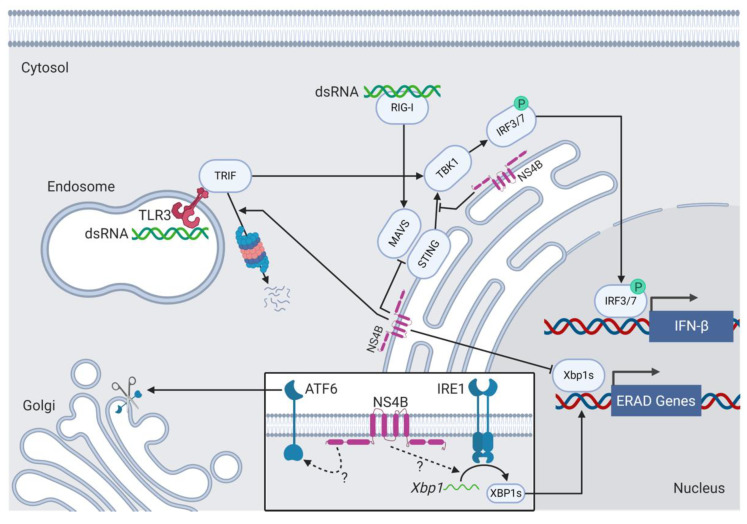
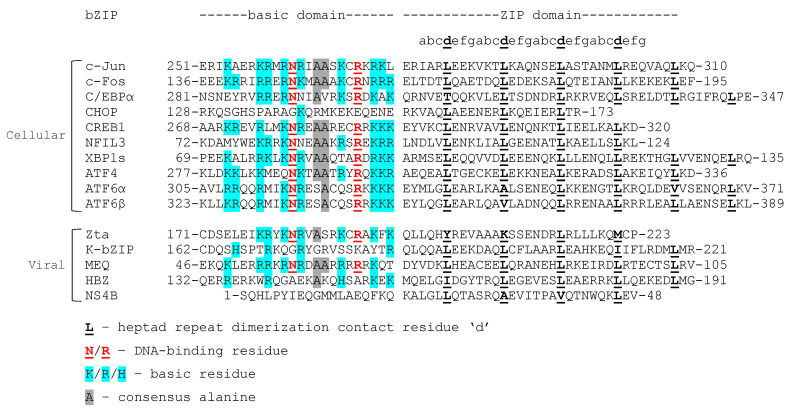
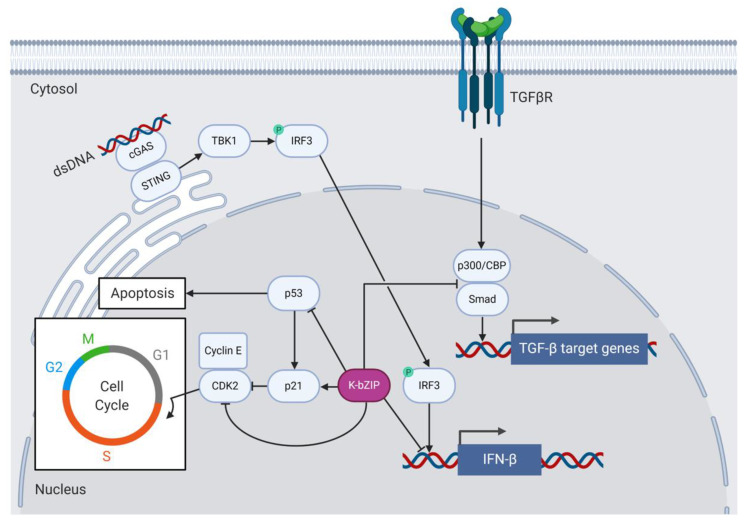
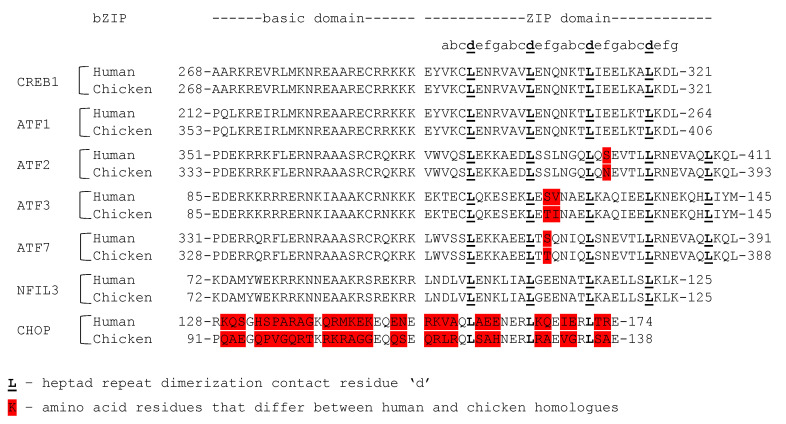
Basic leucine zipper (bZIP) transcription factors (TFs) govern diverse cellular processes and cell fate decisions. The hallmark of the leucine zipper domain is the heptad repeat, with leucine residues at every seventh position in the domain. These leucine residues enable homo- and heterodimerization between ZIP domain α-helices, generating coiled-coil structures that stabilize interactions between adjacent DNA-binding domains and target DNA substrates. Several cancer-causing viruses encode viral bZIP TFs, including human T-cell leukemia virus (HTLV), hepatitis C virus (HCV) and the herpesviruses Marek's disease virus (MDV), Epstein-Barr virus (EBV) and Kaposi's sarcoma-associated herpesvirus (KSHV). Here, we provide a comprehensive review of these viral bZIP TFs and their impact on viral replication, host cell responses and cell fate.
碱性亮氨酸拉链(bZIP)转录因子(TFs)调控多种细胞过程和细胞命运决定。亮氨酸拉链结构域的显著特征是七肽重复序列,在该结构域中每隔七个位置就有一个亮氨酸残基。这些亮氨酸残基使得 ZIP 结构域α-螺旋之间能够发生同源和异源二聚化,形成卷曲螺旋结构,稳定相邻 DNA 结合结构域和靶 DNA 底物之间的相互作用。几种致癌病毒编码病毒 bZIP TFs,包括人类 T 细胞白血病病毒(HTLV)、丙型肝炎病毒(HCV)以及疱疹病毒马立克氏病病毒(MDV)、EB 病毒(EBV)和卡波济肉瘤相关疱疹病毒(KSHV)。在这里,我们全面回顾了这些病毒 bZIP TFs 及其对病毒复制、宿主细胞反应和细胞命运的影响。