Program in Microbiology, Yale School of Medicine, New Haven, CT 06520.
Department of Ecology and Evolutionary Biology, Yale University, New Haven, CT 06520.
Proc Natl Acad Sci U S A. 2020 Aug 4;117(31):18670-18679. doi: 10.1073/pnas.2001888117. Epub 2020 Jul 16.
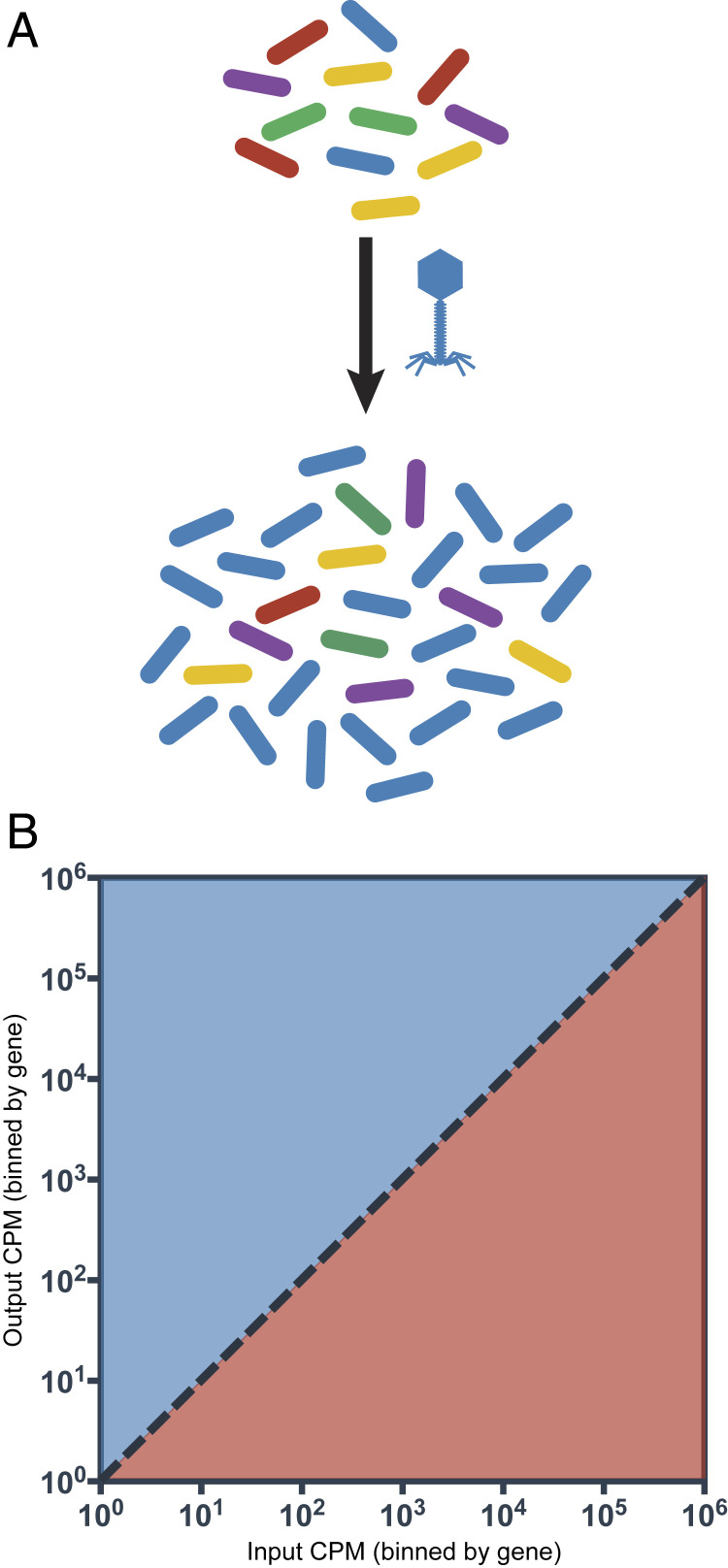
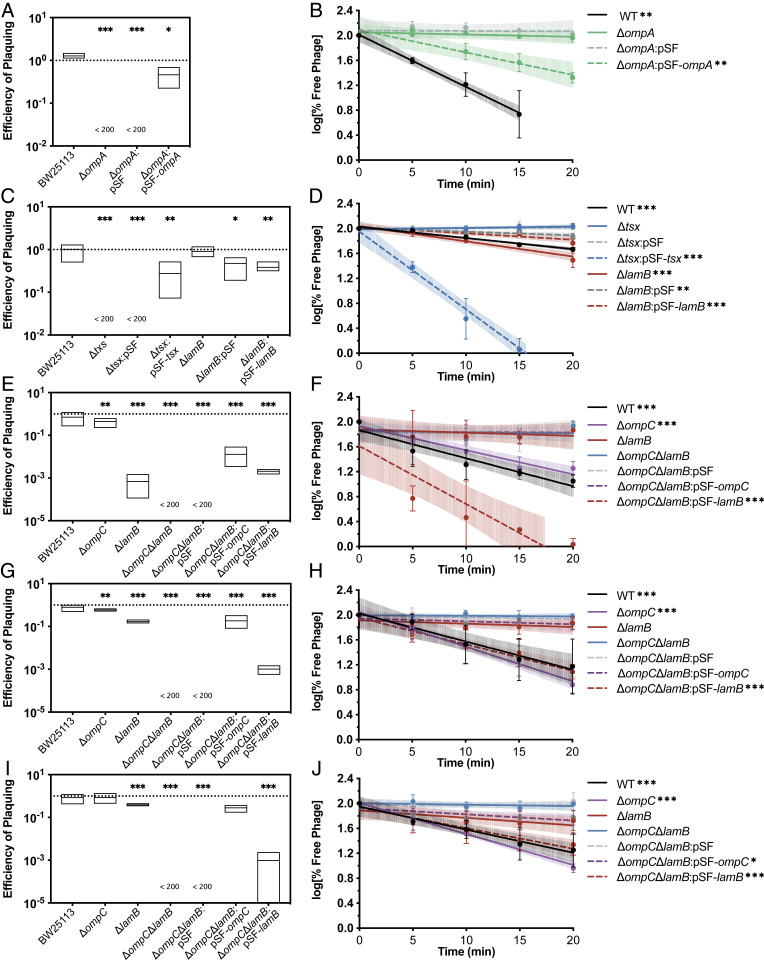
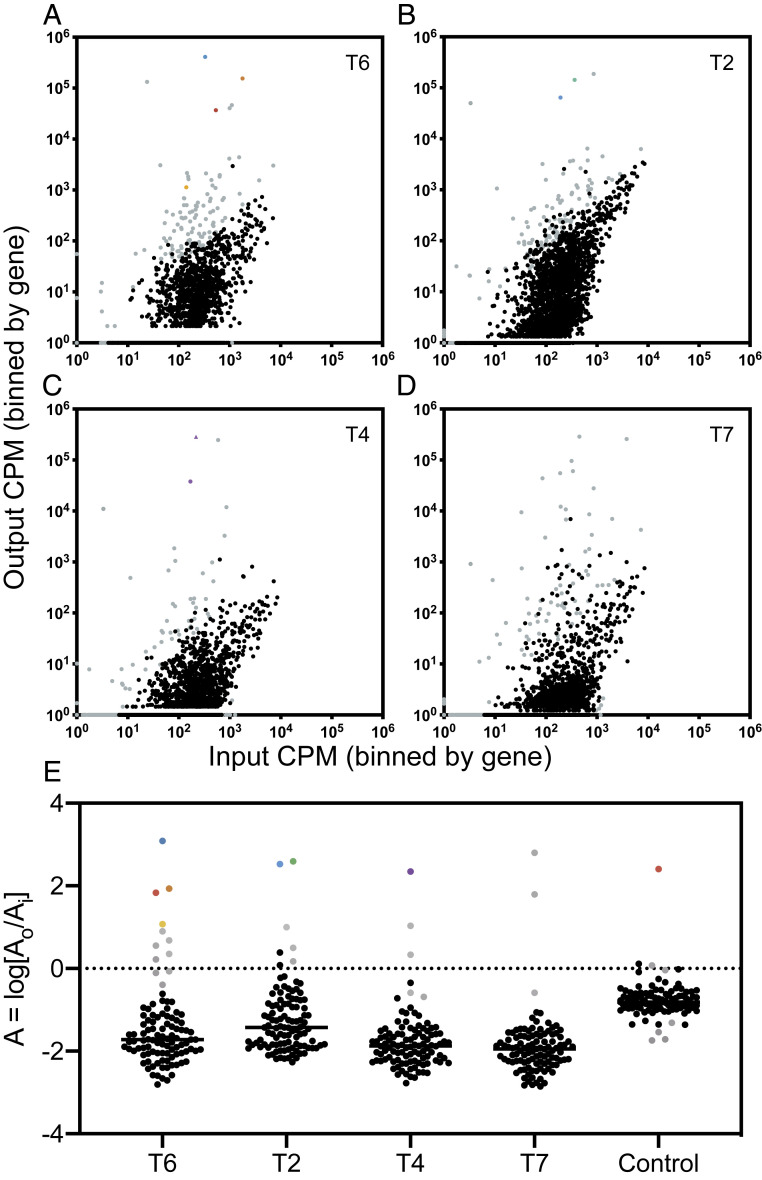
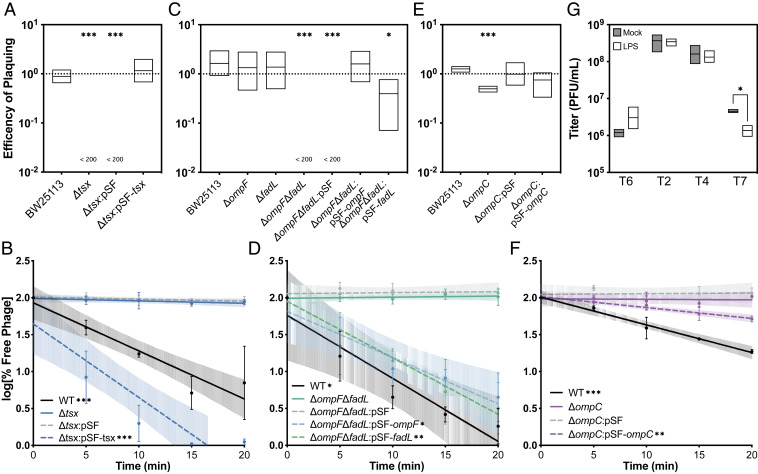
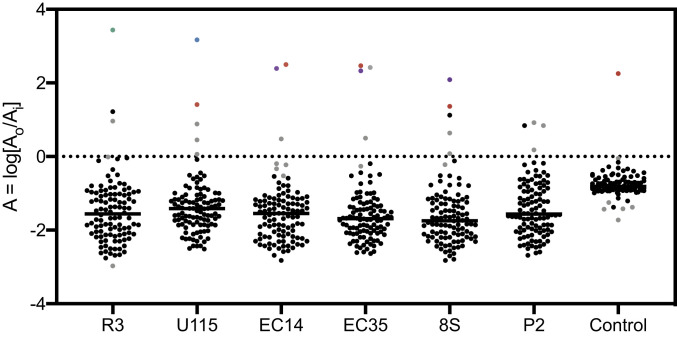
As the most abundant microbes on Earth, novel bacteriophages (phages; bacteria-specific viruses) are readily isolated from environmental samples. However, it remains challenging to characterize phage-bacteria interactions, such as the host receptor(s) phages bind to initiate infection. Here, we tested whether transposon insertion sequencing (INSeq) could be used to identify bacterial genes involved in phage binding. As proof of concept, results showed that INSeq screens successfully identified genes encoding known receptors for previously characterized viruses of (phages T6, T2, T4, and T7). INSeq screens were then used to identify genes involved during infection of six newly isolated coliphages. Results showed that candidate receptors could be successfully identified for the majority (five of six) of the phages; furthermore, genes encoding the phage receptor(s) were the top hit(s) in the analyses of the successful screens. INSeq screens provide a generally useful method for high-throughput discovery of phage receptors. We discuss limitations of our approach when examining uncharacterized phages, as well as usefulness of the method for exploring the evolution of broad versus narrow use of cellular receptors among phages in the biosphere.
作为地球上最丰富的微生物,新型噬菌体(噬菌体;细菌特异性病毒)很容易从环境样本中分离出来。然而,描述噬菌体-细菌相互作用(例如噬菌体结合以启动感染的宿主受体)仍然具有挑战性。在这里,我们测试了转座子插入测序(INSeq)是否可用于鉴定参与噬菌体结合的细菌基因。作为概念验证,结果表明 INSeq 筛选成功鉴定了先前表征的噬菌体(噬菌体 T6、T2、T4 和 T7)编码已知受体的基因。然后,使用 INSeq 筛选来鉴定六种新分离的噬菌(coliphage)感染过程中涉及的基因。结果表明,对于大多数(六种中的五种)噬菌体,可以成功鉴定候选受体;此外,在成功筛选的分析中,编码噬菌体受体的基因是排名最高的基因。INSeq 筛选为噬菌体受体的高通量发现提供了一种通用的方法。我们讨论了当检查未表征的噬菌体时,我们方法的局限性,以及该方法在探索噬菌体在生物圈中对细胞受体的广泛和狭窄使用的进化中的有用性。