Kamiyama Takumi, Sun Wei, Tani Naoki, Nakamura Akira, Niwa Ryusuke
Graduate School of Life and Environmental Sciences, University of Tsukuba, Tsukuba, Japan.
Laboratory of Evolutionary and Functional Genomics, School of Life Sciences, Chongqing University, Chongqing, China.
Front Genet. 2020 Jun 26;11:636. doi: 10.3389/fgene.2020.00636. eCollection 2020.
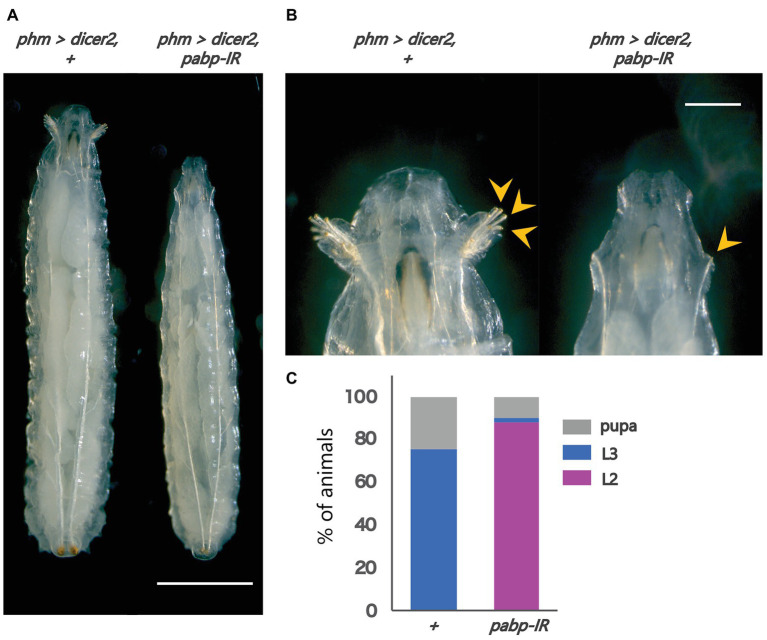
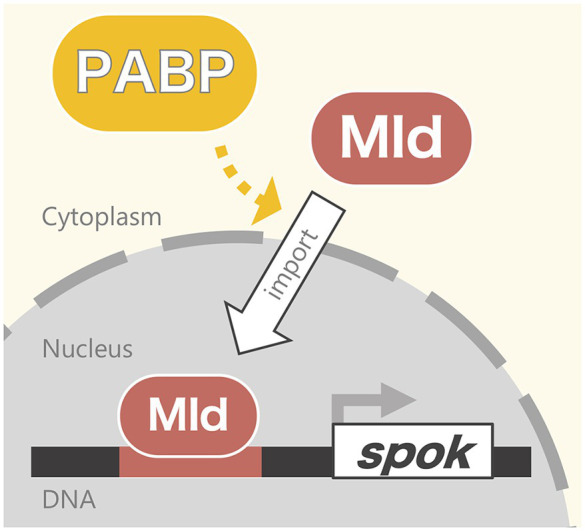
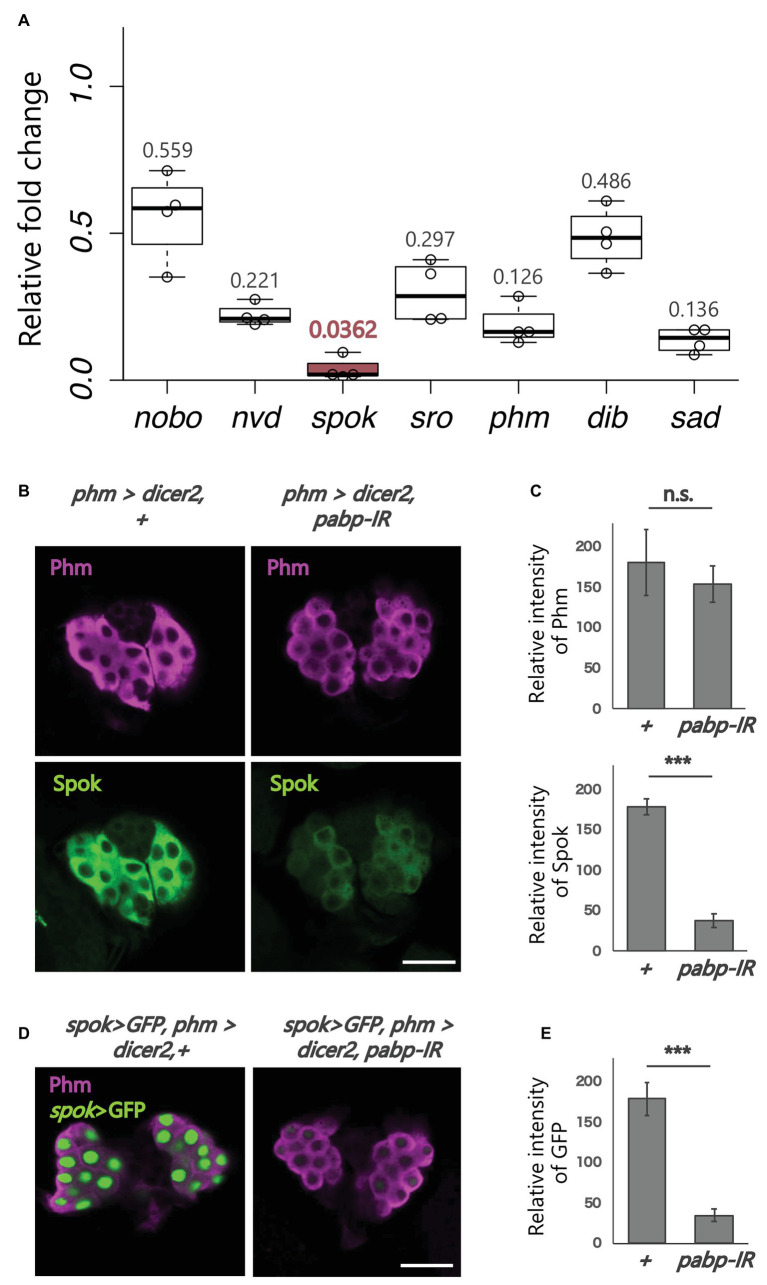
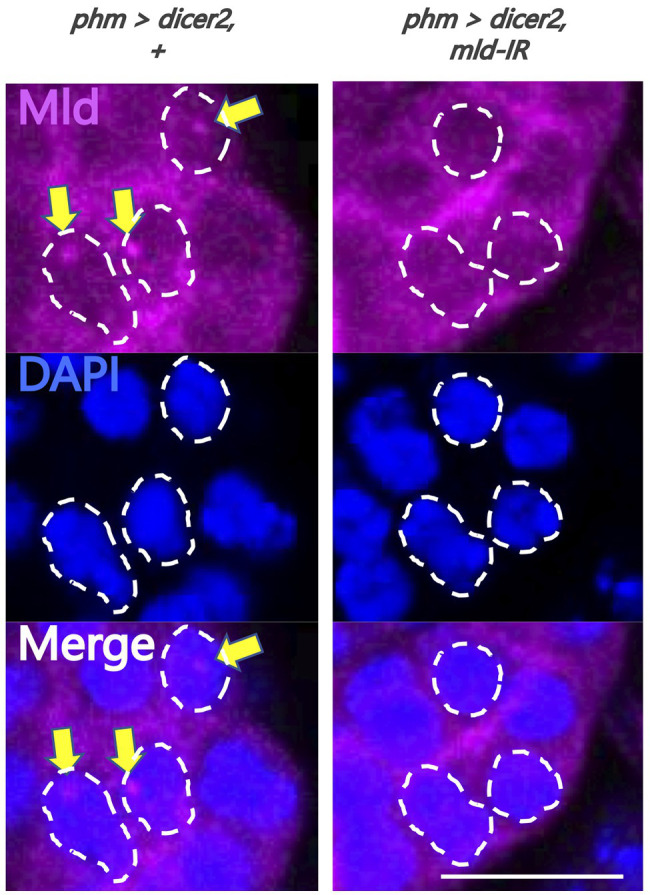
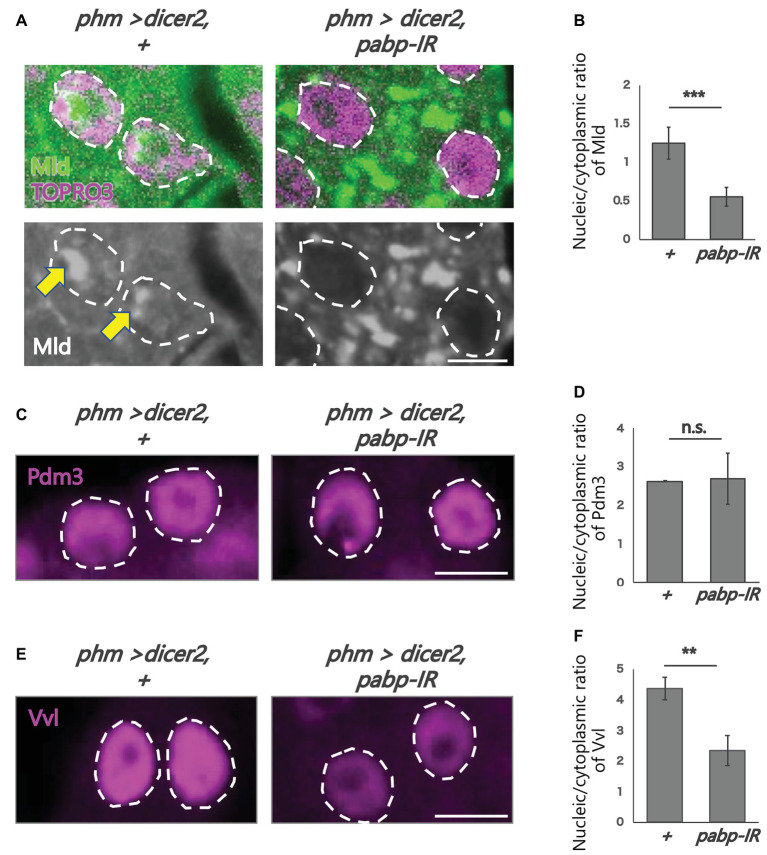
Steroid hormone signaling contributes to the development of multicellular organisms. In insects, ecdysteroids, like ecdysone and the more biologically-active derivative 20-hydroxyecdysone (20E), promote molting and metamorphosis. Ecdysone is biosynthesized in the prothoracic gland (PG), several steps catalyzed by ecdysteroidogenic enzymes that are encoded by Halloween genes. The spatio-temporal expression pattern of ecdysteroidogenic genes is strictly controlled, resulting in a proper fluctuation of the 20E titer during insect development. However, their transcriptional regulatory mechanism is still elusive. A previous study has found that the polyadenylated tail [poly(A)] deadenylation complex, called Carbon catabolite repressor 4-Negative on TATA (CCR4-NOT) regulates the expression of (), which encodes one of the ecdysteroidogenic enzymes in the fruit fly . Based on this finding, we speculated whether any other poly(A)-related protein also regulates expression. In this study, we reported that poly(A) binding protein (Pabp) is involved in expression by regulating nuclear localization of the transcription factor molting defective (Mld). When was knocked down specifically in the PG by transgenic RNAi, both mRNA and Spok protein levels were significantly reduced. In addition, the promoter-driven green fluorescence protein (GFP) signal was also reduced in the -RNAi PG, suggesting that Pabp is involved in the transcriptional regulation of . We next examined which transcription factors are responsible for Pabp-dependent transcriptional regulation. Among the transcription factors acting in the PG, we primarily focused on the zinc-finger transcription factor Mld, as Mld is essential for transcription. Mld was localized in the nucleus of the control PG cells, while Mld abnormally accumulated in the cytoplasm of -RNAi PG cells. In contrast, -RNAi did not affect the nuclear localization of other transcription factors, including ventral vein lacking (Vvl) and POU domain motif 3 (Pdm3), in PG cells. From these results, we propose that Pabp regulates subcellular localization in the PG, specifically of the transcription factor Mld, in the context of ecdysone biosynthesis.
类固醇激素信号传导有助于多细胞生物的发育。在昆虫中,蜕皮类固醇,如蜕皮激素和生物活性更强的衍生物20-羟基蜕皮激素(20E),促进蜕皮和变态。蜕皮激素在前胸腺(PG)中生物合成,由万圣节基因编码的蜕皮类固醇生成酶催化多个步骤。蜕皮类固醇生成基因的时空表达模式受到严格控制,导致昆虫发育过程中20E滴度的适当波动。然而,它们的转录调控机制仍然难以捉摸。先前的一项研究发现,称为碳代谢物阻遏物4-负TATA元件(CCR4-NOT)的聚腺苷酸化尾[poly(A)]去腺苷酸化复合体调节果蝇中一种蜕皮类固醇生成酶的编码基因的表达。基于这一发现,我们推测是否有其他与poly(A)相关的蛋白也调节该基因的表达。在本研究中,我们报道聚腺苷酸结合蛋白(Pabp)通过调节转录因子蜕皮缺陷(Mld)的核定位参与该基因的表达。当通过转基因RNA干扰在PG中特异性敲低该基因时,该基因的mRNA和Spok蛋白水平均显著降低。此外,在该基因RNA干扰的PG中,该基因启动子驱动的绿色荧光蛋白(GFP)信号也降低,表明Pabp参与该基因的转录调控。接下来,我们研究了哪些转录因子负责Pabp依赖性转录调控。在PG中起作用的转录因子中,我们主要关注锌指转录因子Mld,因为Mld对该基因的转录至关重要。Mld定位于对照PG细胞的细胞核中,但在该基因RNA干扰的PG细胞的细胞质中异常积累。相比之下,该基因RNA干扰不影响PG细胞中其他转录因子的核定位,包括腹侧静脉缺失(Vvl)和POU结构域基序3(Pdm3)。根据这些结果,我们提出Pabp在蜕皮激素生物合成的背景下调节PG中的亚细胞定位,特别是转录因子Mld的亚细胞定位。