Swithenbank Lucy, Cox Phillipa, Harris Llinos G, Dudley Edward, Sinclair Kathryn, Lewis Paul, Cappiello Floriana, Morgan Claire
Swansea University Medical School, Institute of Life Science, Swansea University, Swansea SA2 8PP, UK.
Department of Biochemical Sciences "A. Rossi Fanelli", Sapienza University of Rome, Rome, Italy.
Scientifica (Cairo). 2020 Jun 26;2020:3526286. doi: 10.1155/2020/3526286. eCollection 2020.
Recently, antimicrobial peptides (AMPs) have been investigated for their use in cancer therapy. They have been reported to selectively target and kill cancer cells whilst leaving normal healthy cells unaffected. Certain Anura AMPs have expressed selective cytotoxicity against tumour cells.
To test the potential of Anura AMPs bombinin H2, bombinin H4, temporin A, and temporin L for use as therapeutic agents for non-small cell lung carcinoma (NSCLC).
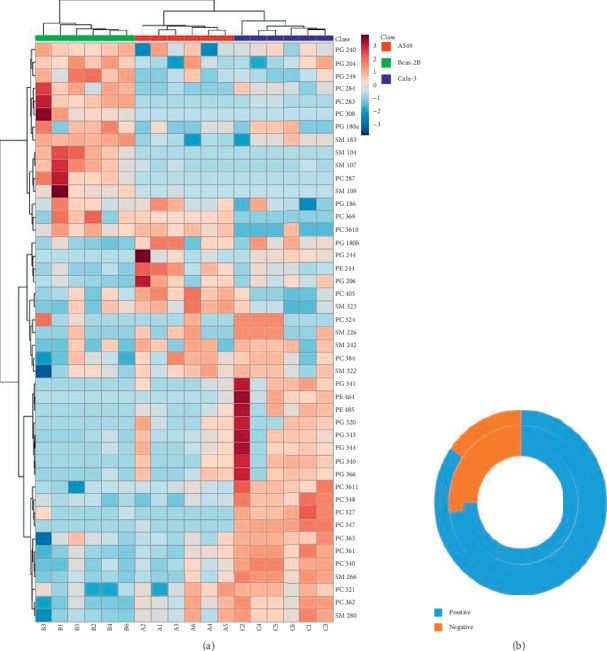
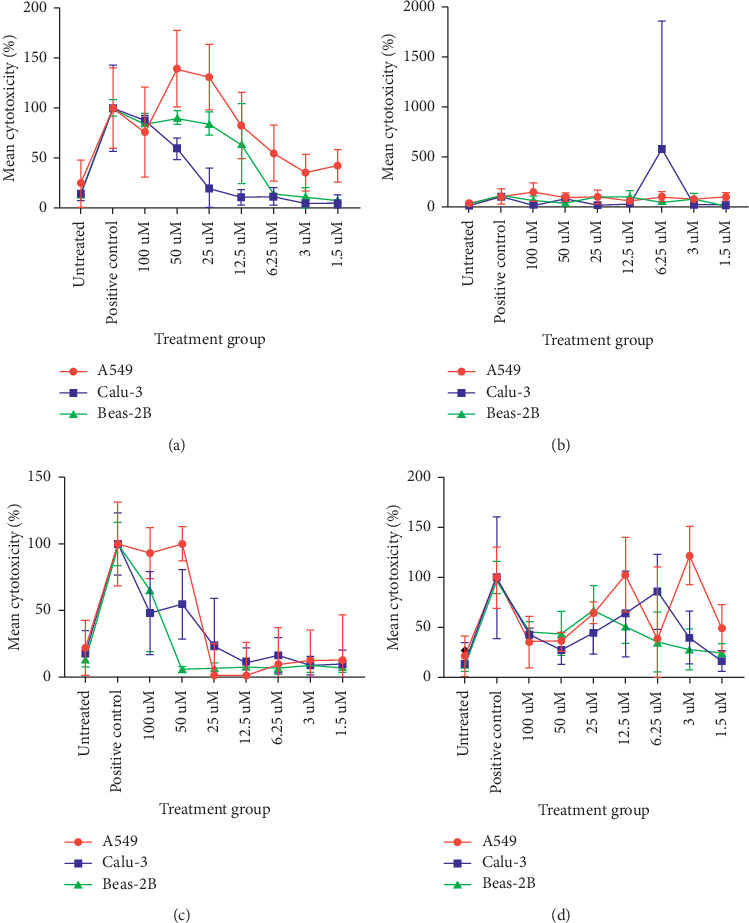
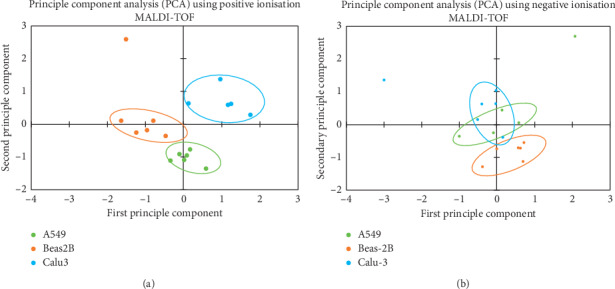
Cytotoxic effects on NSCLC cell lines A549 and Calu-3 and normal epithelial cell line Beas-2B were tested using the CellTox Green Cytotoxicity Assay. Their haemolytic effects on human erythrocytes were also tested for their clinical relevance. Cell membrane profiling, using MALDI-TOF, was performed to ascertain if membrane characteristics of the NSCLC and Beas-2B cell lines may contribute to the AMPs mode of action.
Bombinin H4 (100-1.5 M, < 0.05) and temporin A (100-50 M, < 0.05) showed selective cytotoxicity towards the NSCLC cell lines. Furthermore, they exhibited low levels of haemolytic activity (bombinin H4, 0.061%; temporin A, 0.874%) comparable to untreated cells. Cell membrane profiling showed the phospholipid composition of normal epithelial cell line Beas-2B to be divergent from the cancerous cell lines. However, there was an overlap in the phospholipid profiles of the NSCLC cell lines supporting the hypothesis that the AMPs may have a selective affinity via the membrane composition of cancerous cell lines.
These results suggest that bombinin H4 and temporin A show potential for application in lung cancer therapies. Further and studies are required to develop a greater understanding of their use as anticancer agents.
最近,抗菌肽(AMPs)已被研究用于癌症治疗。据报道,它们能选择性地靶向并杀死癌细胞,而不会影响正常健康细胞。某些无尾两栖类抗菌肽已表现出对肿瘤细胞的选择性细胞毒性。
测试无尾两栖类抗菌肽铃蟾肽H2、铃蟾肽H4、爪蟾素A和爪蟾素L作为非小细胞肺癌(NSCLC)治疗药物的潜力。
使用CellTox Green细胞毒性检测法测试对NSCLC细胞系A549和Calu-3以及正常上皮细胞系Beas-2B的细胞毒性作用。还测试了它们对人红细胞的溶血作用以评估其临床相关性。使用基质辅助激光解吸电离飞行时间质谱(MALDI-TOF)进行细胞膜分析,以确定NSCLC和Beas-2B细胞系的膜特性是否可能有助于抗菌肽的作用模式。
铃蟾肽H4(100 - 1.5 μM,P < 0.05)和爪蟾素A(100 - 50 μM,P < 0.05)对NSCLC细胞系表现出选择性细胞毒性。此外,它们表现出与未处理细胞相当的低水平溶血活性(铃蟾肽H4,0.061%;爪蟾素A,0.874%)。细胞膜分析表明,正常上皮细胞系Beas-2B的磷脂组成与癌细胞系不同。然而,NSCLC细胞系的磷脂谱存在重叠,支持了抗菌肽可能通过癌细胞系的膜组成具有选择性亲和力的假设。
这些结果表明铃蟾肽H4和爪蟾素A在肺癌治疗中具有应用潜力。需要进一步深入研究以更好地理解它们作为抗癌药物的用途。