Jobst Barbara C, Bartolomei Fabrice, Diehl Beate, Frauscher Birgit, Kahane Philippe, Minotti Lorella, Sharan Ashwini, Tardy Nastasia, Worrell Gregory, Gotman Jean
Geisel School of Medicine at Dartmouth and Dartmouth-Hitchcock Medical Center, Hanover, NH, USA.
Aix Marseille University, INSERM, INS, Inst Neurosci Syst, Marseille, France.
Epilepsy Curr. 2020 Jul;20(4):180-188. doi: 10.1177/1535759720934852. Epub 2020 Jul 17.
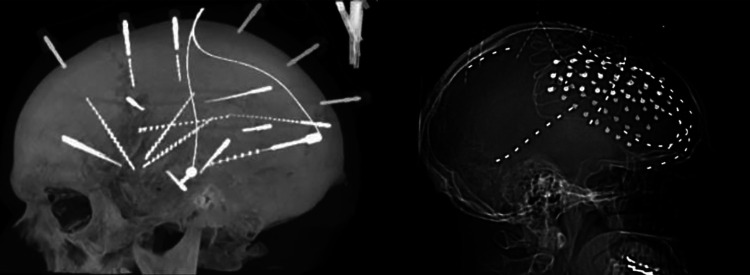
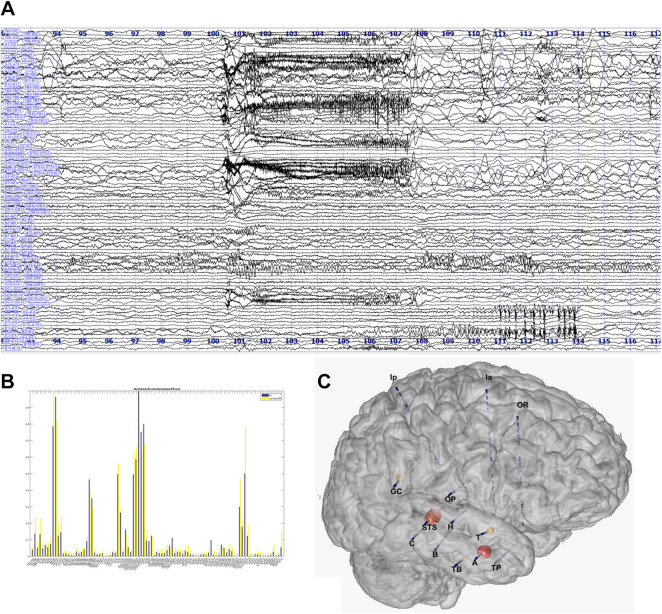
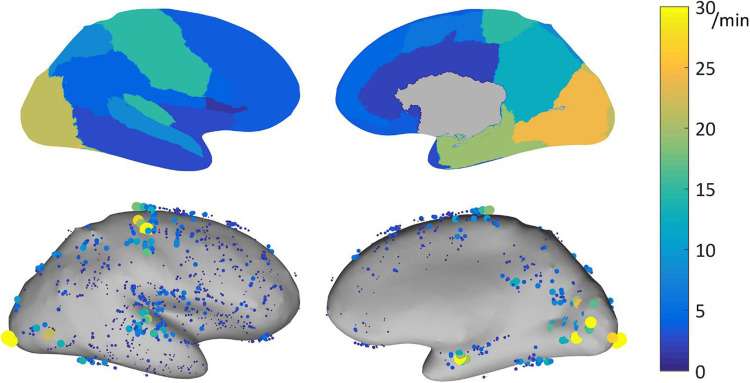
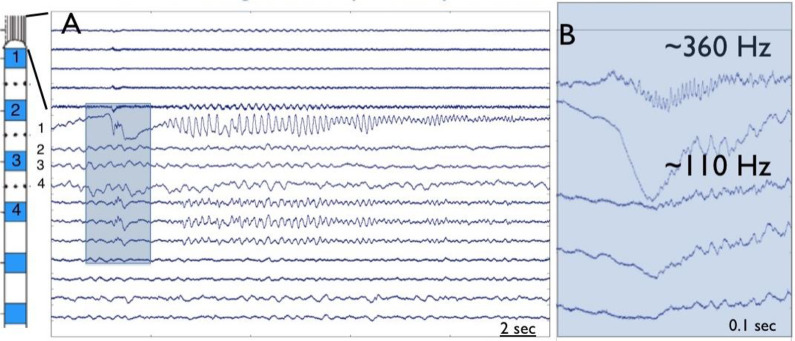
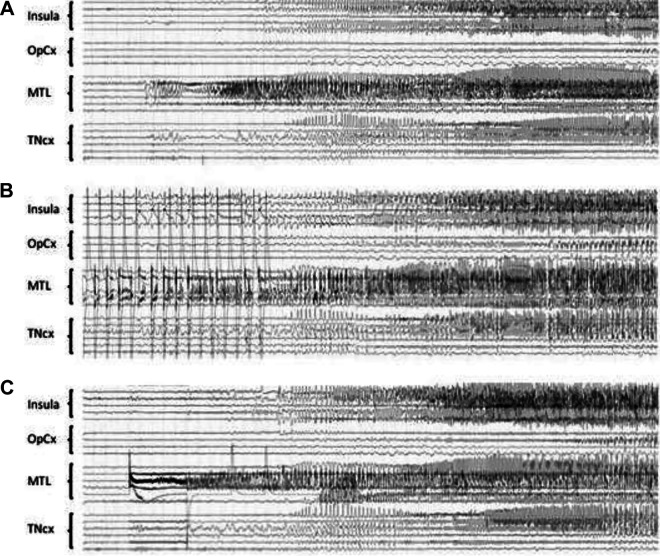
Intracranial electroencephalography (iEEG) has been the mainstay of identifying the seizure onset zone (SOZ), a key diagnostic procedure in addition to neuroimaging when considering epilepsy surgery. In many patients, iEEG has been the basis for resective epilepsy surgery, to date still the most successful treatment for drug-resistant epilepsy. Intracranial EEG determines the location and resectability of the SOZ. Advances in recording and implantation of iEEG provide multiple options in the 21st century. This not only includes the choice between subdural electrodes (SDE) and stereoelectroencephalography (SEEG) but also includes the implantation and recordings from microelectrodes. Before iEEG implantation, especially in magnetic resonance imaging -negative epilepsy, a clear hypothesis for seizure generation and propagation should be based on noninvasive methods. Intracranial EEG implantation should be planned by a multidisciplinary team considering epileptic networks. Recordings from SDE and SEEG have both their advantages and disadvantages. Stereo-EEG seems to have a lower rate of complications that are clinically significant, but has limitations in spatial sampling of the cortical surface. Stereo-EEG can sample deeper areas of the brain including deep sulci and hard to reach areas such as the insula. To determine the epileptogenic zone, interictal and ictal information should be taken into consideration. Interictal spiking, low frequency slowing, as well as high frequency oscillations may inform about the epileptogenic zone. Ictally, high frequency onsets in the beta/gamma range are usually associated with the SOZ, but specialized recordings with combined macro and microelectrodes may in the future educate us about onset in higher frequency bands. Stimulation of intracranial electrodes triggering habitual seizures can assist in identifying the SOZ. Advanced computational methods such as determining the epileptogenicity index and similar measures may enhance standard clinical interpretation. Improved techniques to record and interpret iEEG may in the future lead to a greater proportion of patients being seizure free after epilepsy surgery.
颅内脑电图(iEEG)一直是识别癫痫发作起始区(SOZ)的主要手段,在考虑癫痫手术时,这是除神经影像学检查外的一项关键诊断程序。在许多患者中,iEEG一直是切除性癫痫手术的依据,迄今为止,切除性癫痫手术仍是治疗耐药性癫痫最成功的方法。颅内脑电图可确定癫痫发作起始区的位置和可切除性。21世纪,iEEG记录和植入技术的进步提供了多种选择。这不仅包括硬膜下电极(SDE)和立体定向脑电图(SEEG)之间的选择,还包括微电极的植入和记录。在进行iEEG植入之前,尤其是在磁共振成像阴性的癫痫患者中,应基于非侵入性方法对癫痫发作的产生和传播提出明确的假设。颅内脑电图植入应由一个多学科团队根据癫痫网络进行规划。SDE和SEEG记录都有其优缺点。立体定向脑电图似乎具有较低的具有临床意义的并发症发生率,但在皮质表面的空间采样方面存在局限性。立体定向脑电图可以对大脑更深的区域进行采样,包括深部脑沟和难以到达的区域,如岛叶。为了确定致痫区,应考虑发作间期和发作期的信息。发作间期棘波、低频减慢以及高频振荡可能提示致痫区。在发作期,β/γ范围内的高频起始通常与癫痫发作起始区相关,但未来结合宏观和微观电极的专门记录可能会让我们了解更高频段的起始情况。刺激颅内电极引发习惯性癫痫发作有助于识别癫痫发作起始区。先进的计算方法,如确定致痫性指数和类似指标,可能会增强标准的临床解释。未来,改进的iEEG记录和解释技术可能会使更多癫痫患者在手术后不再发作。