Department of Medicine II, University Medical Center Freiburg, Faculty of Medicine, University of Freiburg, Freiburg, Germany; Berta-Ottenstein-Programme, Faculty of Medicine, University of Freiburg, Freiburg, Germany.
Department of Medicine II, University Medical Center Freiburg, Faculty of Medicine, University of Freiburg, Freiburg, Germany.
Cell Mol Gastroenterol Hepatol. 2021;11(1):1-12. doi: 10.1016/j.jcmgh.2020.07.005. Epub 2020 Jul 15.
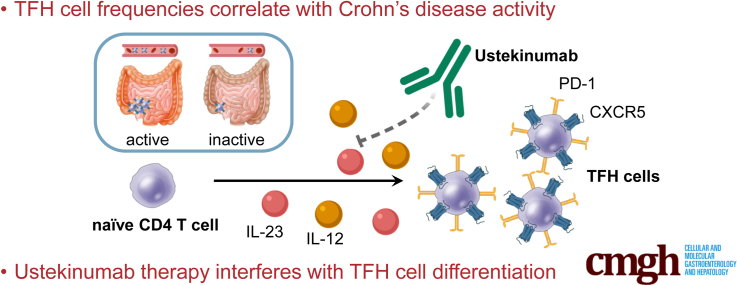
BACKGROUND & AIMS: The pathogenesis of chronic inflammatory bowel diseases (Crohn's disease [CD] and ulcerative colitis) involves dysregulated TH1 and TH17 cell responses, which can be targeted therapeutically by the monoclonal antibody Ustekinumab directed against the joint p40 subunit of IL-12 and IL-23. These cytokines may also regulate the differentiation of T follicular helper (TFH) cells, which promote B cell function in germinal centers. However, the role of TFH cells in CD pathogenesis and impact of Ustekinumab therapy on TFH cell fate in patients are poorly defined.
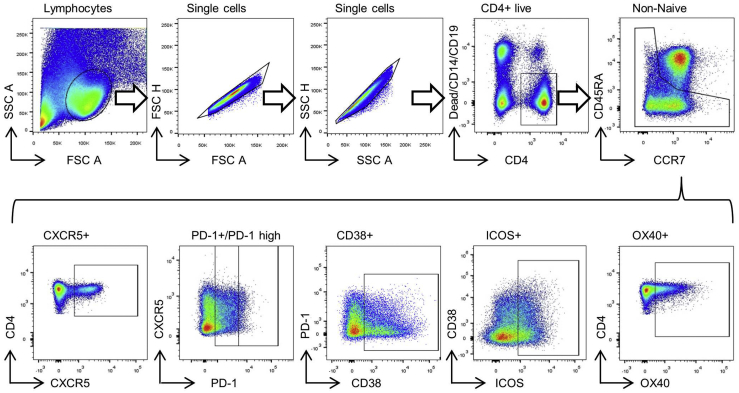
Lymphocytes were isolated from peripheral blood (n=45) and intestinal biopsies (n=15) of CD patients or healthy controls (n=21) and analyzed by flow cytometry to assess TFH cell phenotypes and functions ex vivo. In addition, TFH cell differentiation was analyzed in the presence of Ustekinumab in vitro.
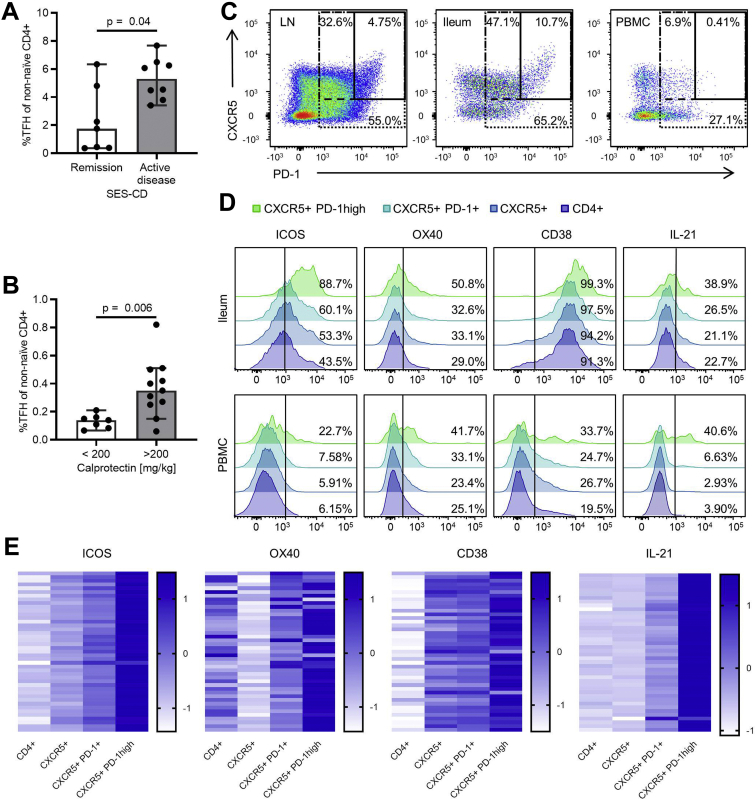
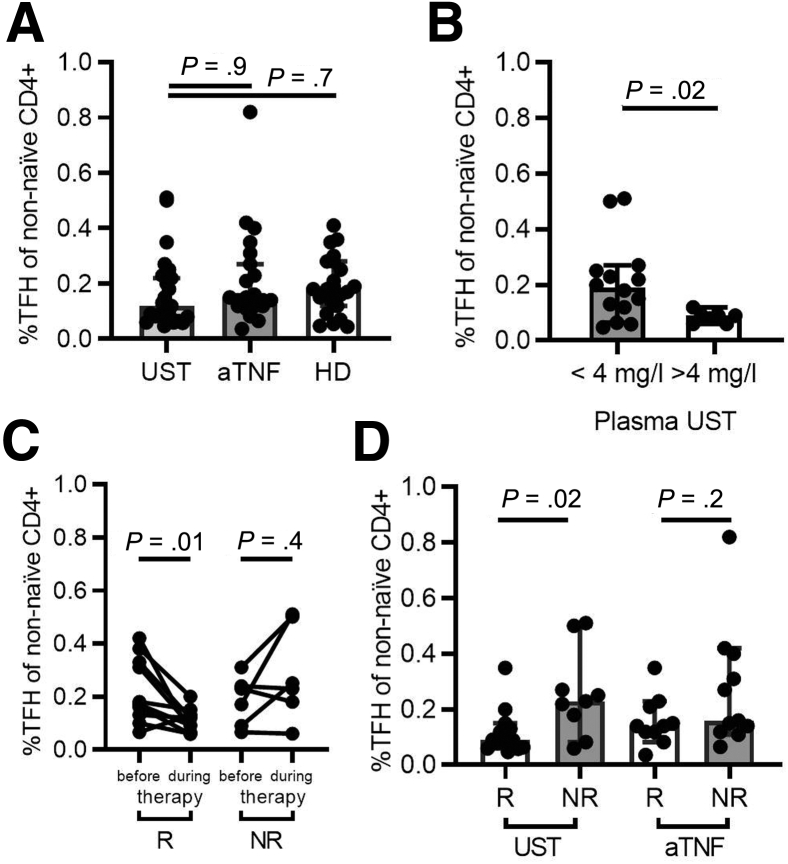
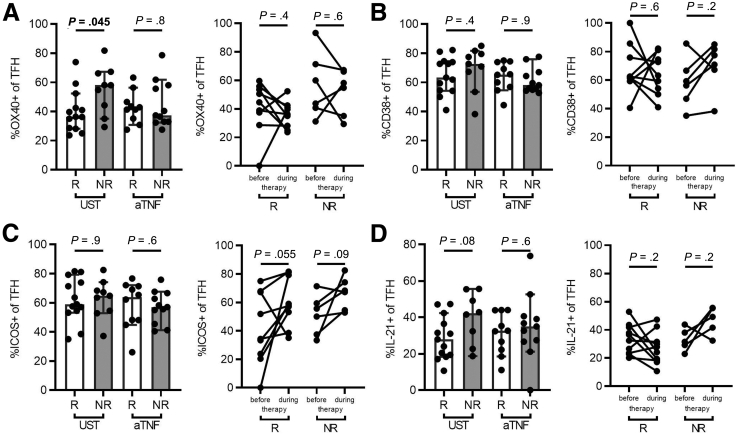
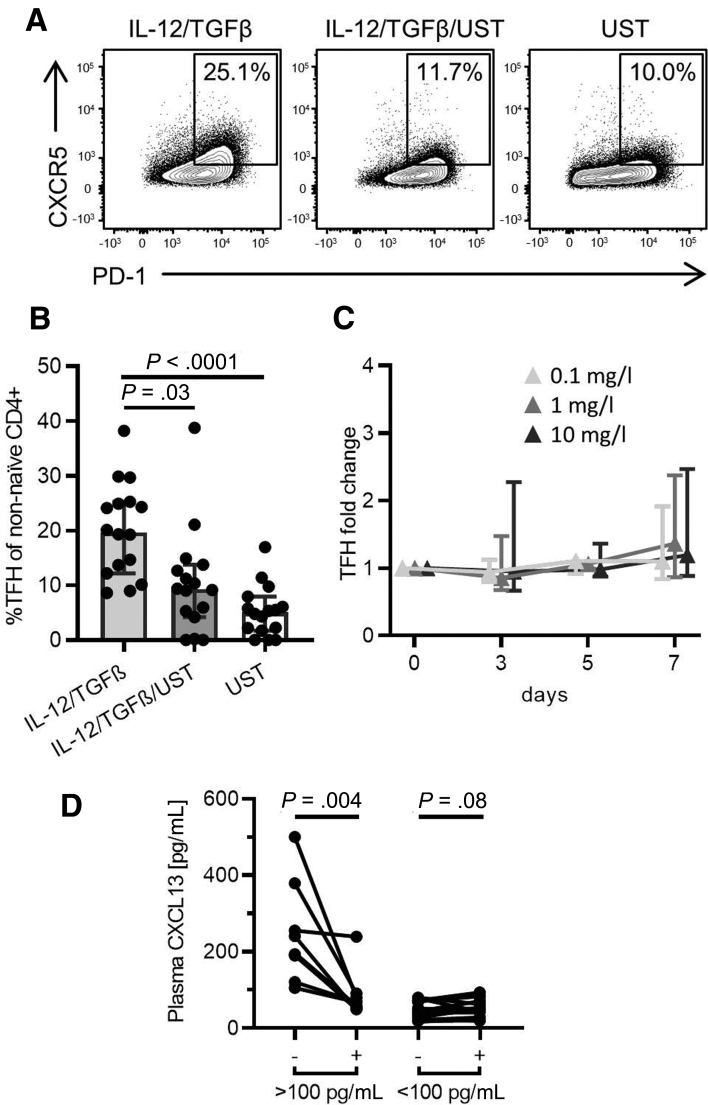
TFH cell frequencies in the intestine as well as peripheral blood were associated with endoscopic as well as biochemical evidence of CD activity. CD patients with clinical response to Ustekinumab, but not those with response to anti-TNF antibodies, displayed reduced frequencies of circulating TFH cells in a concentration-dependent manner while the TFH phenotype was not affected by Ustekinumab therapy. In keeping with this notion, TFH cell differentiation was inhibited by Ustekinumab in vitro while TFH cell maintenance was not affected. Moreover, Ustekinumab therapy resulted in reduced germinal center activity in CD patients in vivo.
These data implicate TFH cells in the pathogenesis of CD and indicate that Ustekinumab therapy affects TFH cell differentiation, which may influence TFH-mediated immune functions in UST-treated CD patients.
慢性炎症性肠病(克罗恩病[CD]和溃疡性结肠炎)的发病机制涉及调节异常的 TH1 和 TH17 细胞反应,这些反应可以通过针对 IL-12 和 IL-23 的共同 p40 亚单位的单克隆抗体乌司奴单抗进行治疗。这些细胞因子还可能调节 T 滤泡辅助(TFH)细胞的分化,促进生发中心的 B 细胞功能。然而,TFH 细胞在 CD 发病机制中的作用以及乌司奴单抗治疗对患者 TFH 细胞命运的影响尚不清楚。
从 CD 患者(n=45)和健康对照者(n=21)的外周血(n=45)和肠活检标本(n=15)中分离淋巴细胞,并通过流式细胞术分析以评估 TFH 细胞表型和功能。此外,还在存在乌司奴单抗的情况下分析 TFH 细胞分化。
肠道和外周血中的 TFH 细胞频率与 CD 活动的内镜和生化证据相关。对乌司奴单抗有临床反应的 CD 患者,但对抗 TNF 抗体有反应的患者,以浓度依赖性方式显示循环 TFH 细胞频率降低,而 TFH 表型不受乌司奴单抗治疗的影响。与这一观点一致,乌司奴单抗在体外抑制 TFH 细胞分化,而 TFH 细胞的维持不受影响。此外,乌司奴单抗治疗导致体内 CD 患者生发中心活性降低。
这些数据表明 TFH 细胞参与 CD 的发病机制,并表明乌司奴单抗治疗影响 TFH 细胞分化,这可能影响 UST 治疗的 CD 患者中 TFH 介导的免疫功能。