Yu Hongliang, Liu Weihua, Li Dongmei, Liu Chunhong, Feng Zhibiao, Jiang Bin
Department of Applied Chemistry, Northeast Agricultural University, Harbin 150000, China.
Polymers (Basel). 2020 Jul 15;12(7):1565. doi: 10.3390/polym12071565.
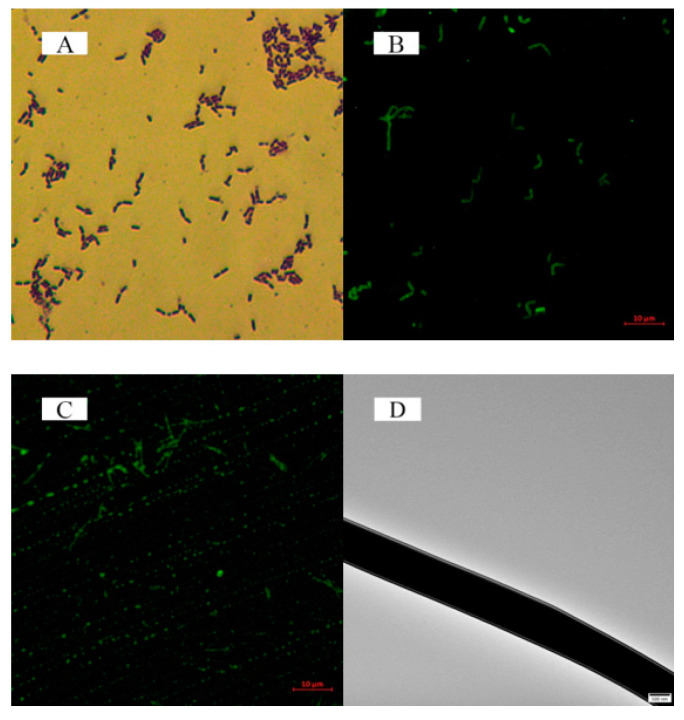
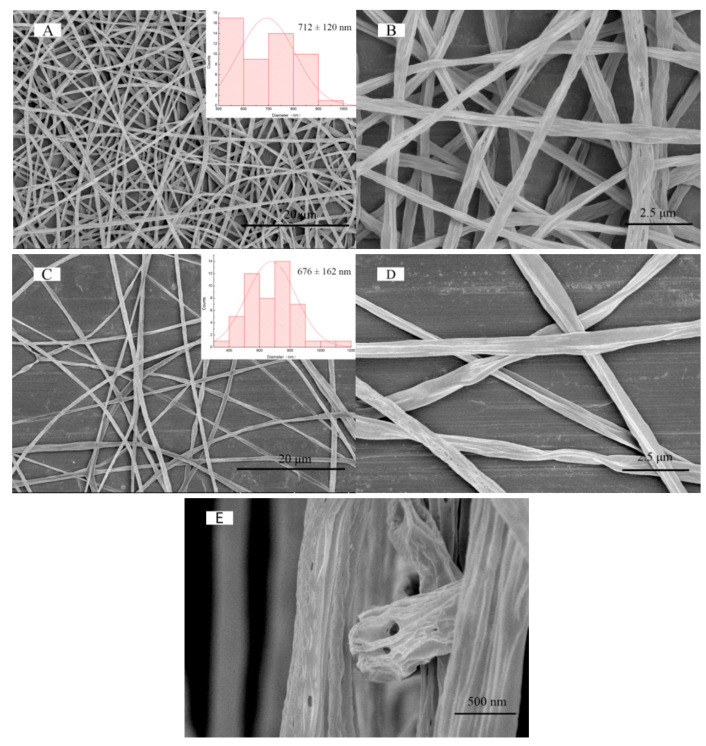
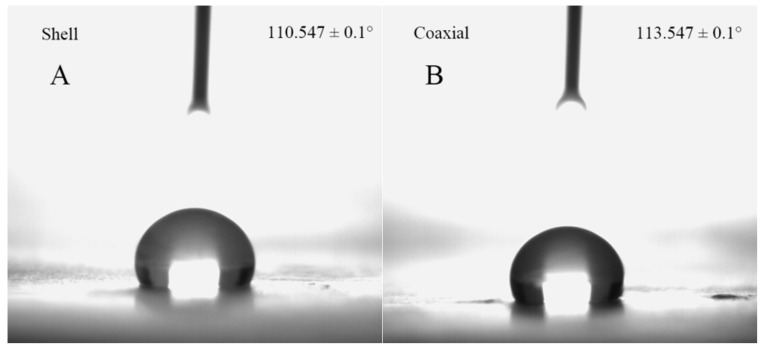
With the increased interest in information on gut microbes, people are realizing the benefits of probiotics to health, and new technologies to improve the viability of probiotics are still explored. However, most probiotics have poor resistance to adverse environments. In order to improve the viability of lactic acid bacteria, polylactic acid (PLA) nanofibers were prepared by coaxial electrospinning. The electrospinning voltage was 16 kV, and the distance between spinneret and collector was 15 cm. The feed rates of the shell and core solutions were 1.0 and 0.25 mL/h, respectively. The lactic acid bacteria were encapsulated in the coaxial electrospun nanofibers with PLA and fructooligosaccharides (FOS) as the shell materials. Scanning electron microscopy, transmission electron microscopy, and laser scanning confocal microscopy showed that lactic acid bacteria were encapsulated in the coaxial electrospun nanofibers successfully. The water contact angle test indicated that coaxial electrospun nanofiber films had good hydrophobicity. An in vitro simulated digestion test exhibited that the survival rate of lactic acid bacteria encapsulated in coaxial electrospun nanofiber films was more than 72%. This study proved that the viability of probiotics can be improved through encapsulation within coaxial electrospun PLA nanofibers and provided a novel approach for encapsulating bioactive substances.
随着人们对肠道微生物信息的兴趣增加,人们逐渐认识到益生菌对健康的益处,并且仍在探索提高益生菌存活率的新技术。然而,大多数益生菌对恶劣环境的抵抗力较差。为了提高乳酸菌的存活率,通过同轴静电纺丝制备了聚乳酸(PLA)纳米纤维。静电纺丝电压为16 kV,喷丝头与收集器之间的距离为15 cm。壳层溶液和芯层溶液的进料速率分别为1.0和0.25 mL/h。将乳酸菌封装在以PLA和低聚果糖(FOS)为壳层材料的同轴静电纺纳米纤维中。扫描电子显微镜、透射电子显微镜和激光扫描共聚焦显微镜显示乳酸菌成功封装在同轴静电纺纳米纤维中。水接触角测试表明同轴静电纺纳米纤维膜具有良好的疏水性。体外模拟消化试验表明,封装在同轴静电纺纳米纤维膜中的乳酸菌存活率超过72%。本研究证明,通过将益生菌封装在同轴静电纺PLA纳米纤维中可以提高其存活率,并为封装生物活性物质提供了一种新方法。