Bush Andrew, Pabary Rishi
Imperial College, London, UK.
Royal Brompton Harefield NHS Foundation Trust, London, UK.
Breathe (Sheff). 2020 Jun;16(2):200001. doi: 10.1183/20734735.0001-2020.
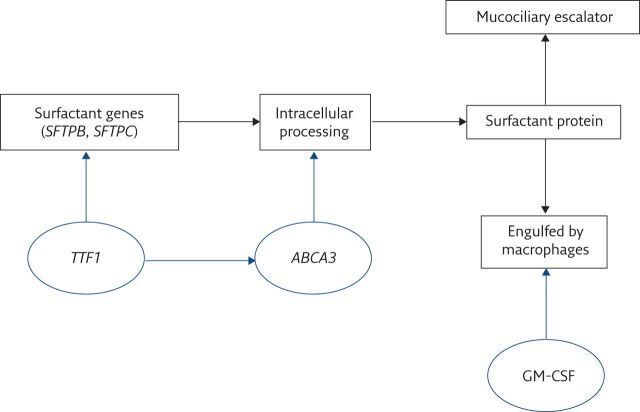
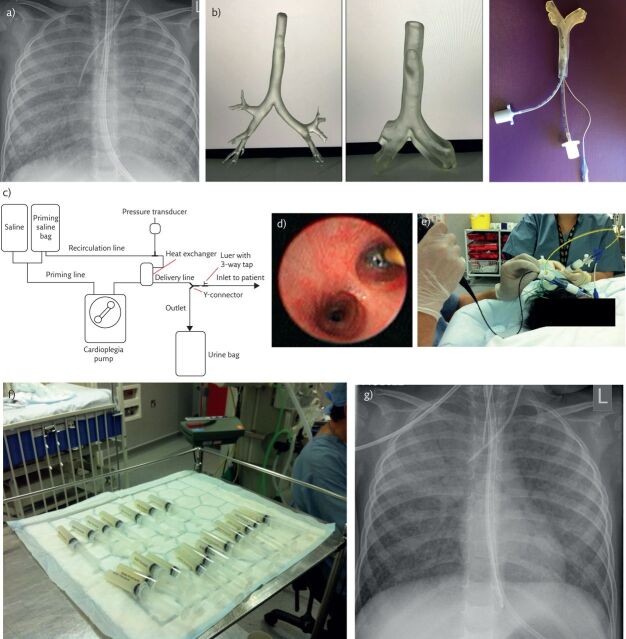
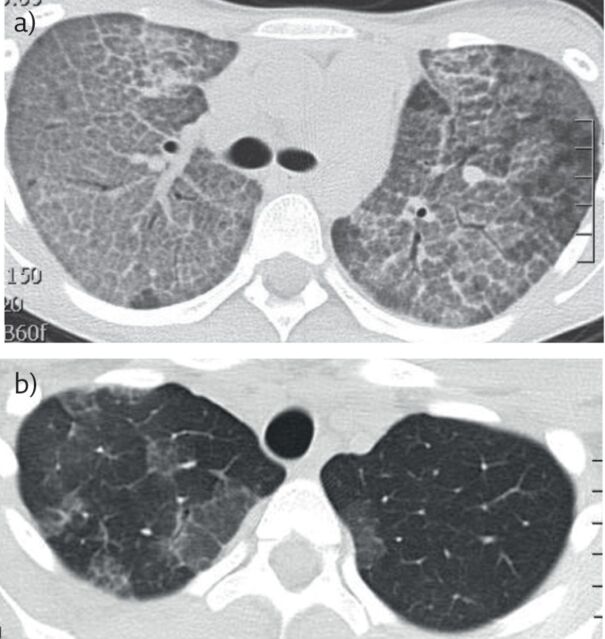
Pulmonary alveolar proteinosis (PAP) is an umbrella term for a wide spectrum of conditions that have a very characteristic appearance on computed tomography. There is outlining of the secondary pulmonary lobules on the background of ground-glass shadowing and pathologically, filling of the alveolar spaces with normal or abnormal surfactant. PAP is rare and the common causes in children are very different from those seen in adults; autoimmune PAP is rare and macrophage blockade not described in children. There are many genetic causes of PAP, the best known of which are mutations in the genes encoding surfactant protein (SP)-B, SP-C, thyroid transcription factor 1, ATP-binding cassette protein 3, and the granulocyte-macrophage colony-stimulating factor (GM-CSF) receptor α- and β- chains. PAP may also be a manifestation of rheumatological and metabolic disease, congenital immunodeficiency, and haematological malignancy. Precise diagnosis of the underlying cause is essential in planning treatment, as well as for genetic counselling. The evidence base for treatment is poor. Some forms of PAP respond well to whole-lung lavage, and autoimmune PAP, which is much commoner in adults, responds to inhaled or subcutaneous GM-CSF. Emerging therapies based on studies in murine models of PAP include stem-cell transplantation for GM-CSF receptor mutations.
To understand when to suspect that a child has pulmonary alveolar proteinosis (PAP) and how to confirm that this is the cause of the presentation.To show that PAP is an umbrella term for conditions characterised by alveolar filling by normal or abnormal surfactant, and that this term is the start, not the end, of the diagnostic journey.To review the developmental differences in the spectrum of conditions that may cause PAP, and specifically to understand the differences between causes in adults and children.To discuss when to treat PAP with whole-lung lavage and/or granulocyte-macrophage colony-stimulating factor, and review potential promising new therapies.
肺泡蛋白沉积症(PAP)是一个统称,涵盖了一系列在计算机断层扫描上具有非常典型表现的病症。在磨玻璃样阴影的背景下可见次级肺小叶轮廓,病理上表现为肺泡腔被正常或异常表面活性物质填充。PAP较为罕见,儿童的常见病因与成人有很大不同;自身免疫性PAP罕见,儿童中未描述巨噬细胞阻滞情况。PAP有许多遗传病因,其中最广为人知的是编码表面活性蛋白(SP)-B、SP-C、甲状腺转录因子1、ATP结合盒蛋白3以及粒细胞-巨噬细胞集落刺激因子(GM-CSF)受体α链和β链的基因突变。PAP也可能是风湿性和代谢性疾病、先天性免疫缺陷以及血液系统恶性肿瘤的表现。准确诊断潜在病因对于制定治疗方案以及遗传咨询至关重要。治疗的证据基础薄弱。某些形式的PAP对全肺灌洗反应良好,而在成人中更为常见的自身免疫性PAP对吸入或皮下注射GM-CSF有反应。基于PAP小鼠模型研究的新兴疗法包括针对GM-CSF受体突变的干细胞移植。
了解何时怀疑儿童患有肺泡蛋白沉积症(PAP)以及如何确认这是导致该表现的原因。表明PAP是一个统称,用于描述以正常或异常表面活性物质填充肺泡为特征的病症,并且这个术语是诊断过程的起点而非终点。回顾可能导致PAP的病症谱中的发育差异,特别是了解成人和儿童病因之间的差异。讨论何时用全肺灌洗和/或粒细胞-巨噬细胞集落刺激因子治疗PAP,并回顾潜在的有前景的新疗法。