Stroek Kevin, Boelen Anita, Bouva Marelle J, De Sain-van der Velden Monique, Schielen Peter C J I, Maase Rose, Engel Henk, Jakobs Bernadette, Kluijtmans Leo A J, Mulder Margot F, Rubio-Gozalbo M E, van Spronsen Francjan J, Visser Gepke, de Vries Maaike C, Williams Monique, Heijboer Annemieke C, Kemper Evelien A, Bosch Annet M
Endocrinology Laboratory, Department of Clinical Chemistry Amsterdam Gastroenterology & Metabolism, Amsterdam UMC, University of Amsterdam Amsterdam The Netherlands.
Reference Laboratory Neonatal Screening, Center for Health protection National Institute for Public Health and the Environment Bilthoven The Netherlands.
JIMD Rep. 2020 May 13;54(1):68-78. doi: 10.1002/jmd2.12124. eCollection 2020 Jul.
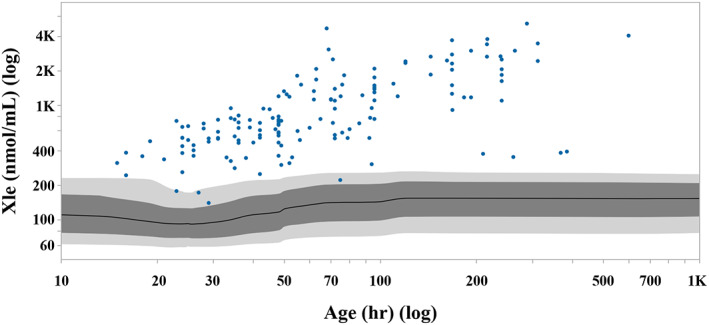
Maple syrup urine disease (MSUD) leads to severe neurological deterioration unless diagnosed early and treated immediately. We have evaluated the effectiveness of 11 years of MSUD newborn screening (NBS) in the Netherlands (screening >72 hours, referral if both total leucine (Xle) and valine ≥400 μmol/L blood) and have explored possibilities for improvement by combining our data with a systematic literature review and data from Collaborative Laboratory Integrated Reports (CLIR). Dutch MSUD NBS characteristics and accuracy were determined. The hypothetical referral numbers in the Dutch population of additional screening markers suggested by CLIR were calculated. In a systematic review, articles reporting NBS leucine concentrations of confirmed patients were included. Our data showed that NBS of 1 963 465 newborns identified 4 MSUD patients and led to 118 false-positive referrals (PPV 3.28%; incidence 1:491 000 newborns). In literature, leucine is the preferred NBS parameter. Total leucine (Xle) concentrations (mass-spectrometry) of 53 detected and 8 false-negative patients (sampling age within 25 hours in 3 patients) reported in literature ranged from 288 to 3376 (median 900) and 42 to 325 (median 209) μmol/L blood respectively. CLIR showed increasing Xle concentrations with sampling age and early NBS sampling and milder variant MSUD phenotypes with (nearly) normal biochemical profiles are causes of false-negative NBS results. We evaluated the effect of additional screening markers and established the Xle/phenylalanine ratio as a promising additional marker ratio for increasing the PPV, while maintaining high sensitivity in the Dutch MSUD NBS.
枫糖尿症(MSUD)如不及早诊断并立即治疗,会导致严重的神经功能恶化。我们评估了荷兰11年的MSUD新生儿筛查(NBS)的有效性(筛查时间>72小时,若血总亮氨酸(Xle)和缬氨酸均≥400μmol/L则转诊),并通过将我们的数据与系统文献综述及协作实验室综合报告(CLIR)的数据相结合,探索改进的可能性。确定了荷兰MSUD NBS的特征和准确性。计算了CLIR建议的荷兰人群中其他筛查标志物的假设转诊数量。在一项系统综述中,纳入了报告确诊患者NBS亮氨酸浓度的文章。我们的数据显示,对1963465名新生儿进行的NBS筛查出4例MSUD患者,并导致118例假阳性转诊(阳性预测值3.28%;发病率1:491000新生儿)。在文献中,亮氨酸是首选的NBS参数。文献报道的53例检测到的患者和8例假阴性患者(3例患者的采样年龄在25小时内)的血总亮氨酸(Xle)浓度(质谱法)分别为288至3376(中位数900)和42至325(中位数209)μmol/L。CLIR显示,随着采样年龄的增加,Xle浓度升高,早期NBS采样以及(几乎)具有正常生化特征的较轻变异型MSUD表型是NBS假阴性结果的原因。我们评估了额外筛查标志物的效果,并确定Xle/苯丙氨酸比值是一种有前景的额外标志物比值,可提高荷兰MSUD NBS的阳性预测值,同时保持高灵敏度。