Microbiology Institute, Universidad San Francisco de Quito, Quito, Ecuador.
Microb Biotechnol. 2020 Sep;13(5):1678-1684. doi: 10.1111/1751-7915.13624. Epub 2020 Jul 19.
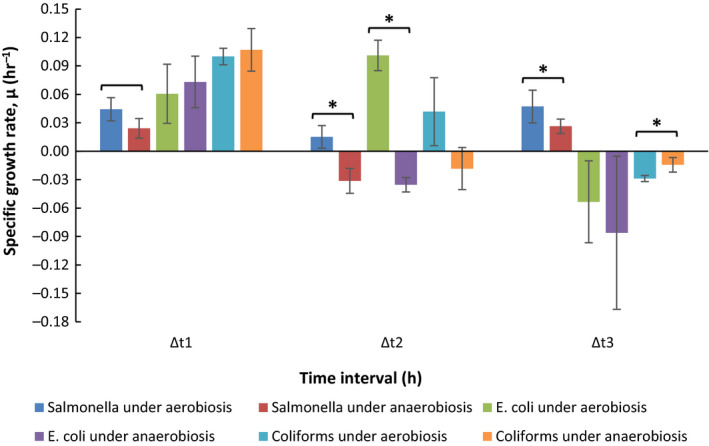
The use of wastewater for irrigation and animal manure as fertilizer can cause transmission of intestinal pathogens, conditions frequently observed in low- and middle-income countries (LMICs). Here, we tested the ability of Salmonella to grow in the faecal matter. We inoculated freshly isolated Salmonella strains (from chickens) in chicken faecal matter and incubated for 1 to 12 days, under aerobic and anaerobic conditions. We found that both Salmonella and Escherichia coli multiplied massively in faecal matter outside a host and significantly higher in aerobic conditions. Our results have critical implications in waste management, as we demonstrate that aerobic treatments may not be the best to reduce the number of Salmonella in the environment.
粪便灌溉和动物粪便作为肥料的使用可能导致肠道病原体的传播,这种情况在中低收入国家(LMICs)经常发生。在这里,我们测试了沙门氏菌在粪便中生长的能力。我们将新分离的沙门氏菌(来自鸡)接种到鸡粪便中,并在有氧和无氧条件下孵育 1 至 12 天。我们发现,沙门氏菌和大肠杆菌在宿主外的粪便中大量繁殖,在有氧条件下繁殖得更多。我们的结果对废物管理具有重要意义,因为我们证明有氧处理可能不是减少环境中沙门氏菌数量的最佳方法。