
儿茶酚胺通过 STAT3 抑制白色脂肪细胞中脂肪酸的再酯化并增加其氧化。
Catecholamines suppress fatty acid re-esterification and increase oxidation in white adipocytes via STAT3.
机构信息
Division of Metabolism and Endocrinology, Department of Medicine, University of California, San Diego, La Jolla, CA, USA.
Life Sciences Institute, University of Michigan, Ann Arbor, MI, USA.
出版信息
Nat Metab. 2020 Jul;2(7):620-634. doi: 10.1038/s42255-020-0217-6. Epub 2020 Jun 8.
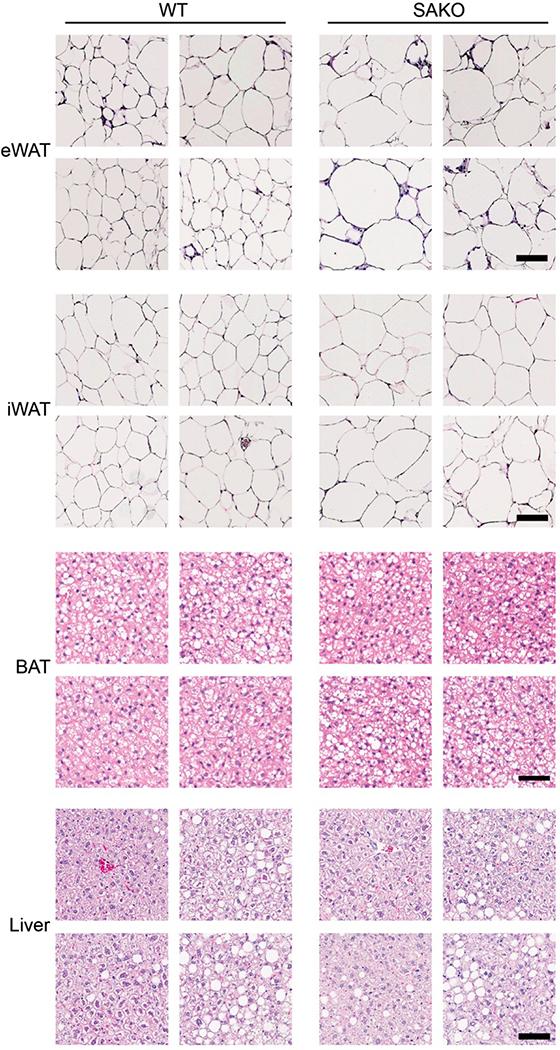
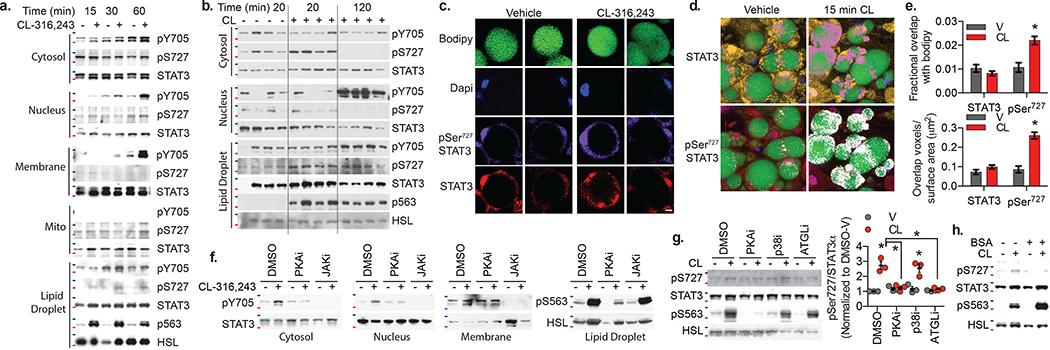
Catecholamines stimulate the mobilization of stored triglycerides in adipocytes to provide fatty acids (FAs) for other tissues. However, a large proportion is taken back up and either oxidized or re-esterified. What controls the disposition of these FAs in adipocytes remains unknown. Here, we report that catecholamines redirect FAs for oxidation through the phosphorylation of signal transducer and activator of transcription 3 (STAT3). Adipocyte STAT3 is phosphorylated upon activation of β-adrenergic receptors, and in turn suppresses FA re-esterification to promote FA oxidation. Adipocyte-specific Stat3 KO mice exhibit normal rates of lipolysis, but exhibit defective lipolysis-driven oxidative metabolism, resulting in reduced energy expenditure and increased adiposity when they are on a high-fat diet. This previously unappreciated, non-genomic role of STAT3 explains how sympathetic activation can increase both lipolysis and FA oxidation in adipocytes, revealing a new regulatory axis in metabolism.
儿茶酚胺刺激脂肪细胞中储存的甘油三酯的动员,以提供脂肪酸 (FAs) 给其他组织。然而,很大一部分被重新吸收,要么被氧化,要么被重新酯化。目前尚不清楚这些脂肪在脂肪细胞中的处置情况是如何控制的。在这里,我们报告儿茶酚胺通过信号转导和转录激活因子 3(STAT3)的磷酸化将 FAs 重新定向用于氧化。β-肾上腺素能受体激活后,脂肪细胞 STAT3 被磷酸化,反过来抑制 FA 再酯化以促进 FA 氧化。脂肪细胞特异性 Stat3 KO 小鼠表现出正常的脂肪分解率,但表现出脂肪分解驱动的氧化代谢缺陷,当它们在高脂肪饮食时,导致能量消耗减少和肥胖增加。STAT3 的这种以前未被认识的非基因组作用解释了交感神经激活如何增加脂肪细胞中的脂肪分解和 FA 氧化,揭示了代谢中的一个新的调节轴。






 Zotero 插件