Shi Jianli, Xiao Peilin, Liu Xiaoli, Chen Yunlin, Xu Yanping, Fan Jinqi, Yin Yuehui
Department of Cardiology, The Second Affiliated Hospital of Chongqing Medical University, Chongqing, China.
Department of Biomedical Engineering and Pediatrics, Emory University, Atlanta, GA, United States.
Front Physiol. 2020 Jun 30;11:669. doi: 10.3389/fphys.2020.00669. eCollection 2020.
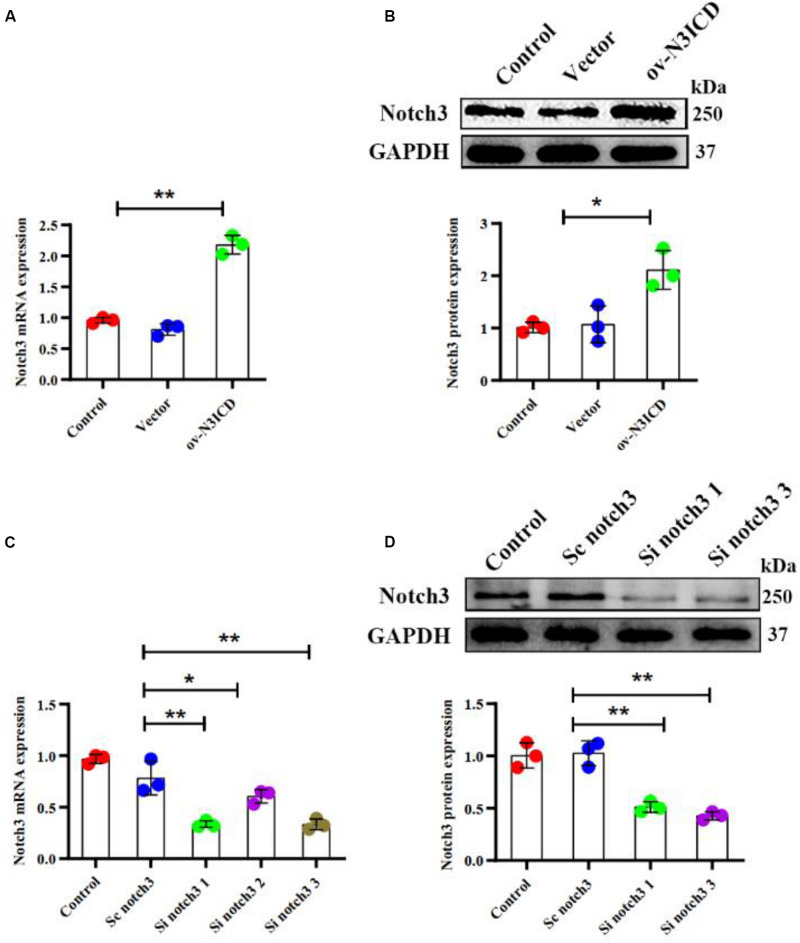
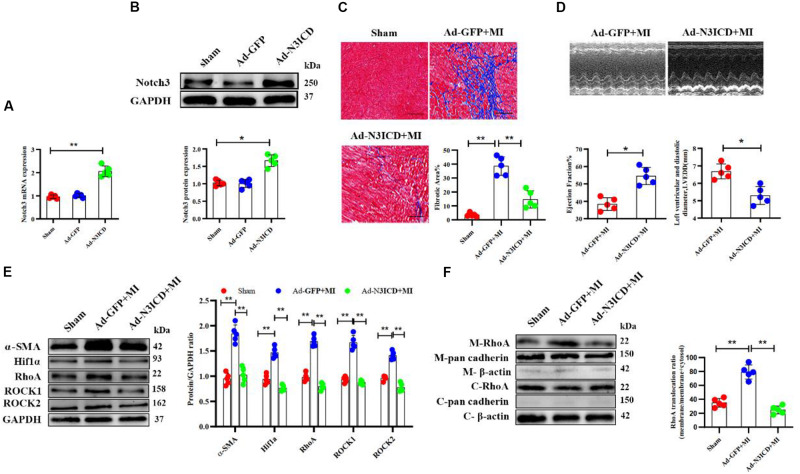
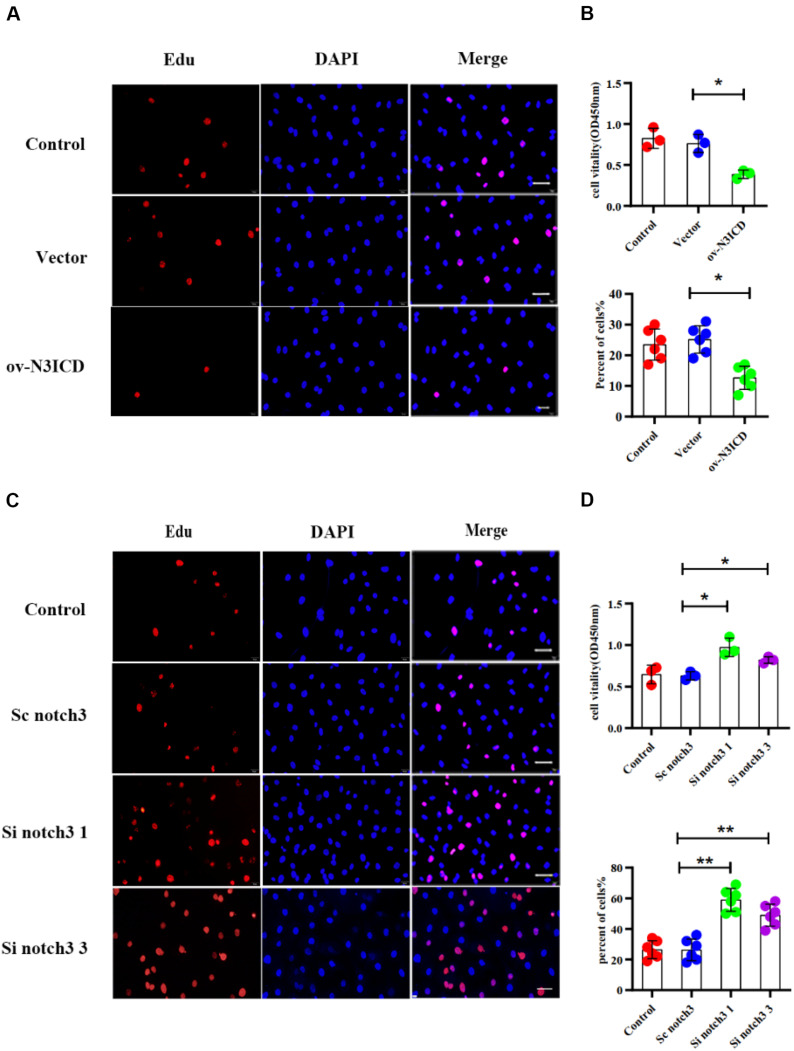
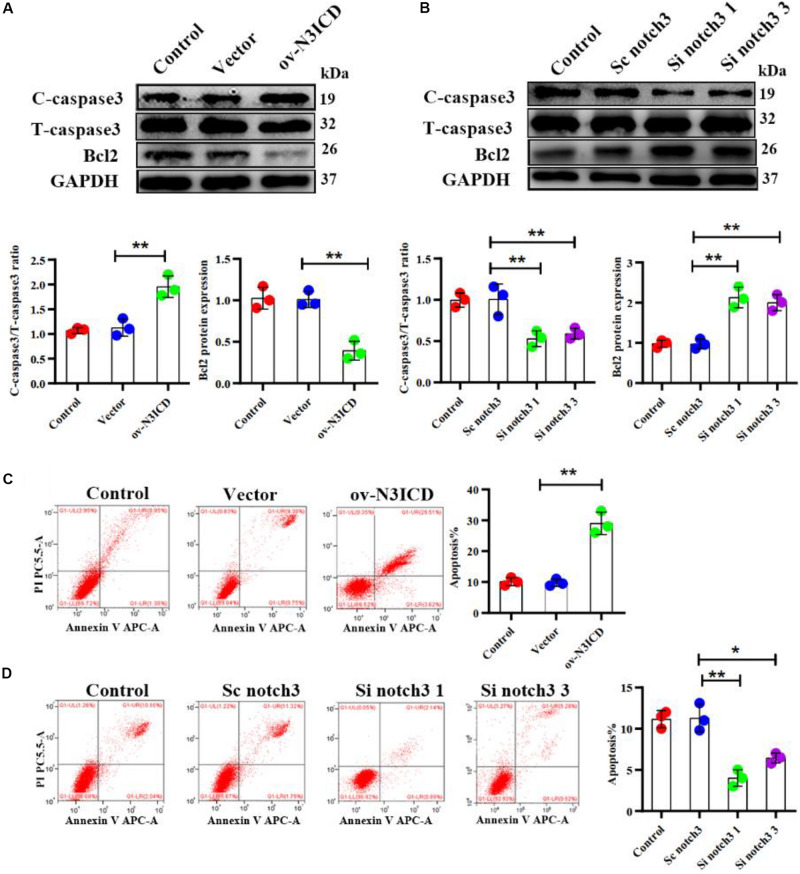
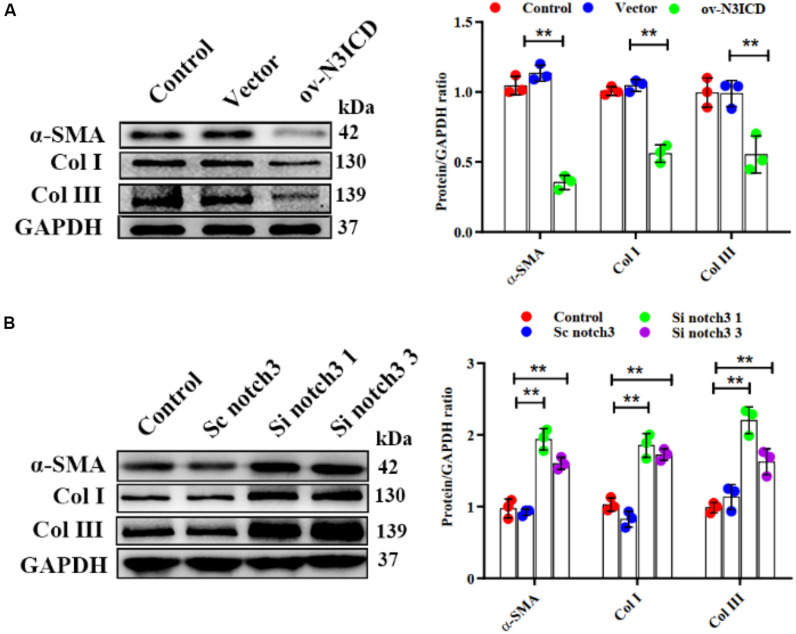
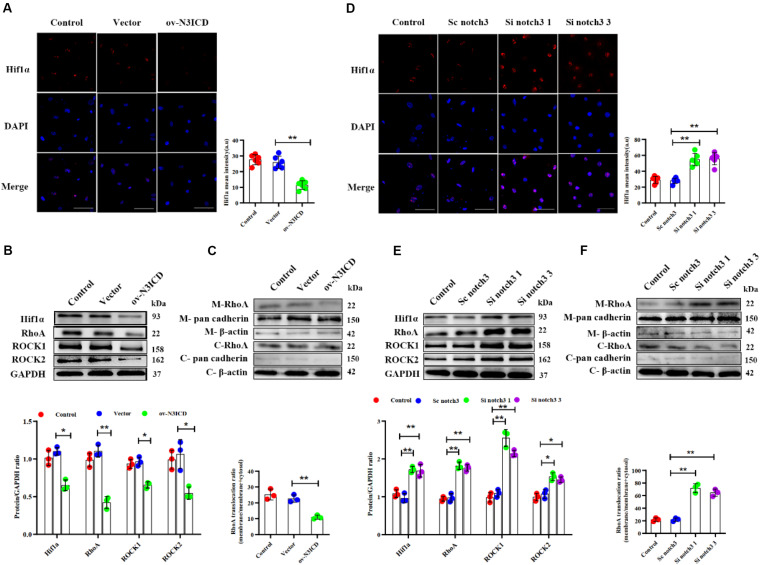
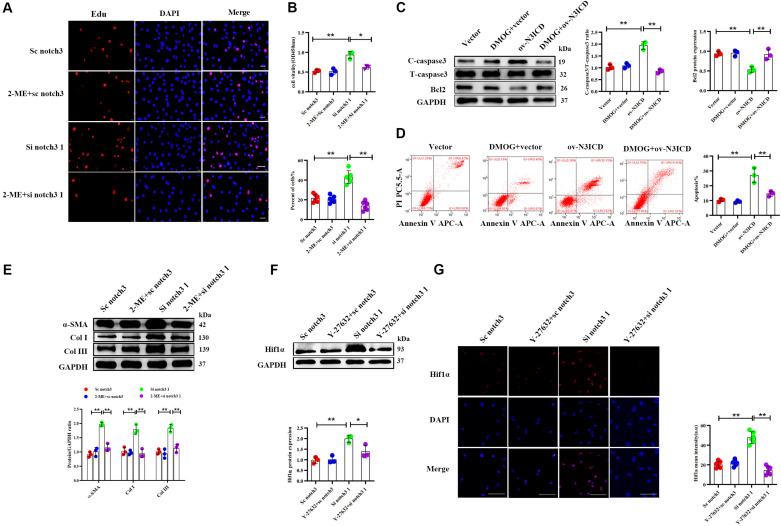
Cardiac fibrosis is a common pathological process in multiple cardiovascular diseases, including myocardial infarction (MI). Abnormal cardiac fibroblast (CF) activity is a key event in cardiac fibrosis. Although the Notch signaling pathway has been reported to play a vital role in protection from cardiac fibrosis, the exact mechanisms underlying cardiac fibrosis and protection from it have not yet been elucidated. Similarly, Hif1α and the RhoA/ROCK signaling pathway have been shown to participate in cardiac fibrosis. The RhoA/ROCK signaling pathway has been reported to be an upstream pathway of Hif1α in several pathophysiological processes. In the present study, we aimed to determine the effects of notch3 on CF activity and its relationship with the RhoA/ROCK/Hif1α signaling pathway. Using experiments, we demonstrated that notch3 inhibited CF proliferation and fibroblast to myofibroblast transition (FMT) and promoted CF apoptosis. A knockdown of notch3 using siRNAs had the exact opposite effect. Next, we found that notch3 regulated CF activity by negative regulation of the RhoA/ROCK/Hif1α signaling pathway. Extending CF-based studies to an rat MI model, we showed that overexpression of notch3 by the Ad-N3ICD injection attenuated the increase of RhoA, ROCK1, ROCK2, and Hif1α levels following MI and further prevented MI-induced cardiac fibrosis. On the basis of these results, we conclude that notch3 is involved in the regulation of several aspects of CF activity, including proliferation, FMT, and apoptosis, by inhibiting the RhoA/ROCK/Hif1α signaling pathway. These findings are significant to further our understanding of the pathogenesis of cardiac fibrosis and to ultimately identify new therapeutic targets for cardiac fibrosis, potentially based on the RhoA/ROCK/Hif1α signaling pathway.
心脏纤维化是包括心肌梗死(MI)在内的多种心血管疾病中常见的病理过程。心脏成纤维细胞(CF)的异常活动是心脏纤维化的关键事件。尽管据报道Notch信号通路在预防心脏纤维化中起着至关重要的作用,但心脏纤维化及其预防的确切机制尚未阐明。同样,Hif1α和RhoA/ROCK信号通路也已被证明参与心脏纤维化。据报道,在几个病理生理过程中,RhoA/ROCK信号通路是Hif1α的上游通路。在本研究中,我们旨在确定Notch3对CF活性的影响及其与RhoA/ROCK/Hif1α信号通路的关系。通过实验,我们证明Notch3抑制CF增殖和成纤维细胞向肌成纤维细胞的转变(FMT),并促进CF凋亡。使用小干扰RNA(siRNAs)敲低Notch3产生了完全相反的效果。接下来,我们发现Notch3通过对RhoA/ROCK/Hif1α信号通路的负调控来调节CF活性。将基于CF的研究扩展到大鼠MI模型,我们发现通过注射Ad-N3ICD过表达Notch3可减轻MI后RhoA、ROCK1、ROCK2和Hif1α水平的升高,并进一步预防MI诱导的心脏纤维化。基于这些结果,我们得出结论,Notch3通过抑制RhoA/ROCK/Hif1α信号通路参与调节CF活性的多个方面,包括增殖、FMT和凋亡。这些发现对于进一步理解心脏纤维化的发病机制以及最终确定可能基于RhoA/ROCK/Hif1α信号通路的心脏纤维化新治疗靶点具有重要意义。