Department of Cell Biology and Anatomy, University of South Carolina School of Medicine, Columbia, South Carolina.
J Cell Physiol. 2019 Aug;234(8):13931-13941. doi: 10.1002/jcp.28075. Epub 2019 Jan 4.
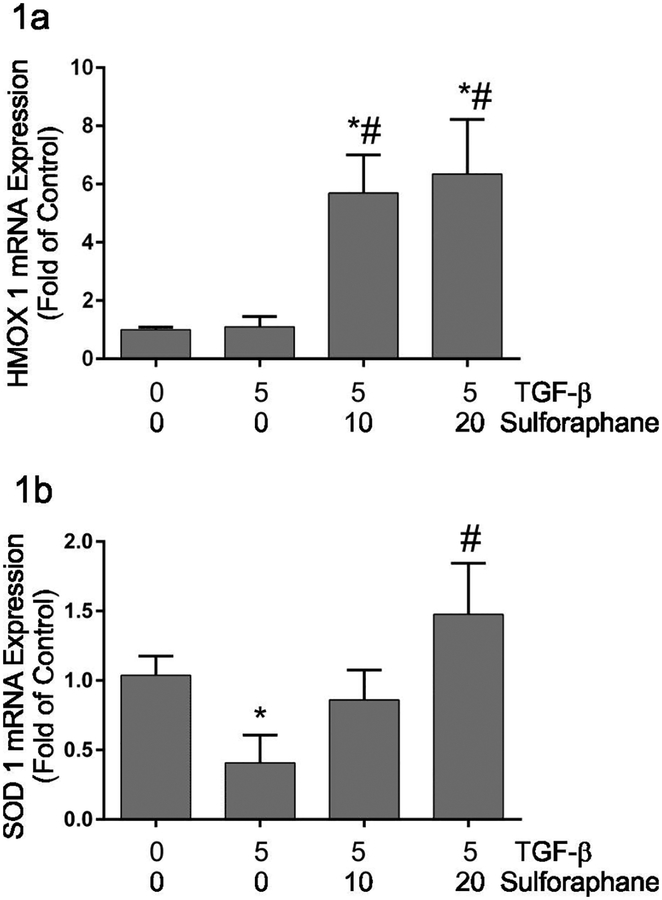
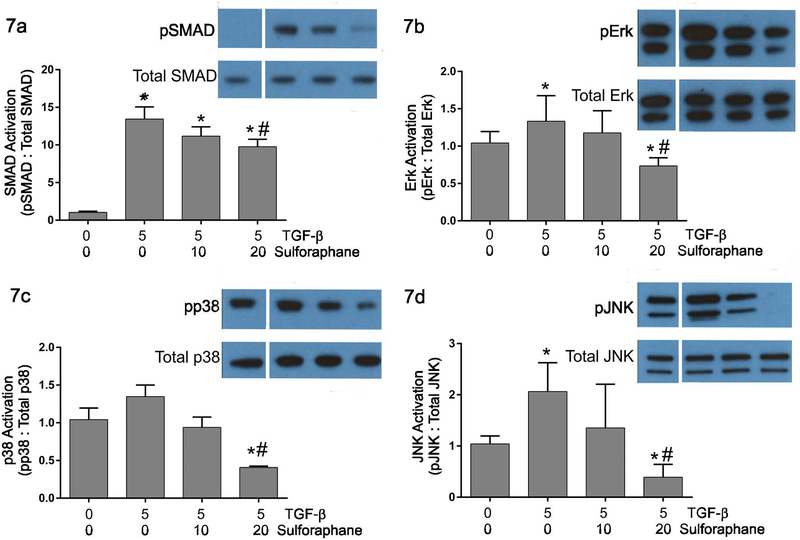
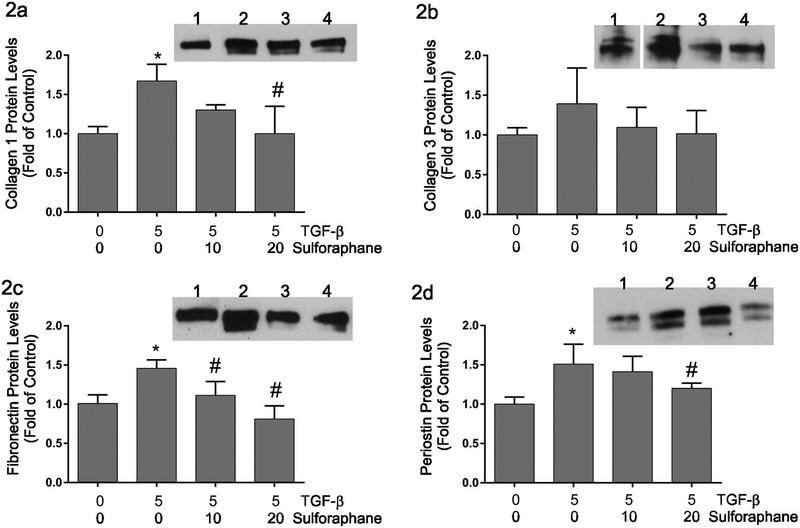
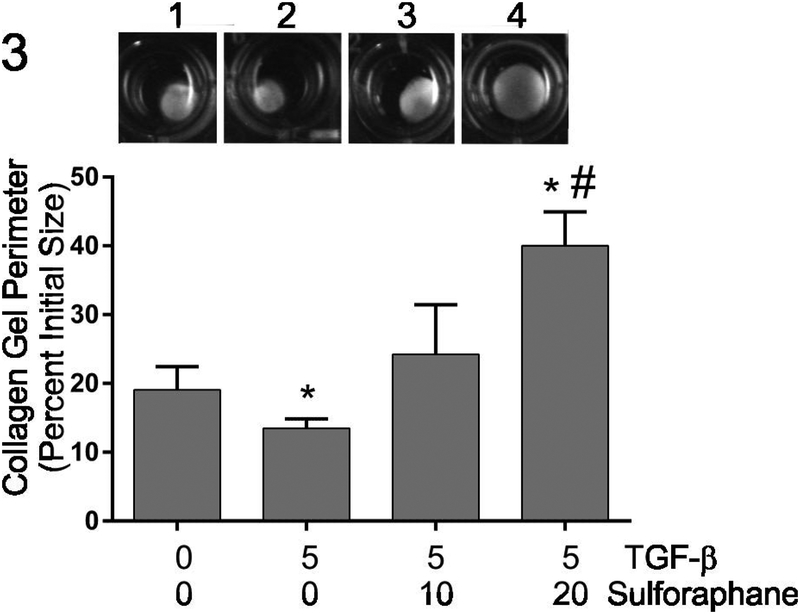
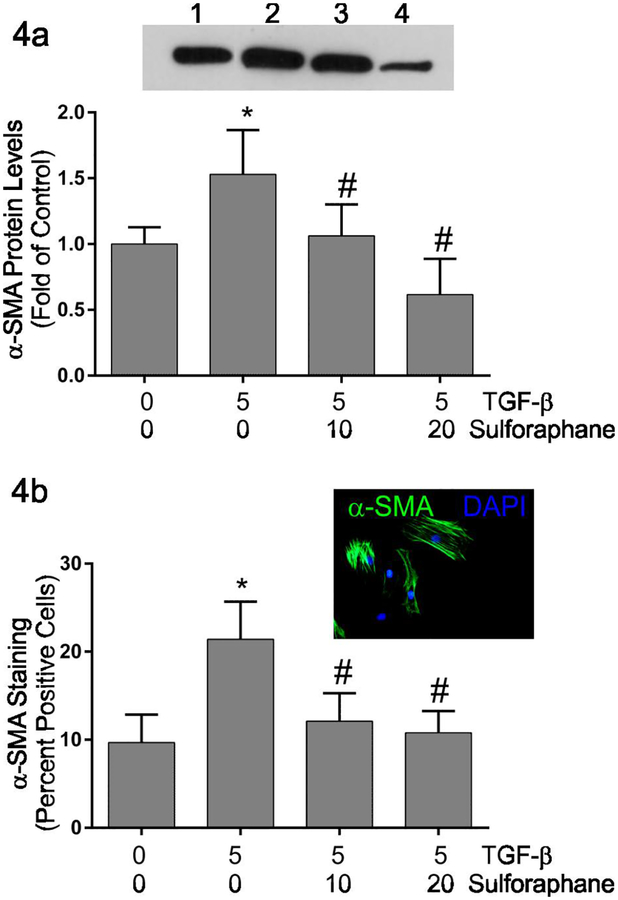
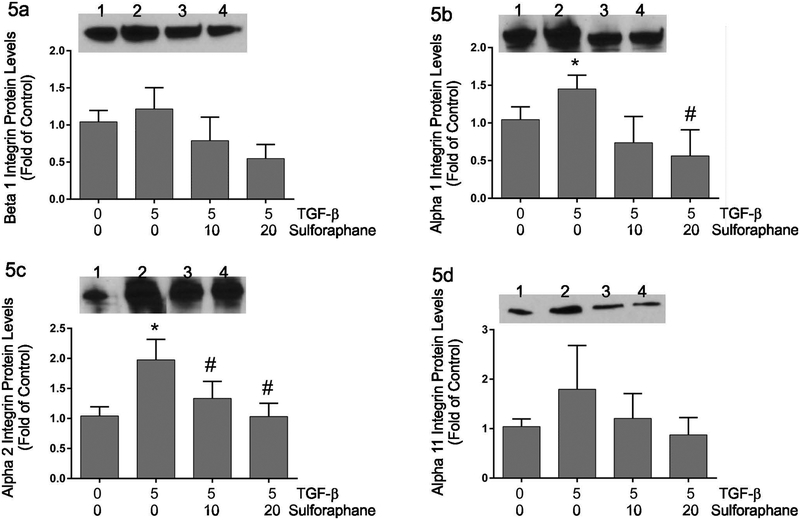
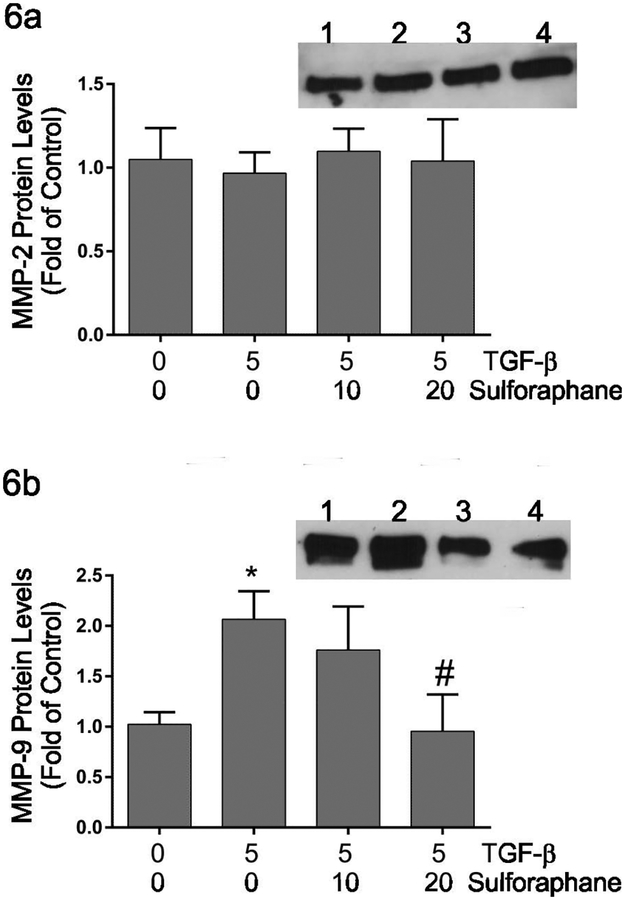
An important step in many pathological conditions, particularly tissue and organ fibrosis, is the conversion of relatively quiescent cells into active myofibroblasts. These are highly specialized cells that participate in normal wound healing but also contribute to pathogenesis. These cells possess characteristics of smooth muscle cells and fibroblasts, have enhanced synthetic activity secreting abundant extracellular matrix components, cytokines, and growth factors, and are capable of generating contractile force. As such, these cells have become potential therapeutic targets in a number of disease settings. Transforming growth factor β (TGF-β) is a potent stimulus of fibrosis and myofibroblast formation and likewise is an important therapeutic target in several disease conditions. The plant-derived isothiocyanate sulforaphane has been shown to have protective effects in several pathological models including diabetic cardiomyopathy, carcinogenesis, and fibrosis. These studies suggest that sulforaphane may be an attractive preventive agent against disease progression, particularly in conditions involving alterations of the extracellular matrix and activation of myofibroblasts. However, few studies have evaluated the effects of sulforaphane on cardiac fibroblast activation and their interactions with the extracellular matrix. The present studies were carried out to determine the potential effects of sulforaphane on the conversion of quiescent cardiac fibroblasts to an activated myofibroblast phenotype and associated alterations in signaling, expression of extracellular matrix receptors, and cellular physiology following stimulation with TGF-β1. These studies demonstrate that sulforaphane attenuates TGF-β1-induced myofibroblast formation and contractile activity. Sulforaphane also reduces expression of collagen-binding integrins and inhibits canonical and noncanonical TGF-β signaling pathways.
在许多病理状况中,特别是组织和器官纤维化,一个重要的步骤是将相对静止的细胞转化为活跃的肌成纤维细胞。这些高度特化的细胞参与正常的伤口愈合,但也有助于发病机制。这些细胞具有平滑肌细胞和成纤维细胞的特征,具有增强的合成活性,分泌丰富的细胞外基质成分、细胞因子和生长因子,并能够产生收缩力。因此,这些细胞已成为许多疾病治疗的潜在靶点。转化生长因子β(TGF-β)是纤维化和肌成纤维细胞形成的有力刺激物,同样也是几种疾病状况的重要治疗靶点。植物来源的异硫氰酸酯萝卜硫素已被证明在几种病理模型中具有保护作用,包括糖尿病心肌病、致癌作用和纤维化。这些研究表明,萝卜硫素可能是一种有吸引力的预防疾病进展的药物,特别是在涉及细胞外基质改变和肌成纤维细胞激活的情况下。然而,很少有研究评估萝卜硫素对心脏成纤维细胞激活的影响及其与细胞外基质的相互作用。本研究旨在确定萝卜硫素对静息心脏成纤维细胞向激活的肌成纤维细胞表型转化的潜在影响,以及 TGF-β1 刺激后信号转导、细胞外基质受体表达和细胞生理学的相关变化。这些研究表明,萝卜硫素可减弱 TGF-β1 诱导的肌成纤维细胞形成和收缩活性。萝卜硫素还降低了胶原结合整联蛋白的表达,并抑制了经典和非经典 TGF-β信号通路。