Department of Pharmacology and Experimental Neuroscience, College of Medicine, University of Nebraska Medical Center, Omaha, NE, 68198-5880, USA.
Department of Pathology and Microbiology, College of Medicine, University of Nebraska Medical Center, Omaha, NE, 68198, USA.
J Neuroimmune Pharmacol. 2020 Sep;15(3):359-386. doi: 10.1007/s11481-020-09944-5. Epub 2020 Jul 21.
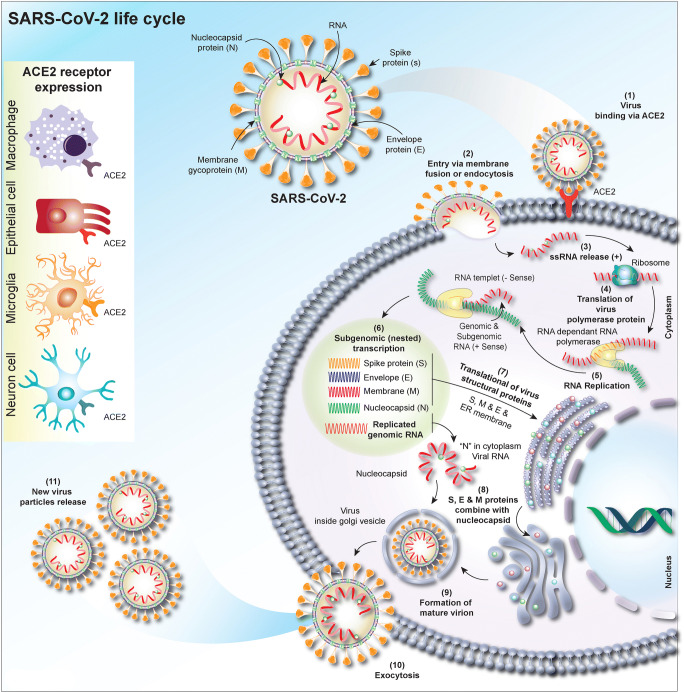
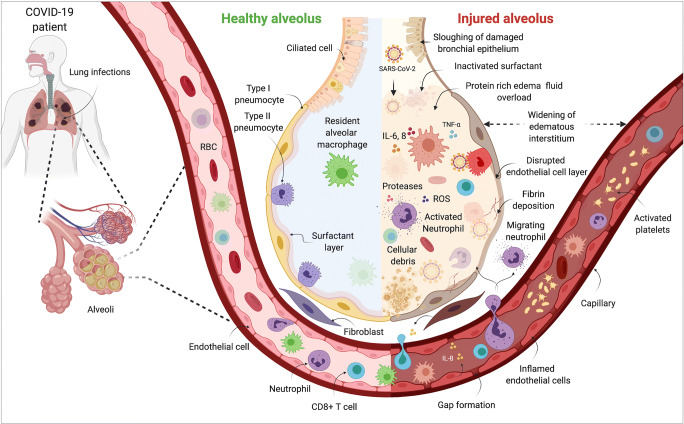
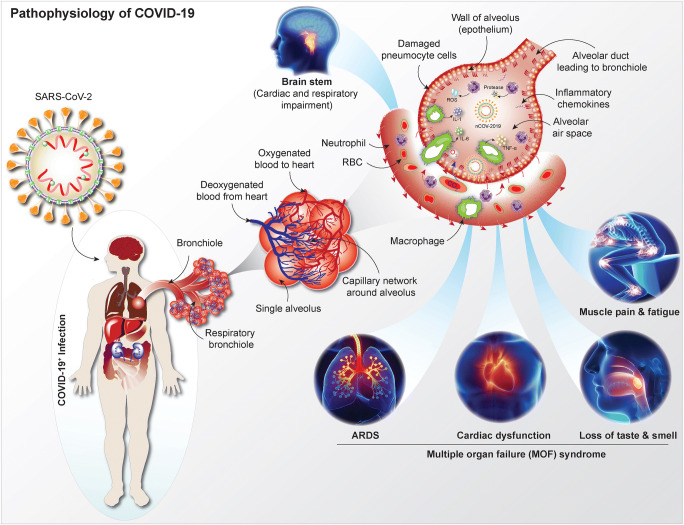
Severe acute respiratory syndrome coronavirus 2 (SARS-CoV-2) is the etiological agent of coronavirus disease 2019 (COVID-19). SARS-CoV-2, is a positive-sense single-stranded RNA virus with epithelial cell and respiratory system proclivity. Like its predecessor, SARS-CoV, COVID-19 can lead to life-threatening disease. Due to wide geographic impact affecting an extremely high proportion of the world population it was defined by the World Health Organization as a global public health pandemic. The infection is known to readily spread from person-to-person. This occurs through liquid droplets by cough, sneeze, hand-to-mouth-to-eye contact and through contaminated hard surfaces. Close human proximity accelerates SARS-CoV-2 spread. COVID-19 is a systemic disease that can move beyond the lungs by blood-based dissemination to affect multiple organs. These organs include the kidney, liver, muscles, nervous system, and spleen. The primary cause of SARS-CoV-2 mortality is acute respiratory distress syndrome initiated by epithelial infection and alveolar macrophage activation in the lungs. The early cell-based portal for viral entry is through the angiotensin-converting enzyme 2 receptor. Viral origins are zoonotic with genomic linkages to the bat coronaviruses but without an identifiable intermediate animal reservoir. There are currently few therapeutic options, and while many are being tested, although none are effective in curtailing the death rates. There is no available vaccine yet. Intense global efforts have targeted research into a better understanding of the epidemiology, molecular biology, pharmacology, and pathobiology of SARS-CoV-2. These fields of study will provide the insights directed to curtailing this disease outbreak with intense international impact. Graphical Abstract.
严重急性呼吸综合征冠状病毒 2(SARS-CoV-2)是 2019 年冠状病毒病(COVID-19)的病原体。SARS-CoV-2 是一种带有正链单链 RNA 的病毒,具有上皮细胞和呼吸系统倾向性。与它的前身 SARS-CoV 一样,COVID-19 可导致危及生命的疾病。由于其广泛的地理影响,影响到世界上极高比例的人口,世界卫生组织将其定义为全球公共卫生大流行。据了解,这种感染很容易在人与人之间传播。它通过咳嗽、打喷嚏、手到口到眼的接触以及通过受污染的硬表面传播飞沫。密切的人际接触会加速 SARS-CoV-2 的传播。COVID-19 是一种全身性疾病,可通过血液传播扩散到肺部以外,影响多个器官。这些器官包括肾脏、肝脏、肌肉、神经系统和脾脏。SARS-CoV-2 死亡率的主要原因是上皮感染和肺部肺泡巨噬细胞激活引起的急性呼吸窘迫综合征。病毒进入的早期细胞门户是通过血管紧张素转换酶 2 受体。病毒起源是动物源的,与蝙蝠冠状病毒有基因组联系,但没有可识别的中间动物宿主。目前治疗方法很少,虽然正在测试许多方法,但没有一种方法能有效降低死亡率。目前还没有可用的疫苗。全球正在进行大量研究,以更好地了解 SARS-CoV-2 的流行病学、分子生物学、药理学和病理生物学。这些研究领域将提供深入了解,以遏制这种具有强烈国际影响的疾病爆发。图表摘要。