The Masters Psychological Services, Philippines.
Trinity University of Asia, Philippines.
J Affect Disord. 2020 Nov 1;276:14-22. doi: 10.1016/j.jad.2020.06.046. Epub 2020 Jul 15.
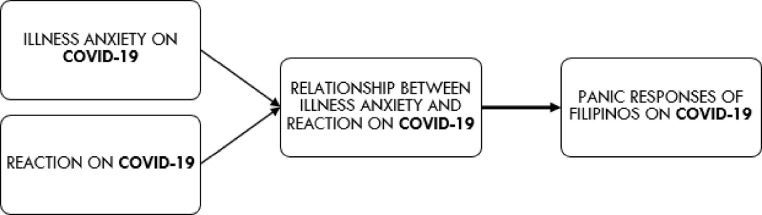
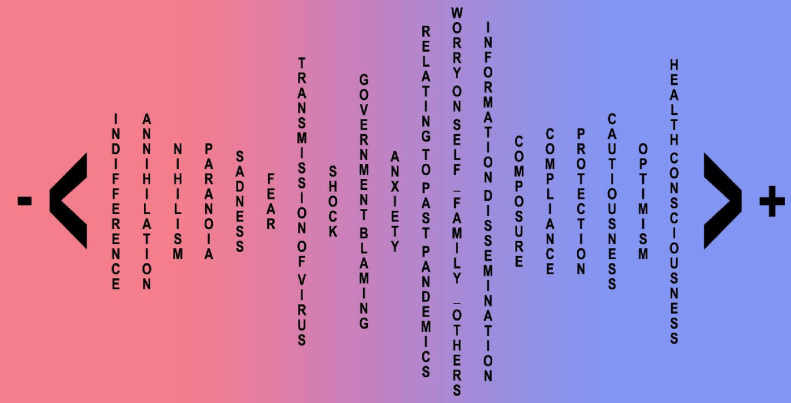
With the rapid spread of global pandemic coronavirus disease 2019 (COVID-19), people around the world express panic in various behaviors. This affects the economy of the county, social values, and psychological stress of the people involved regardless of the directness of contact with the infected. This study aims to analyze the panic responses of the people as well as the perception on the global issue through an online survey. The researchers used Health Anxiety Inventory and open ended questions regarding the feelings, thoughts and actions of people during the enhanced community quarantine. Quantitative and qualitative data were both analyzed and interpreted interactively. Results also show that there is a significant difference (p = 0.028) in the Avoidance behavior between locations. Furthermore, a significant difference (p = 0.000) also shows on the Symptoms of Hypochondriasis between exposure to COVID-19. COVID-19 Panic Framework were also conceptualized with the following themes arranged from negative to positive behaviors: Indifference, Annihilation, Nihilism, Paranoia, Sadness, Fear, Transmission of Virus, Shock, Government Blaming, Anxiety, Relating to Past Pandemics, Worry on Self/Family/Others, Information Dissemination, Composure, Compliance, Protection, Cautiousness, Optimism, and Health Consciousness. In conclusion, levels of health anxiety were consistent regardless of location and exposure to COVID-19 patients. Lastly, spectrum of panic consequences due to COVID-19 pandemic were constructed.
随着全球 2019 年冠状病毒病(COVID-19)的迅速传播,世界各地的人们在各种行为中表现出恐慌。这影响了国家的经济、社会价值观和相关人员的心理压力,无论他们是否直接接触过感染者。本研究旨在通过在线调查分析人们的恐慌反应以及对全球问题的看法。研究人员使用健康焦虑量表和开放式问题,了解人们在强化社区隔离期间的感受、想法和行为。对定量和定性数据进行了交互式分析和解释。结果还表明,在回避行为方面,地点之间存在显著差异(p=0.028)。此外,在接触 COVID-19 方面,疑病症症状也存在显著差异(p=0.000)。还提出了 COVID-19 恐慌框架,其中包括从消极到积极行为的主题:冷漠、毁灭、虚无主义、偏执、悲伤、恐惧、病毒传播、震惊、政府指责、焦虑、与过去大流行相关、担心自身/家庭/他人、信息传播、沉着、遵守、保护、谨慎、乐观和健康意识。总之,无论地点和接触 COVID-19 患者如何,健康焦虑水平都是一致的。最后,构建了 COVID-19 大流行引起的恐慌后果范围。