Experimental Zoology Group, Department of Animal Sciences, Wageningen University, Wageningen, the Netherlands.
Department of Mathematical Science and Advanced Technology, Japan Agency for Marine-Earth Science and Technology (JAMSTEC), Yokohama, Japan.
PLoS Biol. 2020 Jul 22;18(7):e3000462. doi: 10.1371/journal.pbio.3000462. eCollection 2020 Jul.
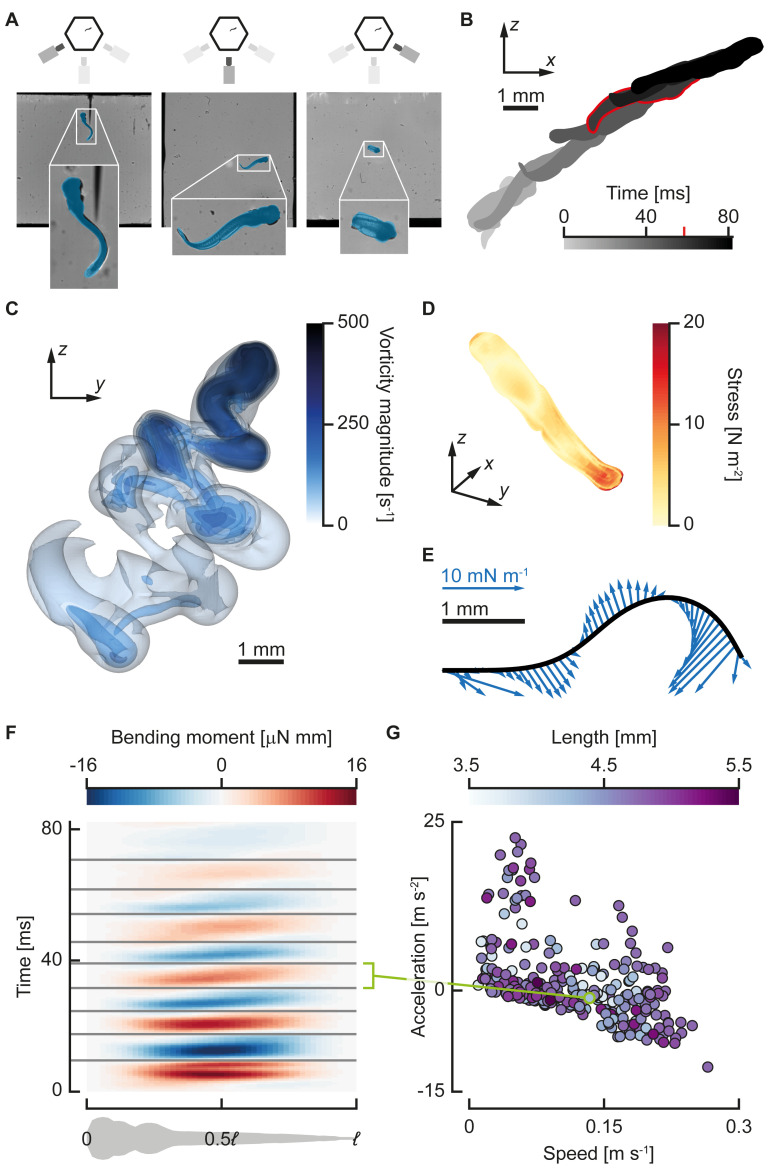
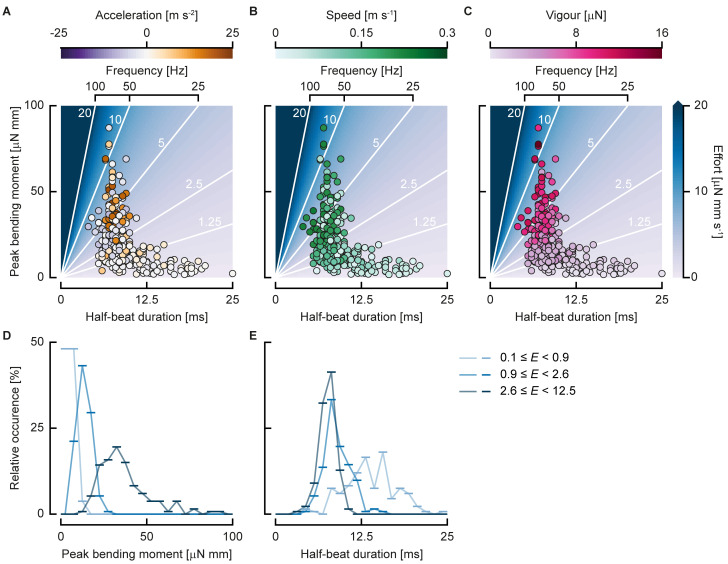
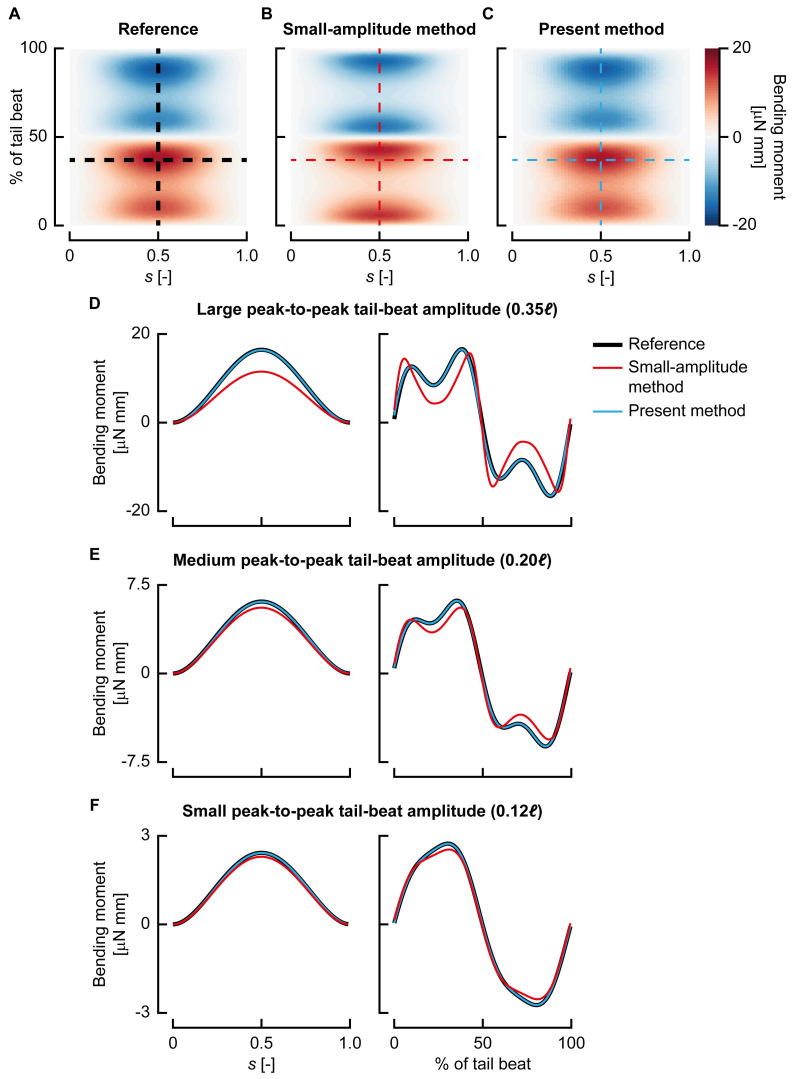
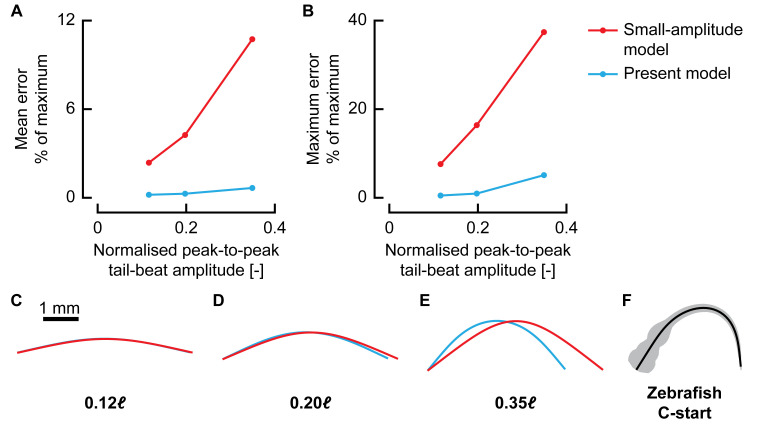
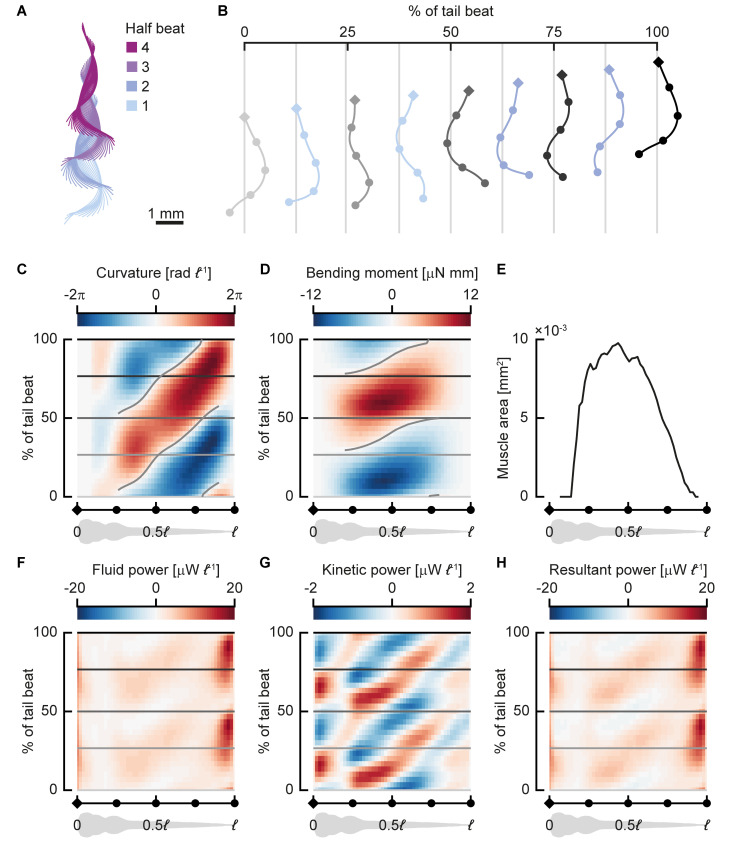
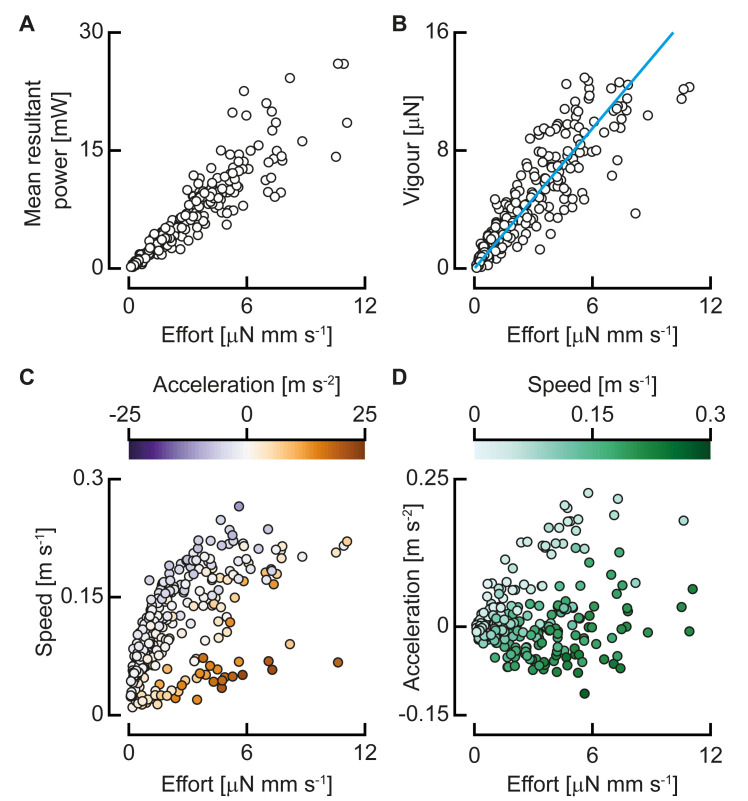
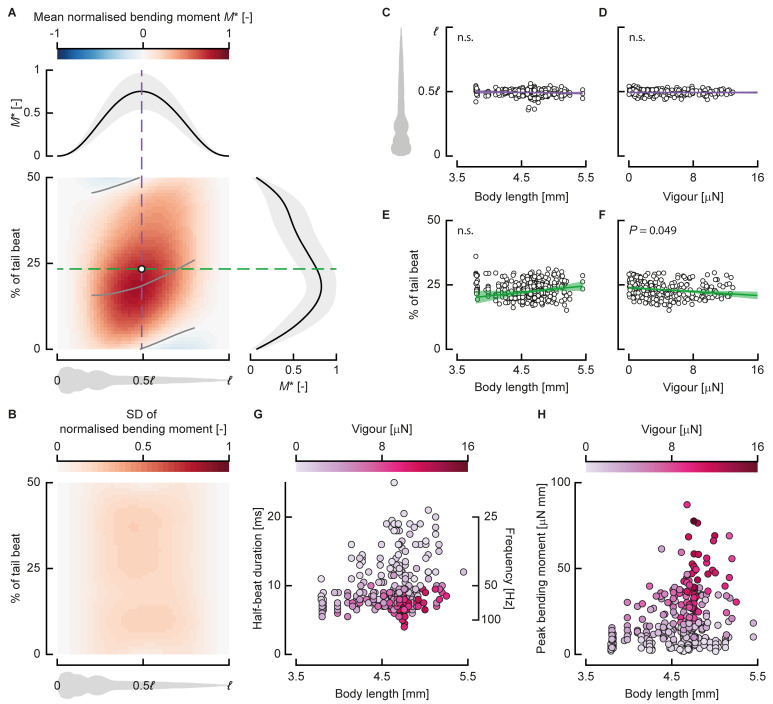
Most fish swim with body undulations that result from fluid-structure interactions between the fish's internal tissues and the surrounding water. Gaining insight into these complex fluid-structure interactions is essential to understand how fish swim. To this end, we developed a dedicated experimental-numerical inverse dynamics approach to calculate the lateral bending moment distributions for a large-amplitude undulatory swimmer that moves freely in three-dimensional space. We combined automated motion tracking from multiple synchronised high-speed video sequences, computation of fluid dynamic stresses on the swimmer's body from computational fluid dynamics, and bending moment calculations using these stresses as input for a novel beam model of the body. The bending moment, which represent the system's net actuation, varies over time and along the fish's central axis due to muscle actions, passive tissues, inertia, and fluid dynamics. Our three-dimensional analysis of 113 swimming events of zebrafish larvae ranging in age from 3 to 12 days after fertilisation shows that these bending moment patterns are not only relatively simple but also strikingly similar throughout early development and from fast starts to periodic swimming. This suggests that fish larvae may produce and adjust swimming movements relatively simply, yet effectively, while restructuring their neuromuscular control system throughout their rapid development.
大多数鱼类通过身体的波动来游泳,这些波动是鱼类内部组织与周围水之间的流固相互作用的结果。深入了解这些复杂的流固相互作用对于理解鱼类如何游泳至关重要。为此,我们开发了一种专门的实验-数值反动力学方法,用于计算在三维空间中自由运动的大振幅波动游泳者的横向弯矩分布。我们将来自多个同步高速视频序列的自动运动跟踪、计算游泳者身体上的流体动力应力的计算流体动力学以及使用这些应力作为身体新型梁模型的输入的弯矩计算相结合。由于肌肉活动、被动组织、惯性和流体动力学的原因,代表系统总致动的弯矩随时间和沿鱼的中轴线而变化。我们对 113 个年龄在受精后 3 至 12 天的斑马鱼幼虫游泳事件的三维分析表明,这些弯矩模式不仅相对简单,而且在整个早期发育过程中以及从快速启动到周期性游泳都惊人地相似。这表明,鱼类幼虫在快速发育过程中重塑其神经肌肉控制系统的同时,可能相对简单但有效地产生和调整游泳动作。