Interfaculty Institute of Biochemistry, University of Tübingen, Tübingen, Germany.
Department of Structural Biology, Max Planck Institute of Biophysics, Frankfurt am Main, Germany.
J Virol. 2020 Sep 29;94(20). doi: 10.1128/JVI.01664-19.
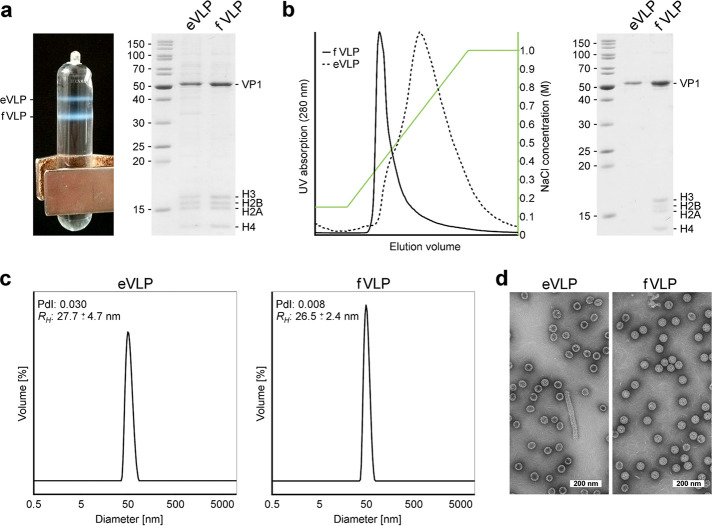
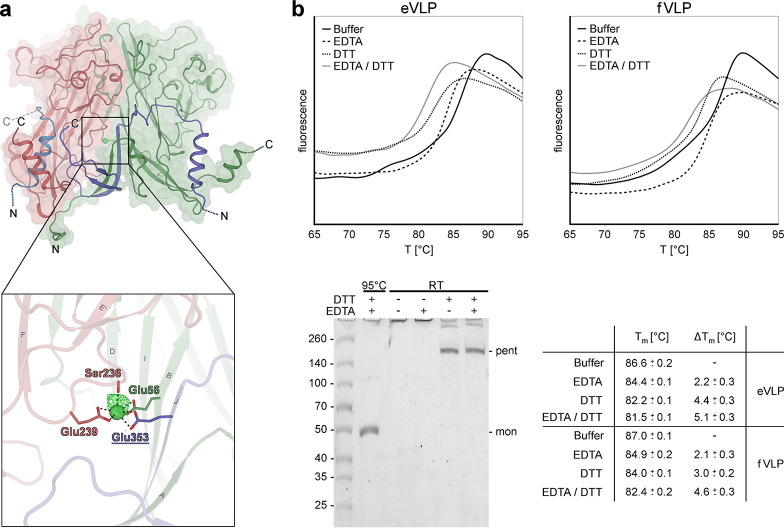
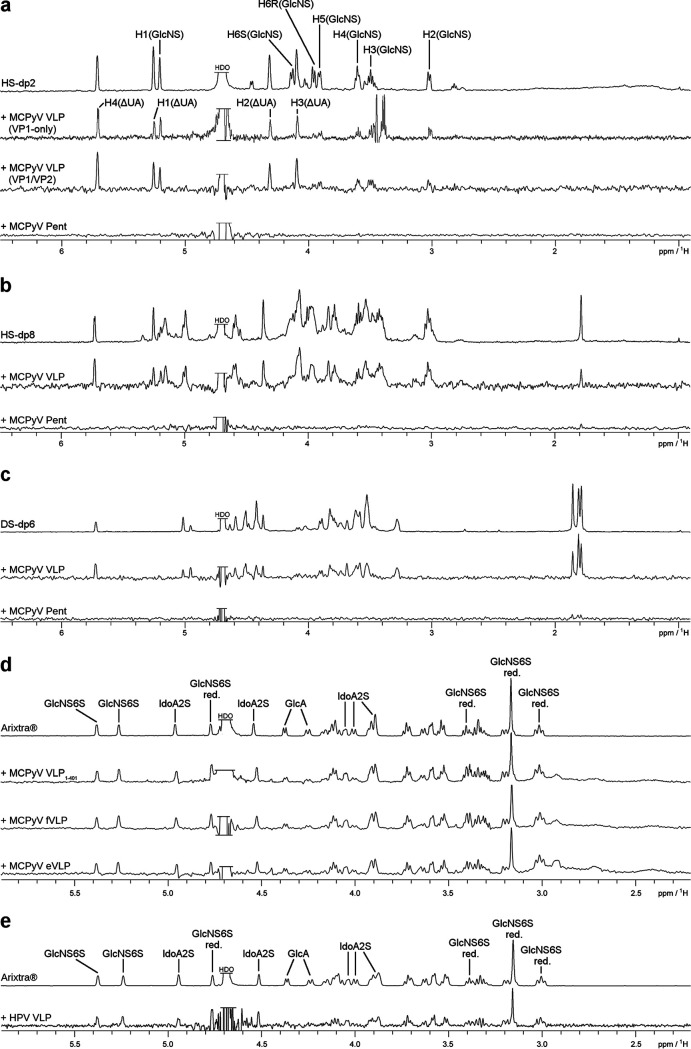
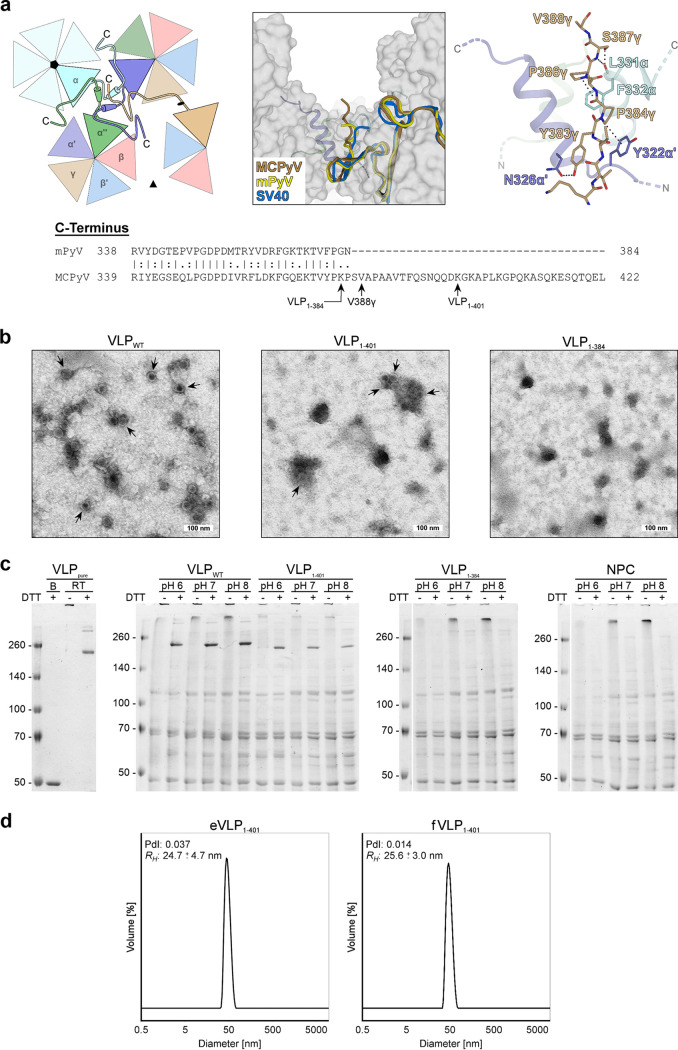
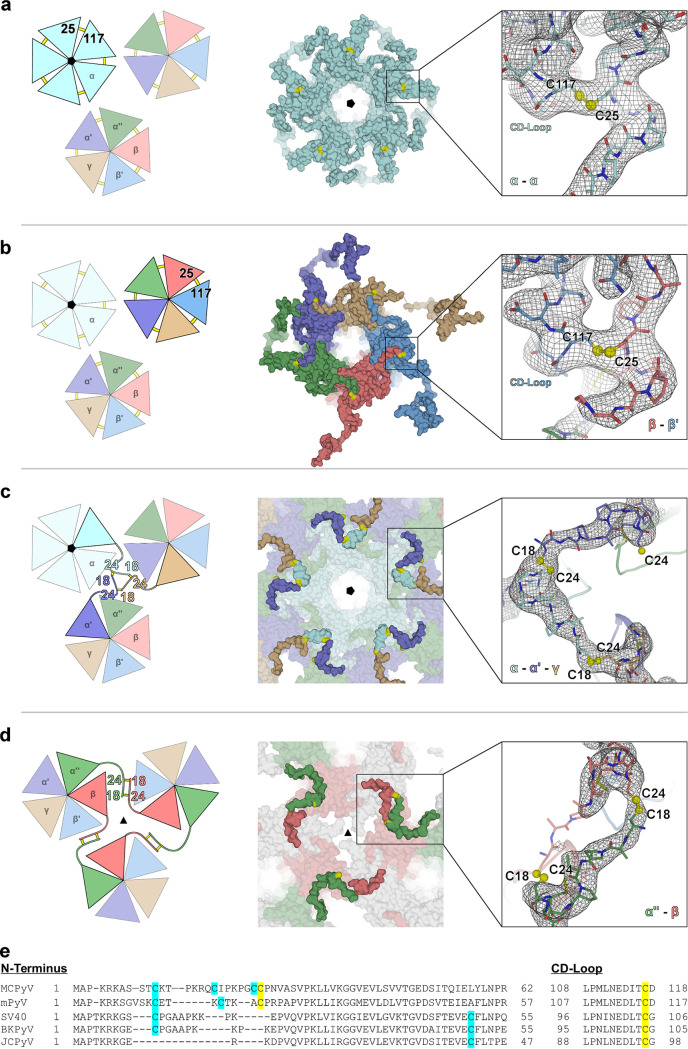
Merkel cell polyomavirus (MCPyV) is a human double-stranded DNA tumor virus. MCPyV cell entry is unique among members of the polyomavirus family as it requires the engagement of two types of glycans, sialylated oligosaccharides and sulfated glycosaminoglycans (GAGs). Here, we present crystallographic and cryo-electron microscopic structures of the icosahedral MCPyV capsid and analysis of its glycan interactions via nuclear magnetic resonance (NMR) spectroscopy. While sialic acid binding is specific for α2-3-linked sialic acid and mediated by the exposed apical loops of the major capsid protein VP1, a broad range of GAG oligosaccharides bind to recessed regions between VP1 capsomers. Individual VP1 capsomers are tethered to one another by an extensive disulfide network that differs in architecture from previously described interactions for other PyVs. An unusual C-terminal extension in MCPyV VP1 projects from the recessed capsid regions. Mutagenesis experiments show that this extension is dispensable for receptor interactions. The MCPyV genome was found to be clonally integrated in 80% of cases of Merkel cell carcinoma (MCC), a rare but aggressive form of human skin cancer, strongly suggesting that this virus is tumorigenic. In the metastasizing state, the course of the disease is often fatal, especially in immunocompromised individuals, as reflected by the high mortality rate of 33 to 46% and the low 5-year survival rate (<45%). The high seroprevalence of about 60% makes MCPyV a serious health care burden and illustrates the need for targeted treatments. In this study, we present the first high-resolution structural data for this human tumor virus and demonstrate that the full capsid is required for the essential interaction with its GAG receptor(s). Together, these data can be used as a basis for future strategies in drug development.
默克尔细胞多瘤病毒(Merkel cell polyomavirus,MCPyV)是一种人类双链 DNA 肿瘤病毒。与多瘤病毒家族的其他成员不同,MCPyV 细胞进入需要两种类型的聚糖,即唾液酸化寡糖和硫酸化糖胺聚糖(glycosaminoglycans,GAGs)的参与。在这里,我们展示了二十面体 MCPyV 衣壳的晶体和低温电子显微镜结构,并通过核磁共振(nuclear magnetic resonance,NMR)光谱分析了其聚糖相互作用。虽然唾液酸结合是特异性的,与α2-3 连接的唾液酸结合,并由主要衣壳蛋白 VP1 的暴露的顶端环介导,但广泛的 GAG 寡糖与 VP1 衣壳蛋白之间的凹陷区域结合。单个 VP1 衣壳蛋白通过广泛的二硫键网络彼此连接,其结构与其他 PyV 描述的相互作用不同。MCPyV VP1 的一个不寻常的 C 末端延伸从凹陷的衣壳区域伸出。突变实验表明,该延伸对于受体相互作用是可有可无的。MCPyV 基因组在 80%的 Merkel 细胞癌(Merkel cell carcinoma,MCC)病例中被克隆整合,MCC 是一种罕见但侵袭性的人类皮肤癌,这强烈表明该病毒具有致癌性。在转移状态下,疾病的进程往往是致命的,特别是在免疫功能低下的个体中,死亡率为 33%至 46%,5 年生存率<45%,反映了这一点。约 60%的高血清阳性率使 MCPyV 成为严重的医疗保健负担,并说明了靶向治疗的必要性。在这项研究中,我们首次提供了这种人类肿瘤病毒的高分辨率结构数据,并证明完整的衣壳是与 GAG 受体(s)进行基本相互作用所必需的。这些数据可共同作为未来药物开发策略的基础。