Piepenbring Meike, Maciá-Vicente Jose G, Codjia Jean Evans I, Glatthorn Carola, Kirk Paul, Meswaet Yalemwork, Minter David, Olou Boris Armel, Reschke Kai, Schmidt Marco, Yorou Nourou Soulemane
Department of Mycology, Goethe University Frankfurt am Main, Biologicum, Max-von-Laue-Str. 13, 60438 Frankfurt am Main, Germany.
Research Unit Tropical Mycology and Plant-Soil Fungi Interactions, Faculty of Agronomy, University of Parakou, BP 123 Parakou, Benin.
IMA Fungus. 2020 Jul 7;11:13. doi: 10.1186/s43008-020-00034-y. eCollection 2020.
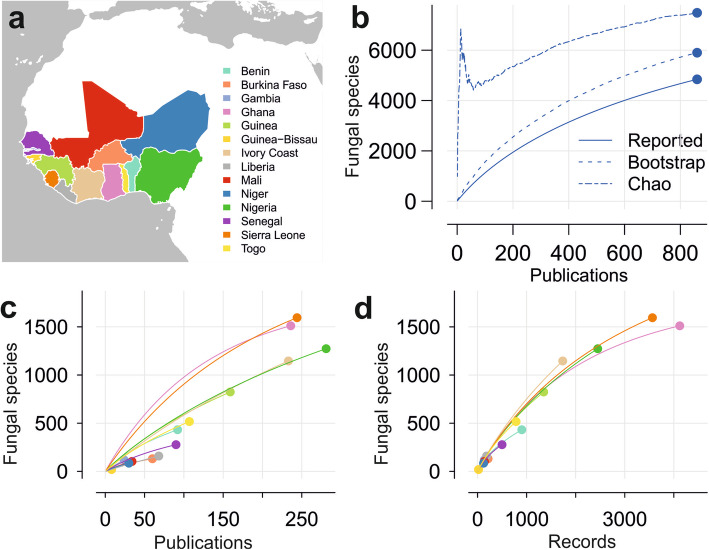
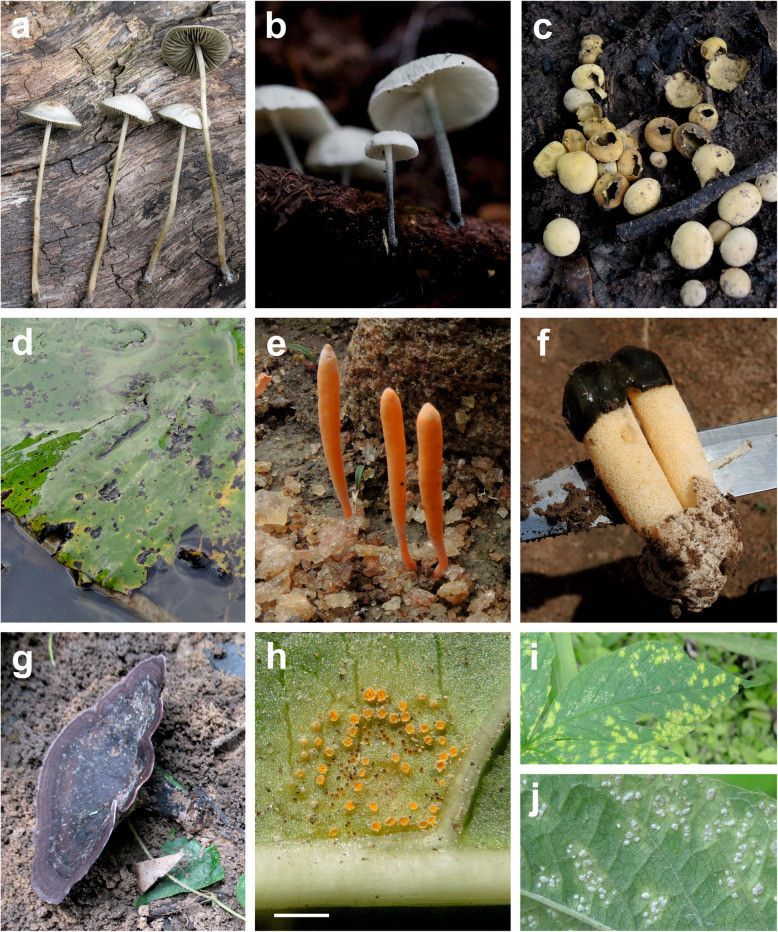
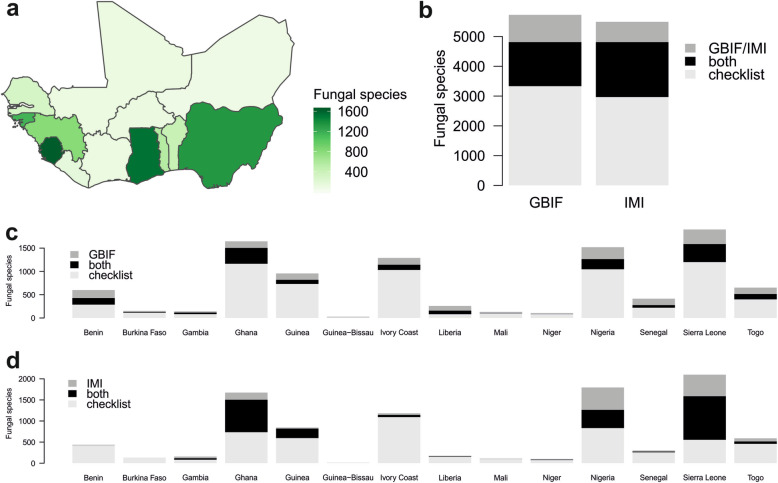
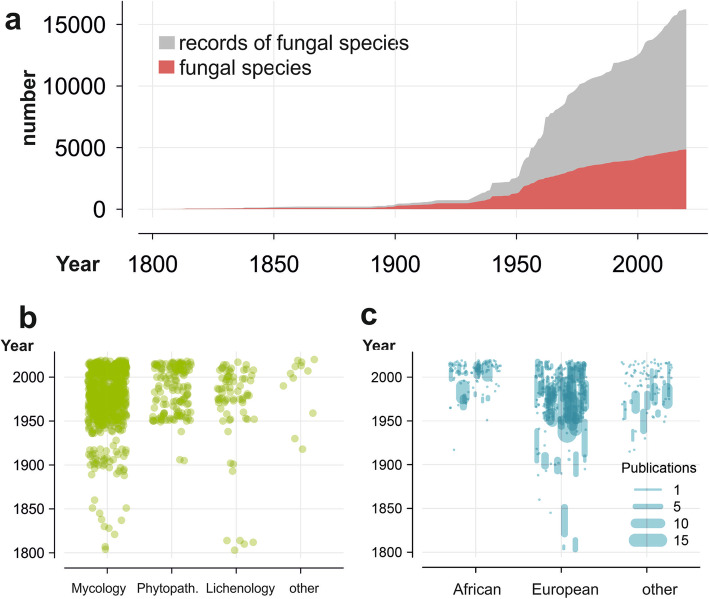
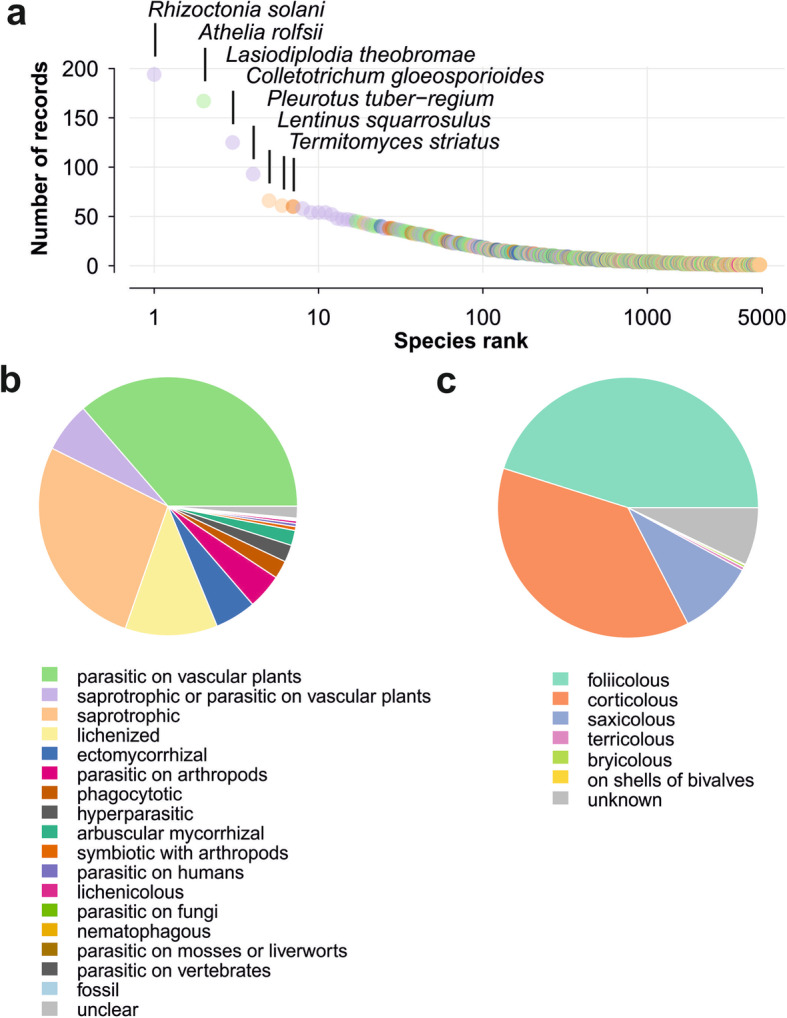
Scientific information about biodiversity distribution is indispensable for nature conservation and sustainable management of natural resources. For several groups of animals and plants, such data are available, but for fungi, especially in tropical regions like West Africa, they are mostly missing. Here, information for West African countries about species diversity of fungi and fungus-like organisms (other organisms traditionally studied by mycologists) is compiled from literature and analysed in its historical context for the first time. More than 16,000 records of fungi representing 4843 species and infraspecific taxa were found in 860 publications relating to West Africa. Records from the Global Biodiversity Information Facility (GBIF) database (2395 species), and that of the former International Mycological Institute fungal reference collection (IMI) (2526 species) were also considered. The compilation based on literature is more comprehensive than the GBIF and IMI data, although they include 914 and 679 species names, respectively, which are not present in the checklist based on literature. According to data available in literature, knowledge on fungal richness ranges from 19 species (Guinea Bissau) to 1595 (Sierra Leone). In estimating existing species diversity, richness estimators and the Hawksworth 6:1 fungus to plant species ratio were used. Based on the Hawksworth ratio, known fungal diversity in West Africa represents 11.4% of the expected diversity. For six West African countries, however, known fungal species diversity is less than 2%. Incomplete knowledge of fungal diversity is also evident by species accumulation curves not reaching saturation, by 45.3% of the fungal species in the checklist being cited only once for West Africa, and by 66.5% of the fungal species in the checklist reported only for a single country. The documentation of different systematic groups of fungi is very heterogeneous because historically investigations have been sporadic. Recent opportunistic sampling activities in Benin showed that it is not difficult to find specimens representing new country records. Investigation of fungi in West Africa started just over two centuries ago and it is still in an early pioneer phase. To promote proper exploration, the present checklist is provided as a tool to facilitate fungal identification in this region and to aid conceptualisation and justification of future research projects. Documentation of fungal diversity is urgently needed because natural habitats are being lost on a large scale through altered land use and climate change.
关于生物多样性分布的科学信息对于自然保护和自然资源的可持续管理至关重要。对于几类动植物来说,已有此类数据,但对于真菌,尤其是在西非等热带地区,此类数据大多缺失。在此,首次从文献中汇编了有关西非国家真菌和类真菌生物(传统上由真菌学家研究的其他生物)物种多样性的信息,并在其历史背景下进行了分析。在860篇与西非有关的出版物中,发现了代表4843个物种和种下分类单元的16000多条真菌记录。还考虑了全球生物多样性信息设施(GBIF)数据库(2395种)和前国际真菌研究所真菌参考收藏(IMI)(2526种)的记录。基于文献的汇编比GBIF和IMI数据更全面,尽管它们分别包含914种和679种在基于文献的清单中不存在的物种名称。根据文献中的数据,关于真菌丰富度的知识范围从19种(几内亚比绍)到1595种(塞拉利昂)。在估计现有物种多样性时,使用了丰富度估计器和霍克斯沃思真菌与植物物种6:1的比例。根据霍克斯沃思比例,西非已知的真菌多样性占预期多样性的11.4%。然而,对于六个西非国家来说,已知的真菌物种多样性不到2%。物种积累曲线未达到饱和、清单中45.3%的真菌物种在西非仅被引用过一次以及清单中66.5%的真菌物种仅在一个国家被报道,这些都表明对真菌多样性的了解不完整。由于历史上的调查是零星的,不同真菌分类群的记录非常不均衡。贝宁最近的机会性采样活动表明,找到代表新国家记录的标本并不困难。对西非真菌的研究始于两个多世纪前,目前仍处于早期开拓阶段。为了促进适当的探索,提供本清单作为一种工具,以方便该地区的真菌鉴定,并有助于未来研究项目的概念化和论证。由于土地利用变化和气候变化导致自然栖息地大量丧失,迫切需要记录真菌多样性。